Smith Machine Leg Press: Proper Form, Muscles, Sets & Safety
Master the floor-based Smith Machine Leg Press with clear form cues, quad-focused sets, essential safety checks, common mistakes, and equipment tips.
Smith Machine Leg Press
The Smith Machine Leg Press uses a floor-lying position to challenge the legs through a controlled pressing movement. Both feet work together as the knees and hips extend against resistance. Because the torso remains supported by the floor, the exercise removes much of the standing balance required during traditional squats. Nevertheless, the lower body must still coordinate muscular force, joint alignment, and movement control. The quadriceps contribute strongly during knee extension. Meanwhile, the glutes assist as the hips extend and the legs move away from the torso. For effective training, prioritize smooth repetitions, a manageable range of motion, and appropriate resistance rather than pursuing maximum weight.
Quick Overview
| Body Part | Legs |
|---|---|
| Primary Muscle | Quadriceps femoris (Rectus femoris, Vastus lateralis, Vastus medialis, Vastus intermedius) |
| Secondary Muscle | Gluteus maximus, hip adductors, hamstrings (supporting role), and calves (stabilization) |
| Equipment | Manufacturer-approved Smith machine, compatible leg press footplate, properly adjusted safety stops, and optional weight plates |
| Difficulty | Intermediate — requires controlled leg strength, equipment familiarity, and careful safety preparation |
Sets & Reps (By Goal)
Training volume depends on experience, strength, recovery, and individual goals. However, these recommendations apply only when using equipment specifically approved for this pressing variation. Start conservatively and maintain control throughout every repetition.
Recommended Training Volume
- Strength: 3–4 sets × 5–8 reps, with 2–3 minutes of rest. Use challenging but manageable resistance while keeping several repetitions in reserve.
- Hypertrophy (Muscle Growth): 3–4 sets × 8–12 reps, with 60–120 seconds of rest. Focus on controlled lowering and consistent quadriceps tension.
- Muscular Endurance: 2–3 sets × 12–15 reps, with 60–90 seconds of rest. Use lighter resistance and avoid excessive fatigue beneath the loaded bar.
- Technique Development: 2–3 sets × 6–10 controlled reps. Practice with minimal resistance and emphasize stable foot placement, smooth knee tracking, and consistent tempo.
- Mobility / Rehabilitation: This unusual variation is not a preferred mobility or rehabilitation exercise. Instead, use an appropriate dedicated leg press or clinician-selected movement.
Tempo, Recovery, and Progression
A controlled tempo supports consistent technique. For example, lower the resistance over approximately two to three seconds and press upward smoothly. Additionally, avoid bouncing at the bottom or forcefully locking the knees at the top. These habits can reduce movement control.
Progression rule: First, build consistent repetitions with a comfortable range of motion. Next, increase repetitions gradually while maintaining technique. Only consider additional resistance when the equipment is approved, safety systems are verified, and every repetition remains controlled. Do not train this variation to muscular failure.
Setup / Starting Position
Proper preparation is especially important for this exercise. Unlike a conventional leg press, the Smith machine places resistance directly above the exerciser. Therefore, equipment compatibility and reliable mechanical safety stops must be established before entering the movement position.
Machine Preparation and Safety Checks
- Check equipment approval: Confirm that the Smith machine manufacturer permits floor-based vertical leg pressing. Otherwise, use a dedicated leg press machine.
- Prepare the safety stops: Set both mechanical stops to prevent the loaded bar from contacting your body if control is lost. Verify their position with the machine unloaded.
- Check the footplate: Use only a secure leg press footplate specifically compatible with the machine. A round bar alone does not provide a dependable pressing surface.
- Select suitable resistance: Begin with the lowest practical load. Additionally, check that weight plates and collars match the machine specifications.
- Inspect the machine: Ensure that guide rails move smoothly and all approved locking mechanisms work. Never attempt the exercise with damaged or unreliable equipment.
Body Position and Foot Placement
- Lie on your back: Position your body beneath the approved pressing attachment while keeping your head, shoulders, and torso supported.
- Arrange your legs: Bend both hips and knees until your feet can contact the footplate comfortably. Avoid forcing the knees toward the chest.
- Set foot width: Position both feet approximately hip-width to shoulder-width apart, according to the footplate design and your anatomy.
- Align your joints: Keep your knees tracking in the same general direction as your toes. Meanwhile, maintain even pressure through both feet.
- Stabilize your torso: Keep the pelvis and lower back supported without forcing an exaggerated arch. Relax your neck and prepare a gentle brace.
- Confirm the starting position: Ensure that the safeties can catch the resistance without allowing body contact. A qualified supervisor should verify the approved setup and locking procedure.
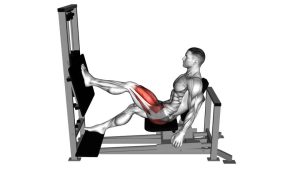
Setup tip: The uploaded demonstration shows the exerciser lying beneath a Smith bar with both feet contacting it. However, the absence of a clearly visible dedicated footplate means that its setup should not be copied directly.
Execution (Step-by-Step)
The Smith Machine Leg Press combines hip extension and knee extension during the pressing phase. Both legs move together, while the guided resistance follows the machine’s fixed path. Although the animation demonstrates the general motion, the following instructions assume an approved footplate and functional safety stops.
Pressing Phase (Concentric Movement)
- Establish your starting position: Keep both knees comfortably bent and the feet secure against the approved footplate. Maintain a stable torso.
- Brace your core: Engage the abdominal muscles gently without holding your breath unnecessarily. Meanwhile, keep your head and shoulders relaxed.
- Apply even foot pressure: Push through both feet simultaneously. As a result, the resistance begins traveling upward along the guide rails.
- Extend the knees and hips: Straighten both legs in a coordinated movement while maintaining consistent knee alignment.
- Control the top position: Stop with a slight bend in both knees. Therefore, avoid snapping the joints into a forceful locked position.
Lowering Phase (Eccentric Movement)
- Begin the descent slowly: Bend your knees and hips while resisting the downward movement of the load.
- Maintain foot alignment: Keep the feet secure and prevent either knee from collapsing inward. Additionally, avoid shifting pressure heavily toward one side.
- Control your range: Lower only as far as your pelvis and lower back remain supported. Stop before your posture deteriorates.
- Reverse the movement smoothly: Press upward again without bouncing against the safety stops or using momentum.
- Finish the set safely: Bring the bar onto the approved support system and have the locking mechanism properly secured before removing your feet. Never release contact while the load remains unsecured above you.
Pro Tips & Common Mistakes
Effective leg pressing depends on controlled mechanics and appropriate resistance. Furthermore, this Smith machine variation requires more equipment-specific caution than a dedicated leg press. The following recommendations explain useful training habits and common errors.
Pro Tips for Better Muscle Activation
- Use balanced leg pressure: Press with both feet evenly rather than allowing one leg to dominate. This encourages symmetrical movement.
- Control the lowering phase: Instead of dropping the resistance quickly, lower it smoothly over two to three seconds. Consequently, the quadriceps remain active throughout the descent.
- Maintain knee alignment: Keep the knees traveling in line with the toes. Additionally, avoid sudden inward knee movement.
- Preserve pelvic stability: Keep the hips supported throughout the repetition. If the pelvis begins curling upward, shorten the range.
- Prioritize movement quality: Moderate resistance allows better control than excessively heavy loading. Therefore, increase difficulty gradually.
- Keep breathing naturally: Exhale during the pressing effort and inhale during the controlled descent. Avoid unnecessary breath-holding.
Common Mistakes to Avoid
- Skipping mechanical safety stops: This is a serious error because the loaded bar travels above the body. Always use correctly positioned, manufacturer-approved safety systems.
- Pressing directly against an unsecured bar: A round bar offers limited foot contact. Instead, use a compatible, properly installed leg press footplate.
- Locking the knees aggressively: Forceful extension may reduce muscular control and increase joint stress. Therefore, maintain a slight knee bend.
- Lowering too deeply: Excessive hip flexion may cause the pelvis to curl away from the floor. Consequently, use only a controlled, comfortable range of motion.
- Allowing the knees to collapse inward: This can create uneven lower-body loading. Keep both legs aligned throughout each rep.
- Moving too quickly: Rapid repetitions make it harder to maintain stable joint positioning. Instead, use a steady tempo.
- Training to complete failure: Reaching failure under an overhead loaded bar creates unnecessary risk. For that reason, stop well before technique or strength breaks down.
- Releasing the bar incorrectly: Never remove your feet before the resistance is securely supported. Follow the approved machine-specific locking procedure with supervision.
Training tip: For most exercisers, a dedicated seated, horizontal, or 45-degree leg press provides a more practical way to train the same major lower-body muscles. Consequently, the Smith machine floor variation should not replace safer purpose-built equipment simply to increase exercise variety.
FAQ
Technique and Muscles Worked
What muscles does the Smith Machine Leg Press work?
The Smith Machine Leg Press primarily trains the quadriceps, which straighten the knees during pressing. Additionally, the gluteus maximus contributes to hip extension, while the adductors, hamstrings, and calves provide supporting muscle activity. Because both legs move together, the exercise develops bilateral lower-body pressing strength.
Is the Smith Machine Leg Press a quadriceps or glute exercise?
It is primarily a quadriceps-focused compound movement with meaningful glute involvement. However, individual muscle emphasis depends on hip and knee angles, movement depth, and foot positioning. Rather than exaggerating a particular muscle bias, maintain stable mechanics and a comfortable range.
How is the Smith Machine Leg Press different from a regular leg press?
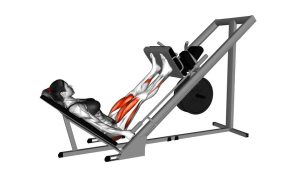
A regular leg press uses a dedicated sled or platform with a supported seated or reclined position. In contrast, the Smith machine variation places the exerciser face-up beneath vertically guided resistance. Although both movements involve hip and knee extension, the floor-based version has different equipment limitations and safety considerations.
Should my knees fully straighten at the top?
Avoid forcefully locking or hyperextending your knees. Instead, finish the pressing phase with a small amount of knee flexion and maintain muscular control. Additionally, never use the top position as an opportunity to relax beneath an unsecured load.
Training Frequency and Safety
How many sets and reps should I perform?
For general muscle development, approximately 3–4 sets of 8–12 reps is a reasonable starting range when using approved equipment. However, resistance should remain manageable, and repetitions should stop before form deteriorates. Additionally, sufficient rest between sets helps maintain consistent technique.
Can beginners perform the Smith Machine Leg Press?
This floor-lying variation is not a preferred option for beginners. Because the resistance travels above the body, equipment preparation and safety requirements are unusually important. Instead, beginners should generally learn leg pressing on a dedicated machine with a stable foot platform.
Is the Smith Machine Leg Press safe?
Safety depends heavily on the equipment design and setup. Some Smith machines are not intended for inverted leg pressing, especially when the feet contact a bare round bar. Therefore, only use equipment explicitly approved for the movement, with a suitable footplate and properly adjusted mechanical safety stops. Otherwise, choose a dedicated leg press machine.
Can I use heavy weights for this exercise?
Heavy resistance increases the consequences of losing control. For that reason, prioritize manageable loads and leave several repetitions in reserve. Furthermore, no additional weight should be used unless the machine, footplate, and safety mechanisms are rated for the intended load.
What should I do if I experience knee or lower-back pain?
Stop the exercise if pain develops during the movement. Although muscular effort is normal, sharp joint pain, unusual pressure, or radiating symptoms should not be ignored. If discomfort persists, consult a qualified healthcare professional before returning to loaded leg training.
What exercises can replace the Smith Machine Leg Press?
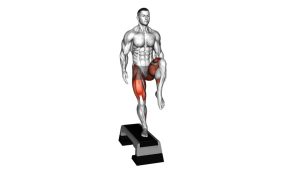
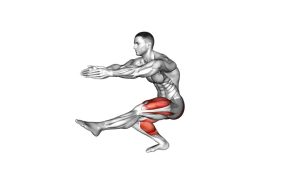
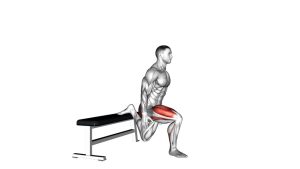
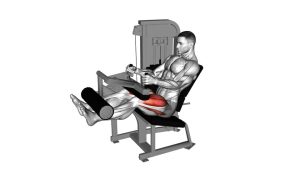
A dedicated 45-degree leg press, horizontal leg press, or purpose-built vertical leg press offers a more appropriate pressing setup. Alternatively, squats, step-ups, and split squats can develop lower-body strength. Choose an option that matches your experience, available equipment, and physical capabilities.
Recommended Equipment (Optional)
Suitable training equipment improves convenience, consistency, and movement control. However, not every Smith machine accessory is compatible with every machine. Therefore, verify manufacturer specifications, weight limits, mounting requirements, and safety features before purchasing or installing equipment.
Equipment for Smith Machine Leg Training
- Smith Machine with Adjustable Safety Stops — A guided resistance machine with mechanical safety stops. Select a model specifically approved for the intended exercise and compatible attachments.
- Smith Machine Leg Press Footplate Attachment — Provides a wider foot-contact surface when designed for the exact machine. Check mounting compatibility and manufacturer approval before use.
- Olympic Weight Plates Set — Allows gradual resistance adjustments for compatible plate-loaded machines. Choose correctly sized plates and remain within the equipment’s rated capacity.
- Olympic Barbell Weight Collars — Helps retain compatible weight plates on the loading sleeves. Confirm the collar design fits the particular Smith machine.
- High-Density Exercise Mat — Can provide additional comfort during floor-based exercise. Use only when permitted by the machine manufacturer and when the mat cannot shift or compromise safety clearance.
Equipment tip: Prioritize approved safety mechanisms and a secure pressing platform before considering heavier resistance. In addition, remember that an accessory cannot automatically make an unsuitable Smith machine safe for floor-based leg pressing. When in doubt, a dedicated leg press machine is the preferred alternative.