Pike Push-Up on Bench: Form, Muscles Worked, Sets & Reps, Tips + FAQ
Learn how to do the Pike Push-Up on a Bench (feet-elevated pike push-up) for stronger shoulders and upper chest. Step-by-step form, sets by goal, common mistakes, FAQs, and recommended equipment.
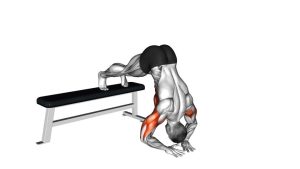
Pike Push-Up on Bench (Feet-Elevated Pike Push-Up)
This movement is all about angle and control. When your hips stay high and your elbows track cleanly, you’ll hit the shoulders hard while still getting strong upper-chest carryover. Use a stable bench, keep the neck neutral, and aim for smooth, repeatable reps before increasing range or elevation.
Quick Overview
| Body Part | Chest |
|---|---|
| Primary Muscle | Anterior deltoids (front shoulders) + upper chest (clavicular pec) |
| Secondary Muscle | Triceps, serratus anterior, upper traps (stabilization), core |
| Equipment | Bench (or sturdy elevated surface), optional mat |
| Difficulty | Intermediate (harder as feet elevation increases) |
Sets & Reps (By Goal)
- Strength (low reps): 4–6 sets × 3–6 reps (2–3 min rest, stop 1 rep before form breaks)
- Hypertrophy (muscle growth): 3–5 sets × 6–12 reps (60–120 sec rest, controlled tempo)
- Endurance / conditioning: 2–4 sets × 10–20 reps (45–75 sec rest, steady pace)
- Handstand push-up progression: 3–6 sets × 3–8 reps (pause 1 sec at bottom, strict form)
Progression rule: First increase reps with perfect control. Next increase range (head closer to floor), then elevate the feet higher or move hands slightly closer to the bench to shift more load onto the shoulders.
Setup / Starting Position
- Bench position: Use a stable bench that won’t slide. Place it behind you.
- Feet on bench: Set the tops of your feet on the bench, about hip-width apart.
- Hands on floor: Hands slightly wider than shoulders, fingers spread for grip.
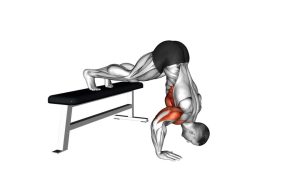
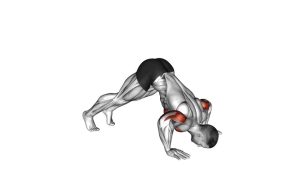
- Pike your hips: Walk hands/feet until hips are high and your torso angles down (inverted “V”).
- Brace and stack: Push the floor away, ribs down, neck neutral—eyes toward the floor between hands.
Tip: If wrists feel stressed, turn hands slightly outward or use push-up handles/parallettes to keep wrists neutral.
Execution (Step-by-Step)
- Lock in the pike: Hips high, heels pressing lightly into the bench, core tight.
- Lower with control: Bend elbows and bring your head down and slightly forward so it travels between your hands.
- Bottom position: Stop just before your head touches the floor (or lightly tap a mat if controlled).
- Press up: Drive through palms, extend elbows, and push your torso away from the floor back to the pike.
- Reset and repeat: Keep shoulders active (no collapsing) and maintain a steady breathing rhythm.
Pro Tips & Common Mistakes
- Keep hips high: This is the #1 cue for shoulder/upper-chest emphasis.
- Head goes between hands: Don’t “nose dive” straight down or crane the neck forward.
- Control the elbows: A moderate flare is okay, but avoid extreme flaring that irritates shoulders.
- Don’t bounce: Touching the floor is fine only if you can do it softly and consistently.
- Use a mat target: Place a folded towel/mat where your head would land to standardize depth.
- Progress smart: More elevation = more load. Earn it with clean reps first.
- Wrist-friendly option: Use handles/parallettes to reduce wrist extension if needed.
FAQ
What muscles does the Pike Push-Up on Bench work most?
It mainly targets the front delts with strong involvement from the upper chest and triceps. Your serratus and core work hard to stabilize the shoulder blades and torso.
Is this more shoulders or chest?
It’s primarily a shoulder-dominant press, but the upper chest contributes—especially if you keep a strong forward lean and press with full control. If you want more chest, use a less aggressive pike angle or switch to decline push-ups.
How high should the bench be?
Start with a low, stable surface (step/low bench). As you get stronger, increase height gradually. Higher elevation increases shoulder loading and difficulty.
My wrists hurt—what can I do?
Use push-up handles/parallettes, do a longer warm-up for wrists, and keep pressure evenly spread through the palm. You can also slightly rotate hands outward to find a comfortable angle.
How do I make it easier or harder?
Easier: lower the feet height, reduce range, elevate hands on blocks, or do standard pike push-ups.
Harder: raise feet, increase depth, add a slow tempo, pause at the bottom, or work toward wall-assisted handstand push-ups.
Recommended Equipment (Optional)
- Adjustable Workout Bench — stable foot elevation + versatile for pressing and accessories
- Push-Up Handles / Parallettes — keeps wrists neutral and improves pressing comfort
- Thick Exercise Mat — protects hands/head contact area and improves floor grip
- Wrist Wraps (Training Support) — optional support if wrists fatigue during higher-volume sets
- Resistance Bands Set — great for warm-ups (band pull-aparts) and shoulder-prep work
Tip: Prioritize a non-slip, stable bench. If anything feels unstable, switch to a lower surface or place the bench against a wall for safety.