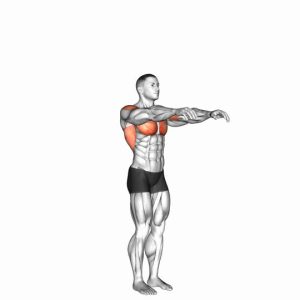
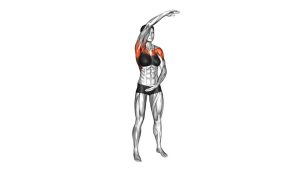
Seated Jack on a Padded Stool: Form, Muscles Worked, Sets, Tips & FAQ
Learn how to perform the Seated Jack on a Padded Stool for shoulder activation, mobility, and light cardio. Includes setup, step-by-step form, muscles worked, sets by goal, common mistakes, FAQs, and recommended equipment.
Seated Jack on a Padded Stool
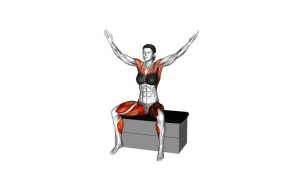
This exercise is best used as a dynamic warm-up, beginner-friendly conditioning drill, or low-impact mobility exercise. The seated position reduces balance demands, making it easier to focus on smooth shoulder motion and full-body rhythm. You should feel the shoulders working, the chest opening, and the hips moving out and back in with control.
Quick Overview
| Body Part | Shoulders |
|---|---|
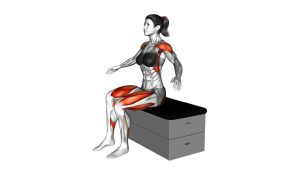
| Primary Muscle | Deltoids (especially lateral and anterior deltoids) |
| Secondary Muscle | Upper trapezius, serratus anterior, upper chest, hip abductors/adductors, core stabilizers |
| Equipment | Padded stool, padded bench, or soft exercise box |
| Difficulty | Beginner (low-impact and coordination-focused) |
Sets & Reps (By Goal)
- Warm-up / activation: 2–3 sets × 10–20 reps with a smooth tempo and 30–45 seconds rest
- Shoulder mobility practice: 2–4 sets × 8–15 reps focusing on clean overhead range
- Low-impact conditioning: 2–4 sets × 20–40 seconds of continuous reps with 30–60 seconds rest
- Beginner coordination work: 1–3 sets × 8–12 reps at an easy pace
Progression rule: First improve rhythm, range, and posture. Then add reps or longer timed sets. Do not progress by moving sloppily or swinging the arms overhead.
Setup / Starting Position
- Sit tall on a padded stool or bench: Place your hips near the center of the surface so you feel stable and balanced.
- Start with legs together: Knees bent and feet under control, ready to move out to the sides.
- Arms begin at your sides: Let the hands rest near the thighs with the shoulders relaxed.
- Brace lightly through the core: Keep the torso upright and avoid leaning backward.
- Lift the chest gently: Maintain a long spine and neutral head position before starting the movement.
Tip: Use a bench or padded box height that allows you to sit comfortably with your feet reaching the floor and your posture staying upright.
Execution (Step-by-Step)
- Begin from the seated start: Sit tall with arms down and legs together.
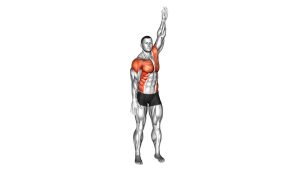
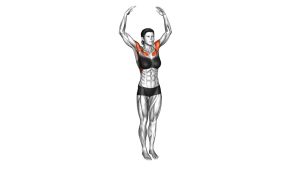
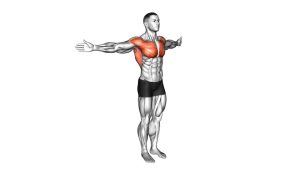
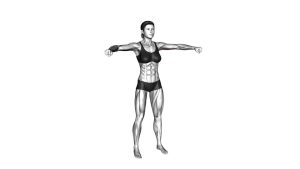
- Open the movement together: Raise the arms out to the sides and up overhead while simultaneously moving the legs apart.
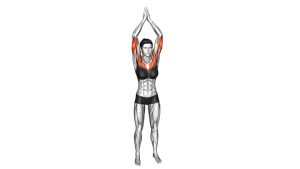
- Reach the top smoothly: Bring the arms near or overhead in a wide arc without forcing the shoulders into a painful range.
- Keep the torso stable: Stay upright and avoid arching the lower back or rocking on the stool.
- Return with control: Lower the arms back to your sides while bringing the legs together.
- Repeat rhythmically: Use a steady, low-impact pace for the prescribed reps or time.
Pro Tips & Common Mistakes
- Move in a wide arc: Let the arms travel out and up rather than swinging straight forward.
- Stay tall on the stool: Do not collapse through the chest or lean back to fake overhead range.
- Keep the pace controlled: Faster is not always better. Smooth reps train coordination better than rushed ones.
- Do not shrug aggressively: Allow natural upward rotation, but avoid forcing the shoulders into the ears.
- Use a pain-free overhead range: Stop short if overhead motion feels pinchy or uncomfortable.
- Control the legs too: The lower body should open and close with the arms, not flop outward loosely.
- Breathe naturally: Avoid holding your breath during repetitive sets.
FAQ
What is the Seated Jack on a Padded Stool good for?
It is useful for shoulder warm-ups, mobility practice, light cardio, and beginner-friendly coordination training. The seated setup makes it more accessible than a full standing jumping jack.
Which muscles does this exercise work the most?
The main muscles are the deltoids, especially the lateral and front portions. Secondary support comes from the upper traps, serratus anterior, upper chest, and the muscles that move the legs apart and back together.
Is this a strength exercise or a mobility drill?
It is mainly a mobility and activation drill with a light conditioning effect. It is not usually programmed as a primary strength exercise.
Can beginners use a partial range of motion?
Yes. If reaching fully overhead feels uncomfortable, use a shorter range and gradually improve control. Quality of movement matters more than height of the arms.
Can I use this before upper-body training?
Yes. It works well before shoulder, chest, or general upper-body sessions because it raises body temperature and encourages smooth overhead movement.
Recommended Equipment
- Aerobic Step Platform — a stable raised surface that can work as a seated platform for low-impact drills and warm-ups
- Foam Balance Pad — adds cushioning and comfort if you need a softer seated surface or support for mobility work
- Resistance Bands Set — useful for pairing with shoulder activation, pull-aparts, and warm-up circuits before or after this drill
- Light Dumbbell Set — helpful for progressing into more direct shoulder endurance and mobility-based strength work
- Padded Exercise Bench — a comfortable, durable option if you want a more secure and gym-style seated setup
Tip: Choose equipment that improves comfort and movement quality. For this exercise, stability, posture, and a pain-free range matter more than adding load.