Arms-Apart Circular Toe Touch: Form, Benefits, Sets, Tips & FAQ
Learn the Arms-Apart Circular Toe Touch for core rotation, hamstring mobility, and dynamic warm-ups with step-by-step form, tips, FAQs, and equipment.
Arms-Apart Circular Toe Touch
This exercise works well as part of a warm-up, mobility circuit, bodyweight routine, or active recovery session. Because the reaching arm travels across the body toward the opposite foot, the movement challenges the obliques, hamstrings, glutes, spinal stabilizers, and thoracic rotation at the same time. Additionally, the extended arms help improve balance and coordination by creating a windmill-style movement pattern.
For best results, focus on rhythm rather than speed. Each repetition should feel like a controlled circular sweep, not a rushed bend toward the floor. If your hamstrings feel tight, slightly soften the knees and limit the range of motion. Over time, better control and mobility will allow the hand to reach closer to the opposite foot without forcing the spine or bouncing at the bottom.
Quick Overview
| Body Part | Core |
|---|---|
| Primary Muscle | Obliques and abdominal stabilizers |
| Secondary Muscle | Hamstrings, glutes, lower back stabilizers, thoracic spine muscles, shoulders |
| Equipment | None; optional exercise mat for warm-up circuits |
| Difficulty | Beginner to intermediate, depending on mobility and rotation control |
Sets & Reps (By Goal)
- Dynamic warm-up: 2–3 sets × 8–12 reps per side with a smooth, controlled tempo.
- Mobility training: 2–4 sets × 10–15 reps per side, focusing on range without bouncing.
- Core activation: 3 sets × 8–10 reps per side with a brief pause near the bottom position.
- Active recovery: 1–2 easy sets × 8–12 reps per side using relaxed breathing and reduced depth.
- Beginner practice: 2 sets × 6–8 reps per side while keeping the knees slightly bent.
Progression rule: First improve control and symmetry. Then increase range of motion. Finally, add more repetitions only when the movement stays smooth on both sides.
Setup / Starting Position
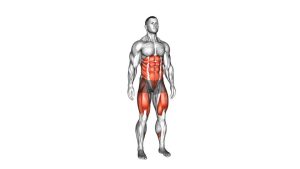
- Stand tall with a wide base: Place your feet slightly wider than shoulder-width. Turn the toes forward or slightly outward, depending on what feels natural for your hips.
- Extend both arms out to the sides: Create a strong “T” position with your arms. Keep the elbows long but not locked.
- Brace lightly through the core: Pull the ribs down slightly and keep the torso tall before beginning the rotation.
- Relax your shoulders: Let the arms stay active, but avoid shrugging the traps toward the ears.
- Set your gaze forward: Start with the head neutral. As you rotate, allow the head to follow the movement naturally.
A slightly wider stance usually makes the exercise easier to control. However, avoid standing so wide that the hips feel strained or the knees collapse inward.
Execution (Step-by-Step)
- Begin in the arms-apart position: Stand tall with both arms stretched outward. Keep your chest open and your feet grounded.
- Start the circular reach: Rotate your torso and guide one hand diagonally across your body toward the opposite foot.
- Hinge as you rotate: Fold from the hips while maintaining control through the core. Your torso should travel on a diagonal path rather than dropping straight down.
- Reach toward the opposite toes: Touch the foot or reach as close as your mobility allows. Meanwhile, keep the opposite arm extended behind or upward to create a windmill shape.
- Pause briefly with control: Hold the bottom position for a moment without bouncing. Feel the hamstring stretch and the rotational engagement through the core.
- Return to center: Reverse the same path and rise back to the upright “T” position. Move smoothly instead of snapping back.
- Repeat on the other side: Rotate in the opposite direction and reach the other hand toward the opposite foot.
- Continue alternating: Keep the movement rhythmic, controlled, and symmetrical from side to side.
Pro Tips & Common Mistakes
Pro Tips
- Use your arms as guides: The arms should create a long, open line that helps direct the rotation.
- Keep the movement circular: Imagine drawing a smooth arc from one side to the opposite foot.
- Soften the knees if needed: A slight bend helps protect the hamstrings and lower back, especially if mobility is limited.
- Rotate through the torso: Let the chest turn as the hand reaches across the body.
- Breathe naturally: Exhale as you reach down, then inhale as you return to standing.
- Control the return: The upward phase matters as much as the toe touch. Avoid rushing back to the top.
Common Mistakes
- Bending straight down: This removes the rotational benefit. Instead, reach diagonally toward the opposite foot.
- Rounding aggressively through the lower back: A small amount of spinal flexion is normal, but the motion should still be controlled.
- Locking the knees hard: Locked knees can increase strain behind the legs. Keep them soft if needed.
- Swinging too fast: Momentum reduces muscle control and may irritate the lower back.
- Letting the arms collapse: Dropped arms make the movement less coordinated. Keep the arms long throughout the rep.
- Forcing toe contact: Touching the toe is not required. Quality range is better than a forced reach.
FAQ
What muscles does the Arms-Apart Circular Toe Touch work?
This exercise mainly targets the obliques and abdominal stabilizers because the torso rotates during each reach. It also trains the hamstrings, glutes, lower back stabilizers, shoulders, and thoracic spine mobility.
Is the Arms-Apart Circular Toe Touch good for warming up?
Yes. It is a strong warm-up option because it combines rotation, hip hinging, hamstring lengthening, and shoulder positioning. For that reason, it works well before bodyweight training, sports drills, lower-body workouts, and core sessions.
Should my hand touch the opposite foot every time?
Not necessarily. The goal is controlled rotation and a comfortable hinge. If your mobility does not allow a clean toe touch, reach toward the shin, ankle, or foot without forcing the range.
Why do I feel this more in my hamstrings than my core?
That is common, especially if your hamstrings are tight. To feel more core engagement, slow the movement down, rotate the chest clearly, and lightly brace before each reach.
Can beginners do this exercise?
Beginners can perform this exercise if they use a smaller range of motion and keep the knees slightly bent. However, they should avoid bouncing, twisting aggressively, or forcing the hand to the floor.
Is this exercise safe for the lower back?
It can be safe when performed with control and a comfortable range. Still, people with back pain should move carefully, reduce depth, and avoid fast twisting. If symptoms appear, stop the movement and choose a gentler mobility drill.
How is this different from a regular toe touch?
A regular toe touch usually moves straight forward. In contrast, the Arms-Apart Circular Toe Touch adds torso rotation and a diagonal reach, which makes it more dynamic and more useful for rotational mobility.
Recommended Equipment (Optional)
- Exercise Mat — useful for warm-up circuits, stretching sessions, and floor-based mobility work.
- Yoga Blocks — helpful if you cannot comfortably reach the floor or foot during mobility drills.
- Stretching Strap — supports hamstring flexibility work after the exercise.
- Foam Roller — useful for preparing the hamstrings, glutes, calves, and upper back before training.
- Mobility Stick — helps improve shoulder positioning, torso rotation awareness, and warm-up control.
Tip: Equipment is optional for this bodyweight drill. Still, simple mobility tools can help you prepare tighter muscles, improve range, and make warm-up routines more consistent.