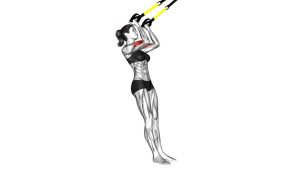
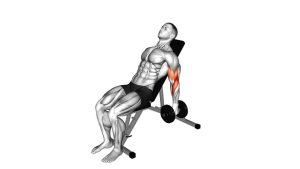
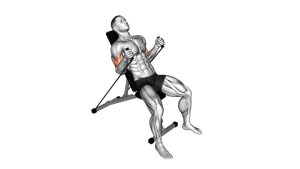
Band Incline Alternate Hammer Curl: Form, Sets, Tips & FAQ
Learn the Band Incline Alternate Hammer Curl to build biceps, brachialis, and forearm strength with constant band tension. Includes setup, step-by-step form, sets by goal, mistakes, FAQs, and recommended equipment.
Band Incline Alternate Hammer Curl
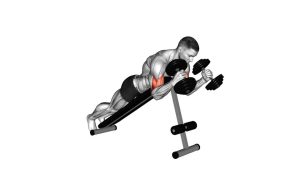
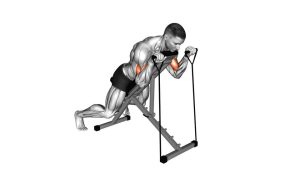
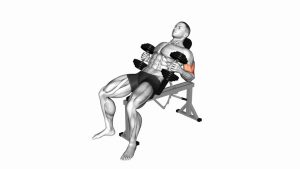
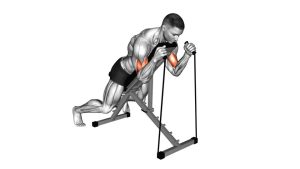
This variation is especially useful for lifters who want more arm tension without relying on heavy dumbbells. The bench support limits swinging, while the band increases resistance as you curl upward. Keep your grip neutral, elbows pointed down, and reps controlled. The goal is not to yank the band up, but to create steady elbow flexion with a hard squeeze at the top and a slow, resisted lowering phase.
Quick Overview
| Body Part | Arms |
|---|---|
| Primary Muscle | Brachialis |
| Secondary Muscle | Biceps brachii, brachioradialis, forearms |
| Equipment | Resistance band and incline bench |
| Difficulty | Beginner to Intermediate |
Sets & Reps (By Goal)
- Muscle growth: 3–4 sets × 8–15 reps per arm with 45–75 seconds rest
- Arm definition / pump work: 2–4 sets × 12–20 reps per arm with 30–60 seconds rest
- Strength-focused control: 3–5 sets × 6–10 reps per arm using a thicker band and slower tempo
- Technique practice: 2–3 sets × 10–12 clean reps per arm with a moderate band
Progression rule: First improve rep quality, then add reps, then increase band tension. Do not progress by shortening the range of motion or swinging through the hardest part.
Setup / Starting Position
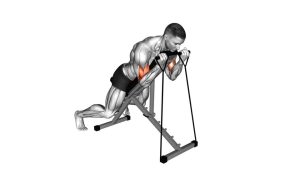
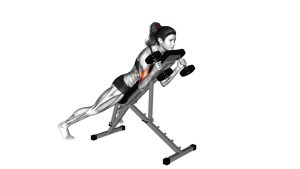
- Set the bench: Adjust an incline bench to a comfortable chest-supported angle that allows your arms to hang naturally downward.
- Anchor the band: Secure the resistance band under your feet, the bench base, or another stable point below you.
- Lie chest-down: Place your chest against the bench pad and let both arms hang straight down under your shoulders.
- Take a neutral grip: Hold the band handles or ends with palms facing each other.
- Brace lightly: Keep your chest planted, shoulders down, neck neutral, and core lightly engaged.
- Start long: Elbows should be extended at the bottom without hyperextending the joints.
Tip: Choose a band that lets you complete full reps with control. If the top is too easy or the bottom is too awkward, adjust your anchor point or band length before starting.
Execution (Step-by-Step)
- Lock in your body position: Keep your chest supported on the bench and your shoulders quiet.
- Curl one arm up: Bring one hand toward your shoulder using a hammer grip, bending only at the elbow.
- Keep the elbow pinned: Do not let the upper arm drift forward or the shoulder take over.
- Squeeze at the top: Pause briefly when your forearm is near vertical and the biceps are fully contracted.
- Lower with control: Resist the band on the way down until the arm returns to near full extension.
- Alternate sides: Repeat the same motion with the other arm while maintaining the same tempo and range.
- Continue evenly: Alternate right and left reps until you finish the set.
Pro Tips & Common Mistakes
- Use a true neutral grip: Keep palms facing each other throughout the set to emphasize the brachialis and brachioradialis.
- Do not swing the band: Momentum reduces arm tension and turns the movement into a sloppy partial curl.
- Control the eccentric: The lowering phase is where a lot of growth stimulus happens, so do not let the band yank your arm down.
- Keep your chest on the pad: Lifting off the bench to cheat the rep defeats the purpose of the incline setup.
- Watch elbow position: Let the elbows stay under the shoulders instead of drifting forward as fatigue builds.
- Do not overgrip: Squeezing the handles too hard can create unnecessary forearm fatigue before the biceps are fully challenged.
- Match both sides: Use the same range of motion and tempo on each arm to avoid developing imbalances.
FAQ
What muscles does the Band Incline Alternate Hammer Curl work?
It primarily targets the brachialis, while also training the biceps brachii, brachioradialis, and other forearm flexors. The neutral grip shifts some focus away from a pure biceps peak and toward overall upper-arm thickness.
Why use an incline bench for hammer curls?
The incline bench provides chest support, reduces cheating, and helps keep your torso stable. This makes it easier to focus on strict elbow flexion and feel the working arm muscles more clearly.
Is this better with bands or dumbbells?
Both can work well. Bands provide increasing resistance as you curl upward, while dumbbells provide a more traditional loading curve. Bands are excellent for home training, joint-friendly tension, and high-rep arm work.
Should I curl both arms together or alternate them?
Alternating reps can improve control and mind-muscle connection because you can focus on one side at a time. It also gives the opposite arm a brief recovery window without fully ending the set.
How heavy should the band be?
Choose a band that allows full range of motion and a clean top squeeze without forcing you to swing or shorten the rep. If your elbows drift badly or the eccentric is uncontrolled, the band is too strong.
Recommended Equipment
- Resistance Bands with Handles — ideal for comfortable hammer-grip curls and adjustable band resistance
- Adjustable Incline Weight Bench — gives you a stable chest-supported setup for stricter arm training
- Door Anchor for Resistance Bands — useful when you need a secure and repeatable band anchor point
- Exercise Mat — adds floor protection and stability when setting up home workouts
- Lifting Straps / Grip Aids — optional if grip fatigue limits your arm training before the target muscles are challenged
Tip: For most people, the best investment is a good band set plus a solid adjustable bench. That combination opens up far more than just curls.