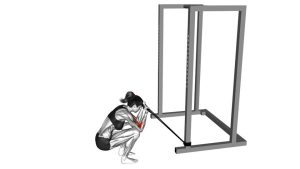
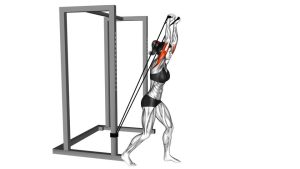
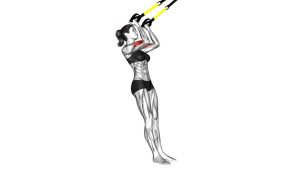
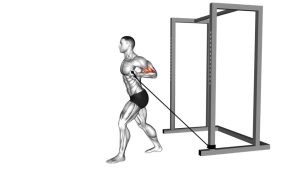
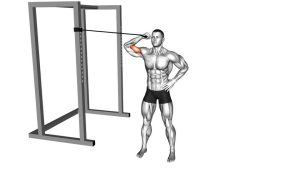
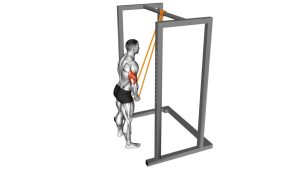
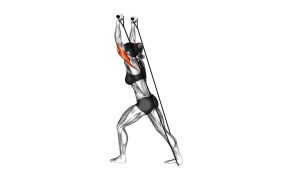
Band Horizontal Biceps Curl: Proper Form, Sets, Tips & FAQ
Learn how to do the Band Horizontal Biceps Curl with proper form for stronger, more defined arms. Includes setup, execution steps, sets and reps by goal, common mistakes, FAQs, and recommended equipment.
Band Horizontal Biceps Curl
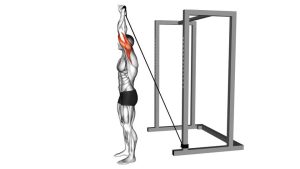
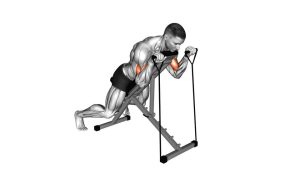
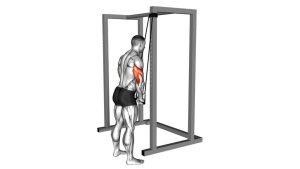
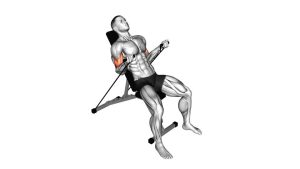
This curl variation works best when you focus on smooth elbow flexion rather than using momentum. The band creates a unique resistance curve that can make the middle and top portions of the rep feel especially demanding. Your goal is to keep tension on the biceps from start to finish while avoiding shoulder shrugging, wrist collapse, or body swing.
Quick Overview
| Body Part | Biceps |
|---|---|
| Primary Muscle | Biceps brachii |
| Secondary Muscle | Brachialis, brachioradialis, and front delts as stabilizers |
| Equipment | Resistance band with handles or loop band with a front anchor point |
| Difficulty | Beginner to Intermediate |
Sets & Reps (By Goal)
- Muscle growth: 3–4 sets × 10–15 reps with controlled tempo and 45–75 sec rest
- General toning: 2–4 sets × 12–20 reps with moderate band tension and 30–60 sec rest
- Warm-up / activation: 2–3 sets × 12–15 reps using a lighter band and perfect form
- Endurance / burn sets: 2–3 sets × 15–25 reps with continuous tension
Progression rule: First increase reps or improve control, then move to a thicker band or step farther from the anchor to raise tension.
Setup / Starting Position
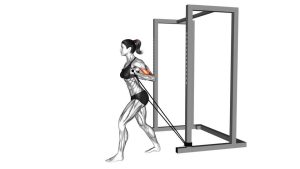
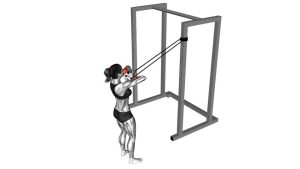
- Anchor the band in front of you: Set the band at about chest height so the resistance pulls horizontally.
- Stand tall: Place your feet about hip- to shoulder-width apart and brace your core lightly.
- Grip the handles or band evenly: Use a supinated grip so your palms face upward.
- Extend the arms forward: Start with the elbows nearly straight and the band already under light tension.
- Set the shoulders: Keep them down and back slightly, without over-arching the lower back.
Tip: Step backward or forward until the start position gives you light tension without pulling you off balance.
Execution (Step-by-Step)
- Lock in posture: Stand upright with your chest up, ribs stacked, and eyes forward.
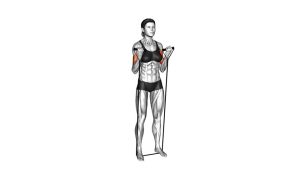
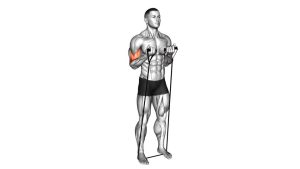
- Start the curl: Bend the elbows and pull the handles toward your shoulders in a smooth arc.
- Keep elbows controlled: Let them stay close to their original position instead of swinging excessively forward or backward.
- Squeeze at the top: Pause briefly when your biceps are fully contracted.
- Lower slowly: Extend the arms back to the start under control without letting the band snap you forward.
Pro Tips & Common Mistakes
- Use full control: The slower you control the lowering phase, the more useful tension the biceps get.
- Keep wrists neutral: Avoid bending the wrists backward as the band tension rises.
- Do not swing: If your hips or torso start helping too much, the band is likely too heavy.
- Keep steady elbow position: Small movement is normal, but excessive shoulder involvement reduces biceps isolation.
- Choose the right band tension: Too little tension makes the movement easy; too much encourages cheating.
- Train through a consistent range: Repeat the same clean motion each rep instead of shortening the top half only.
FAQ
What makes the Band Horizontal Biceps Curl different from a regular band curl?
The main difference is the horizontal line of resistance. Instead of pulling mostly downward, the band pulls forward, which changes how tension feels across the rep and can keep the biceps working hard through the curl.
Where should I feel this exercise most?
You should mainly feel it in the biceps, with some assistance from the brachialis and forearms. If you mostly feel your shoulders or lower back, adjust the tension and improve your posture.
Can beginners use this exercise?
Yes. Beginners can use a lighter band and focus on smooth reps, stable elbows, and controlled lowering. It is a practical home-friendly curl variation when done with good setup.
How do I make this exercise harder?
You can use a stronger band, step farther away from the anchor, add a pause at peak contraction, or slow down the eccentric phase to increase time under tension.
Can I use this exercise for arm growth?
Yes. It can be effective for hypertrophy when you train close to fatigue with enough weekly volume, use progressive overload, and maintain clean technique.
Recommended Equipment
- Resistance Bands Set — ideal for adjustable tension and a wider range of upper-body exercises
- Door Anchor for Resistance Bands — useful for creating a safe horizontal pulling angle at home
- Resistance Band Handles — can improve comfort and grip during repeated curl sets
- Workout Gloves — helpful for grip comfort and palm protection during band work
- Exercise Mat — useful for a stable workout space and pairing with other home exercises
Tip: Prioritize a durable band and a secure anchor first. Those two items make the biggest difference for this exercise.