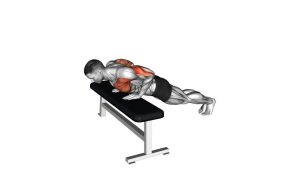
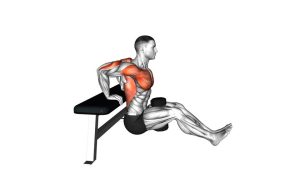
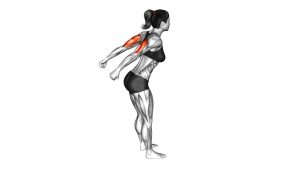
Bench Triceps Dip (Leg-Supported): Proper Form, Sets, Muscles Worked & FAQ
Learn how to perform the Bench Triceps Dip (Leg-Supported) with proper form for stronger triceps and upper-arm development. Includes setup, step-by-step execution, sets by goal, mistakes, FAQs, and recommended equipment.
Bench Triceps Dip (Leg-Supported)
This movement is best performed with a smooth tempo and a moderate range of motion. You should feel the exercise mostly in the back of the upper arms, with the legs helping to reduce difficulty when needed. The goal is not to sink as low as possible, but to maintain clean elbow mechanics and steady shoulder positioning throughout each rep.
Quick Overview
| Body Part | Triceps |
|---|---|
| Primary Muscle | Triceps brachii |
| Secondary Muscle | Anterior deltoids, chest, forearms, core stabilizers |
| Equipment | Bench or sturdy platform, bodyweight |
| Difficulty | Beginner to Intermediate, depending on leg assistance and range of motion |
Sets & Reps (By Goal)
- Muscle building: 3–4 sets × 8–15 reps, 45–75 seconds rest
- General strength/endurance: 2–4 sets × 10–20 reps, 30–60 seconds rest
- Beginner control practice: 2–3 sets × 6–10 reps with shallow depth and slow tempo
- Finisher / burnout: 1–2 sets close to technical fatigue with strict form
Progression rule: First increase rep quality, then reps, then reduce leg assistance or elevate the feet only when shoulder comfort and control remain solid.
Setup / Starting Position
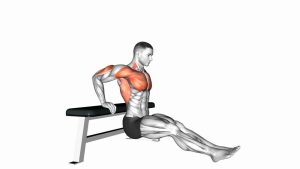
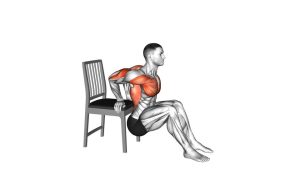
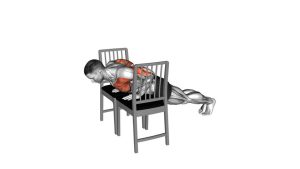
- Place your hands on the bench: Sit on the edge of a sturdy bench and put your palms beside your hips with fingers pointing forward.
- Move your hips off the bench: Slide forward so your glutes are just in front of the bench edge.
- Set your legs: Extend your legs forward with heels on the floor, or bend the knees slightly to make the movement easier.
- Brace your upper body: Keep the chest lifted, shoulders controlled, and elbows pointing mostly backward.
- Start tall: Arms are straight, body stays close to the bench, and core is lightly engaged.
Tip: The farther your feet are from the bench and the straighter your legs, the more challenging the exercise becomes.
Execution (Step-by-Step)
- Begin the descent: Bend your elbows and lower your body straight down while staying close to the bench.
- Keep the elbows tracking back: Avoid letting them flare excessively to the sides.
- Lower under control: Descend until your elbows reach roughly 90 degrees, or slightly less if your shoulders feel strained.
- Pause briefly: Maintain tension at the bottom without collapsing into the shoulders.
- Press back up: Extend your elbows and drive through your palms until you return to the top position.
- Reset and repeat: Keep the shoulders stable and avoid bouncing between reps.
Pro Tips & Common Mistakes
- Stay close to the bench: Letting the body drift too far forward increases shoulder stress.
- Do not chase extreme depth: Lowering too deep often shifts tension away from the triceps and into the shoulders.
- Use your legs intelligently: More leg assistance makes the exercise safer and more manageable for beginners.
- Control both directions: Avoid dropping quickly and avoid explosive lockouts that remove tension.
- Keep shoulders packed: Do not shrug excessively or let the shoulders collapse forward at the bottom.
- Prioritize elbow extension: Think about pushing through the palms and straightening the arms with the triceps.
FAQ
What muscles do bench triceps dips work the most?
Bench triceps dips primarily target the triceps brachii. They also involve the front shoulders, chest, forearms, and stabilizing muscles of the upper body.
Are bench dips good for beginners?
Yes, they can be beginner-friendly when done with leg support and a controlled, shallow range of motion. Bent knees make the exercise easier and more manageable.
How deep should I go on bench triceps dips?
A good guideline is to lower until your elbows reach about 90 degrees. Going deeper is not always better and can increase strain on the shoulders.
Why do I feel bench dips more in my shoulders than my triceps?
That usually happens when you go too deep, let the body drift too far from the bench, or lose shoulder control. Reduce depth, stay close to the bench, and keep the elbows tracking backward.
How can I make bench triceps dips harder?
You can straighten the legs fully, elevate the feet on another bench, slow the tempo, or add external load on the lap. Only progress once your shoulder comfort and technique are solid.
Recommended Equipment
- Adjustable Weight Bench — a stable bench gives you a safer and more reliable setup for dips and other upper-body work
- Resistance Bands Set — useful for warm-ups, triceps activation, and complementary arm training
- Exercise Mat — adds comfort for heel contact and improves your workout area setup
- Wrist Wraps — can help improve wrist comfort during repeated bodyweight pressing movements
- Dip Belt / Loading Belt — for advanced trainees who want to increase difficulty once bodyweight reps become easy
Tip: For most people, a stable bench and strict technique matter more than adding load. Build control first, then progress gradually.