Close-Grip Push-Up: Proper Form, Sets, Muscles Worked & FAQ
Learn how to do the Close-Grip Push-Up with proper form to target the triceps, chest, and shoulders. Includes setup, step-by-step execution, sets by goal, common mistakes, FAQs, and recommended equipment.
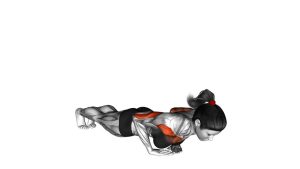
Close-Grip Push-Up
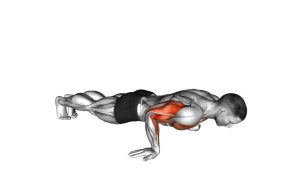
This exercise works best when each rep is performed with tight body alignment, tucked elbows, and a smooth pressing tempo. You should feel strong effort in the triceps and front of the upper body, while the core stays braced to prevent the hips from sagging. If your shoulders roll forward, elbows flare, or your lower back starts arching, reduce the range or regress the movement.
Quick Overview
| Body Part | Triceps |
|---|---|
| Primary Muscle | Triceps brachii |
| Secondary Muscle | Chest, anterior deltoids, serratus anterior, core stabilizers |
| Equipment | Bodyweight only (optional: push-up handles, mat, weighted vest, resistance bands) |
| Difficulty | Beginner to Intermediate depending on strength and variation used |
Sets & Reps (By Goal)
- Technique practice: 2–4 sets × 5–8 reps with slow, controlled tempo
- Muscle building: 3–4 sets × 8–15 reps, stopping 1–2 reps before form breaks
- Strength endurance: 2–4 sets × 12–20 reps with clean lockout and full-body tension
- Advanced overload: 3–5 sets × 6–12 reps using a weighted vest or band resistance
Progression rule: First improve range, body control, and rep quality. Then add reps, tempo pauses, band resistance, or light external load only when you can keep the elbows tucked and the torso rigid.
Setup / Starting Position
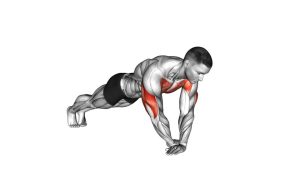
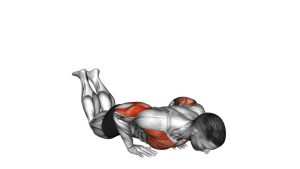
- Start in a high plank: Place your hands under the shoulders or slightly narrower, with fingers spread for stability.
- Set body alignment: Keep the head, shoulders, hips, knees, and heels in one straight line.
- Brace the core: Tighten the abs and glutes so the torso does not sag during the rep.
- Tuck the elbows: Turn the elbow pits slightly forward and keep the elbows tracking close to the ribs.
- Neutral neck: Look slightly ahead of the hands, not straight down or craned upward.
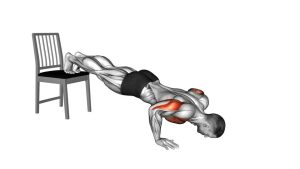
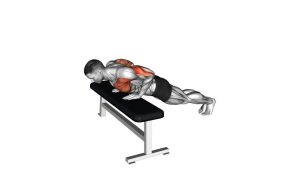
Tip: If floor reps are too hard, elevate the hands on a bench or box to practice the same mechanics with less load.
Execution (Step-by-Step)
- Lock in the plank: Start with your body rigid and shoulders stacked over the hands.
- Lower under control: Bend the elbows and bring the chest toward the floor while keeping the elbows tucked close to the torso.
- Maintain full-body tension: Do not let the hips drop or the lower back arch as you descend.
- Reach the bottom position: Lower until your chest is just above the floor or until you reach your strongest pain-free range.
- Press back up: Drive through the palms, extend the elbows, and return to the top without losing alignment.
- Reset briefly: Stabilize at the top before beginning the next rep.
Pro Tips & Common Mistakes
- Keep elbows close: This is the main feature that makes the movement more triceps-focused than a standard push-up.
- Use full-body tension: Squeeze the glutes and brace the abs to protect the lower back and improve force transfer.
- Lower with control: A slow eccentric helps improve pressing mechanics and upper-arm tension.
- Avoid flaring the elbows: Elbows shooting outward shifts emphasis away from the triceps and can stress the shoulders.
- Do not shorten the range: Half reps reduce the training effect unless used intentionally for a specific overload method.
- Watch wrist comfort: If flat palms bother your wrists, push-up handles can create a more neutral wrist position.
- Do not let the hips sag: A broken plank often means the set has gone too far.
FAQ
What muscles does the close-grip push-up work most?
The triceps are the primary movers, with support from the chest, front delts, and core stabilizers. The tucked elbow position is what increases upper-arm involvement.
Is the close-grip push-up better for triceps than a regular push-up?
It is usually more triceps-focused than a standard push-up because the narrower arm path places greater demand on elbow extension. A regular push-up still trains the triceps, but not as directly.
What if I cannot do full floor reps yet?
Start with incline close-grip push-ups using a bench, box, or sturdy elevated surface. This reduces the load while letting you practice the same setup and elbow path.
Should my hands touch each other?
Not necessarily. For most people, placing the hands slightly narrower than shoulder width is more comfortable and sustainable than forcing them together. The key is tucked elbows and good joint alignment, not an extreme hand position.
How can I make this exercise harder?
You can slow the lowering phase, add pause reps, wear a weighted vest, loop a resistance band across the upper back, or increase total training volume once your form is consistent.
Recommended Equipment (Optional)
- Push-Up Handles — help create a more neutral wrist position and may improve comfort during higher-volume sets
- Exercise Mat — adds comfort for hands, knees, and general floor training
- Resistance Bands Set — useful for progressive overload, warm-ups, and pairing with other triceps movements
- Weighted Vest — effective for making close-grip push-ups more challenging once bodyweight reps become easy
- Wrist Wraps — optional support tool for lifters who want more wrist stability during pressing work
Tip: Choose tools that improve comfort, consistency, and progressive overload—not tools that force poor joint positions.