Resistance Band Wide Stance Anti-Rotation Chop: Form, Sets, Tips & FAQ
Learn the Resistance Band Wide Stance Anti-Rotation Chop for stronger obliques, better core stability, and improved rotational control. Includes setup, step-by-step execution, sets by goal, common mistakes, FAQ, and recommended equipment.
Resistance Band Wide Stance Anti-Rotation Chop
This exercise works best when you think “move the arms, brace the torso”. The band creates sideways tension, and your job is to keep the ribs, hips, and shoulders controlled while performing the chop. You should feel your obliques and midsection working to prevent unnecessary twisting, leaning, or rib flare.
Quick Overview
| Body Part | Core |
|---|---|
| Primary Muscle | Obliques |
| Secondary Muscle | Transverse abdominis, rectus abdominis, glutes, shoulders |
| Equipment | Resistance band with anchor point |
| Difficulty | Beginner to Intermediate |
Sets & Reps (By Goal)
- Core stability: 2–4 sets × 8–12 reps per side
- Movement control / warm-up: 2–3 sets × 6–10 reps per side with slow tempo
- General strength endurance: 3–4 sets × 10–15 reps per side
- Athletic trunk control: 3 sets × 8–10 reps per side with a 1–2 second pause at full extension
Progression rule: Increase tension gradually, then add reps, then slow the tempo. Do not progress load if you start rotating through the torso or shifting through the hips.
Setup / Starting Position
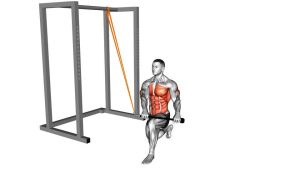
- Anchor the band: Set the resistance band at about chest to shoulder height on one side of your body.
- Take a wide stance: Stand with your feet wider than shoulder-width for a more stable base.
- Turn side-on to the anchor: Your body should be positioned so the band is pulling from your side, not directly in front of you.
- Grip the band with both hands: Hold the handle or band firmly with arms slightly bent and hands near the side closest to the anchor.
- Brace your torso: Keep ribs down, spine neutral, knees softly bent, and hips square. Avoid leaning toward the anchor.
Tip: Think of your lower body as the “base” and your core as the “brake.” The wider stance helps reduce wobbling so your abs can do the real work.
Execution (Step-by-Step)
- Start under tension: Step away from the anchor until the band has light to moderate tension.
- Lock in your posture: Keep your chest tall, core braced, shoulders relaxed, and pelvis stable.
- Begin the chop: Move your hands diagonally across your body in a controlled chopping path.
- Resist rotation: As the band tries to twist your torso, fight to keep your trunk square and steady.
- Finish with control: Reach the end range without collapsing, leaning, or turning through the hips.
- Pause briefly: Hold the end position for 1 second to reinforce anti-rotation control.
- Return slowly: Let the hands travel back to the start under control while resisting the pull of the band.
- Repeat evenly: Complete all reps on one side, then switch sides.
Pro Tips & Common Mistakes
- Brace before you move: Set your ribs and abs before starting each rep.
- Use a wide, grounded stance: Push your feet into the floor to create full-body stability.
- Keep the movement smooth: Avoid snapping the band or rushing the return phase.
- Arms move, torso resists: The hands travel; the trunk stays disciplined.
- Don’t lean sideways: Side bending is a common compensation when the band is too strong.
- Avoid over-rotating: Too much torso turn takes stress away from the anti-rotation demand.
- Keep hips quiet: Don’t pivot the feet or sway through the pelvis to cheat the rep.
- Start lighter than you think: Better tension control beats sloppy heavy reps.
FAQ
What does the anti-rotation chop train?
It mainly trains the obliques and deep core muscles to resist unwanted twisting while the arms move against band tension.
Should I rotate my torso during this exercise?
No. A small amount of natural movement may happen, but the main goal is to resist rotation, not create it.
Why use a wide stance?
The wide stance gives you a more stable base so you can focus on core control, balance, and resisting the sideways pull of the band.
Where should I feel this exercise?
You should mainly feel your obliques, abs, and trunk stabilizers working. You may also feel the glutes and shoulders supporting the position.
Is this good for beginners?
Yes, as long as the resistance stays manageable. Start with a lighter band and focus on posture, breathing, and control before increasing tension.
Recommended Equipment
- Resistance Bands Set with Door Anchor — the most practical setup for home anti-rotation chops and other standing band drills
- Resistance Band Door Anchor — useful if you already own bands and only need a secure anchor point
- Single D-Handle Cable Attachment — helpful for a more comfortable grip when doing chops, presses, and anti-rotation work
- Exercise Mat — adds traction and comfort for home workouts, especially on hard or slippery floors
- Resistance Band Set with Handles — a good option if you want smoother hand positioning and more exercise variety
Tip: Choose a band tension that lets you stay square through the torso. If the resistance forces you to twist, step closer to the anchor or use a lighter band.