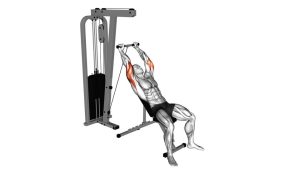
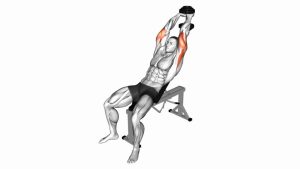
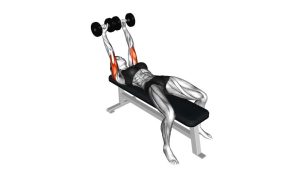
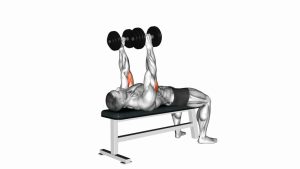
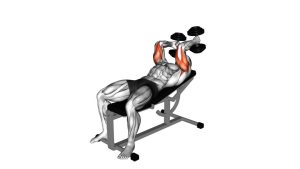
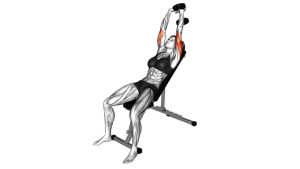
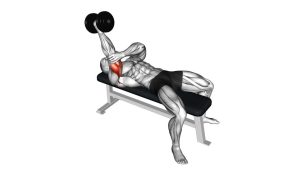
Barbell Lying Triceps Extension (Skull Crusher): Form, Sets, Tips & FAQ
Learn the Barbell Lying Triceps Extension, also called the Skull Crusher, to build stronger triceps with better elbow control. Includes form tips, sets by goal, setup, common mistakes, FAQs, and recommended equipment.
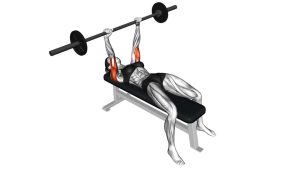
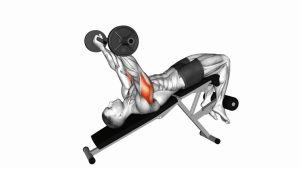
Barbell Lying Triceps Extension (Skull Crusher)
This movement works best when you lower the bar with patience, keep your elbows from drifting excessively, and let the triceps do the work. You should feel strong tension through the back of the upper arms, not discomfort in the wrists, shoulders, or elbows. A slightly tucked elbow position and a steady bar path will usually make the exercise feel smoother and more joint-friendly.
Quick Overview
| Body Part | Triceps |
|---|---|
| Primary Muscle | Triceps brachii (especially the long head) |
| Secondary Muscle | Anconeus, forearms, shoulder stabilizers |
| Equipment | Barbell or EZ curl bar, flat bench, weight plates, collars |
| Difficulty | Intermediate |
Sets & Reps (By Goal)
- Muscle growth: 3–4 sets × 8–12 reps with controlled lowering and 60–90 sec rest
- Strength support for pressing: 3–5 sets × 5–8 reps with heavier load and 90–120 sec rest
- Technique practice: 2–3 sets × 10–15 reps with lighter weight and perfect elbow control
- Finisher / arm pump: 2–3 sets × 12–15 reps with smooth tempo and short rest
Progression rule: Add weight only when you can keep the bar path controlled, avoid elbow flare, and complete all reps without bouncing or shortening the range.
Setup / Starting Position
- Lie flat on a bench: Keep your head, upper back, and glutes supported, with feet planted firmly on the floor.
- Grip the bar securely: Use a shoulder-width or slightly narrower grip. Many lifters prefer an EZ curl bar for wrist comfort.
- Start above the upper chest: Press or position the bar so your arms are extended and the bar is stable above you.
- Set the elbows: Keep the upper arms mostly still and angled so the elbows can bend without drifting excessively.
- Brace lightly: Keep your wrists neutral, ribs down, and shoulders packed so the rep stays controlled.
Tip: A small backward angle of the upper arms can help keep tension on the triceps and reduce the tendency to rest at the top.
Execution (Step-by-Step)
- Begin from lockout: Hold the bar steady with straight arms above the chest or slightly behind it.
- Bend at the elbows: Lower the bar slowly toward the forehead or just behind the head, depending on your preferred variation.
- Keep upper arms stable: Avoid turning the rep into a press by minimizing shoulder movement during the descent.
- Reach the bottom under control: Stop when you feel a strong triceps stretch and can still maintain clean elbow alignment.
- Extend the elbows: Drive the bar back up by contracting the triceps until your arms are straight again.
- Reset and repeat: Stabilize the top position briefly before starting the next rep.
Pro Tips & Common Mistakes
- Use a controlled eccentric: The lowering phase should be deliberate, not rushed.
- Do not flare the elbows early: Keeping them reasonably tucked helps maintain triceps tension.
- Do not turn it into a close-grip press: Too much shoulder movement reduces isolation.
- Choose the right bar: An EZ curl bar often feels better on the wrists and elbows than a straight bar.
- Keep wrists stacked: Avoid letting the wrists fold backward under the load.
- Use a full but safe range: Lower deep enough for tension, but not so far that you lose control.
- Train with moderate loads first: This exercise rewards precision more than ego lifting.
FAQ
What muscles do skull crushers work the most?
Skull crushers primarily target the triceps brachii, with strong emphasis on the long head because of the shoulder position and elbow-extension pattern.
Should I lower the bar to my forehead or behind my head?
Both are valid. Lowering slightly behind the head often increases stretch and can feel smoother on the elbows, while lowering toward the forehead is the classic version. Use the path that feels strongest and safest for you.
Is an EZ curl bar better than a straight bar?
For many lifters, yes. An EZ curl bar usually places the wrists in a more natural angle, which can make the exercise more comfortable without changing the basic training effect.
How heavy should I go on barbell lying triceps extensions?
Use a load you can control for the full range without losing elbow position. This exercise is usually more productive with strict, moderate loading than with very heavy sloppy reps.
What is the biggest mistake in this exercise?
The most common mistake is letting the rep become a hybrid press by moving the shoulders too much and losing the isolation effect on the triceps.
Recommended Equipment (Optional)
- Olympic EZ Curl Bar — often more wrist-friendly than a straight bar for skull crushers
- Adjustable Weight Bench — provides a stable setup for lying triceps extensions and other upper-body lifts
- Olympic Barbell Collars — helps keep plates secure during controlled reps
- Lifting Wrist Wraps — useful for extra wrist support if straight-bar work feels uncomfortable
- Olympic Weight Plates — allows steady loading and progression over time
Tip: If elbow comfort is your main issue, try an EZ curl bar first before increasing load.