Cable Lying Curl: Proper Form, Muscles Worked, Sets, Tips & FAQ
Learn how to do the Cable Lying Curl with proper form to build stronger biceps through a full range of motion. Includes muscles worked, setup, step-by-step execution, sets and reps by goal, common mistakes, FAQs, and recommended equipment.
Cable Lying Curl
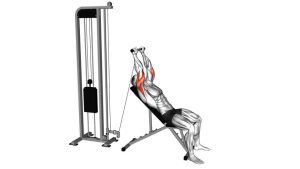
The Cable Lying Curl is especially useful for lifters who want a more controlled alternative to standing curls. Because your torso is supported by the bench, it becomes harder to cheat with body swing, hip drive, or shoulder movement. That makes the exercise ideal for training the biceps brachii with better precision and tension. Use a weight you can control fully, pause briefly at the top, and avoid letting the elbows drift excessively during the set.
Quick Overview
| Body Part | Biceps |
|---|---|
| Primary Muscle | Biceps brachii |
| Secondary Muscle | Brachialis, brachioradialis, forearm flexors |
| Equipment | Cable machine, flat bench, straight bar or EZ-style cable attachment |
| Difficulty | Beginner to Intermediate |
Sets & Reps (By Goal)
- Muscle growth: 3–4 sets × 8–12 reps with 45–75 seconds rest
- Controlled pump work: 2–4 sets × 12–15 reps with 30–60 seconds rest
- Strength-focused arm training: 3–4 sets × 6–8 reps with 75–90 seconds rest
- Technique practice: 2–3 sets × 10–12 reps using light weight and slower tempo
Progression rule: First improve rep quality, stretch control, and peak contraction. Then add small amounts of weight while keeping the same smooth form and full range of motion.
Setup / Starting Position
- Place the bench correctly: Set a flat bench in line with a low cable so the handle can travel naturally during the curl.
- Choose your attachment: Use a straight bar, EZ-style bar, or similar cable handle that feels comfortable on your wrists.
- Lie flat on the bench: Position yourself face up with your head supported and feet planted firmly on the floor.
- Grip the handle evenly: Take an underhand grip around shoulder width, keeping the wrists straight and secure.
- Start with arms extended: Let the elbows extend fully without aggressively locking them out, and keep tension on the cable from the start.
Tip: Adjust your bench position so the cable path feels smooth and does not pull your shoulders into an awkward angle.
Execution (Step-by-Step)
- Brace and settle: Keep your upper back supported on the bench, chest steady, and shoulders down and back.
- Begin the curl: Bend your elbows to pull the handle upward in a smooth arc while keeping the upper arms as stable as possible.
- Keep tension on the biceps: Avoid jerking the weight or using momentum from the shoulders or torso.
- Squeeze at the top: When the handle reaches the top position, contract the biceps hard for a brief pause.
- Lower slowly: Extend the elbows under control until the arms are nearly straight again and the biceps are fully stretched.
- Repeat without relaxing completely: Move directly into the next rep while maintaining tension and clean mechanics.
Pro Tips & Common Mistakes
- Use control, not momentum: The bench setup is designed to make the curl stricter, so keep every rep smooth.
- Don’t rush the eccentric: Lowering slowly increases tension and improves the training effect.
- Keep wrists neutral: Excessive wrist bending can shift stress away from the biceps and irritate the joints.
- Avoid shoulder takeover: If the front delts start doing too much work, reduce the load and refocus on elbow flexion.
- Train through a full range: Let the biceps lengthen at the bottom and contract fully at the top.
- Don’t overload too early: This exercise works best with clean tension and strong contractions, not sloppy heavy reps.
FAQ
What muscles does the Cable Lying Curl work?
The main target is the biceps brachii. The brachialis, brachioradialis, and some forearm muscles also assist during elbow flexion.
Why do the lying version instead of a standing cable curl?
Lying on the bench reduces body movement and cheating, which makes it easier to isolate the biceps and maintain a more controlled rep path.
Is the Cable Lying Curl good for muscle growth?
Yes. It is excellent for hypertrophy because the cable provides constant tension and the lying setup helps you focus on quality contractions and controlled eccentrics.
Should I use a straight bar or EZ attachment?
Both can work well. A straight bar may feel more direct on the biceps, while an EZ-style attachment can feel more comfortable for some lifters with wrist sensitivity.
How heavy should I go on this exercise?
Choose a weight that allows full control, a strong squeeze at the top, and a slow lowering phase. If your elbows drift too much or you start using momentum, go lighter.
Recommended Equipment
- Flat Weight Bench — provides stable support for strict lying curl setup and better body positioning
- Cable Machine / Functional Trainer — the main station needed to create smooth constant resistance for the movement
- EZ Curl Cable Attachment — a wrist-friendly handle option for cable curling variations
- Straight Bar Cable Attachment — useful for traditional underhand cable curls with a direct grip feel
- Lifting Straps — optional for lifters whose grip fatigues before the biceps during higher-rep sets
Tip: Prioritize a comfortable attachment and a smooth cable path. Small setup changes can make a big difference in how well you feel the biceps working.