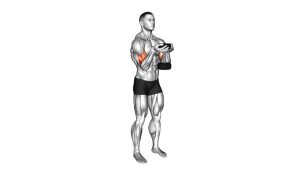
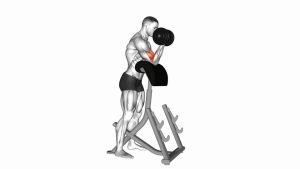
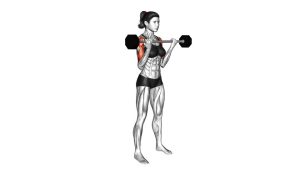
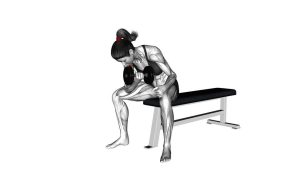
Bottle-Weighted Alternate Biceps Curl: Form, Muscles Worked, Sets, Tips & FAQ
Learn how to do the Bottle-Weighted Alternate Biceps Curl with proper form. Discover muscles worked, setup tips, sets and reps by goal, common mistakes, FAQs, and recommended equipment.
Bottle-Weighted Alternate Biceps Curl
This variation is ideal for home workouts, beginners, or anyone who wants an accessible way to train the arms without traditional dumbbells. The key is to move the bottle in a smooth arc while keeping the elbow close to the torso. Avoid swinging, shrugging, or leaning back to lift the weight. A controlled curl with a steady lowering phase will train the biceps far better than using momentum.
Quick Overview
| Body Part | Biceps |
|---|---|
| Primary Muscle | Biceps brachii |
| Secondary Muscle | Brachialis, brachioradialis, forearm flexors |
| Equipment | Two filled bottles or jugs, bench/box/chair |
| Difficulty | Beginner |
Sets & Reps (By Goal)
- Muscle building: 3–4 sets × 8–15 reps per arm, 45–75 sec rest
- Endurance / toning: 2–4 sets × 15–20 reps per arm, 30–45 sec rest
- Beginner technique practice: 2–3 sets × 8–10 reps per arm, light weight, slow tempo
- Home workout finisher: 2–3 sets × 12–15 reps per arm with strict form and short rest
Progression rule: First improve control and full range of motion. Then increase reps, slow the lowering phase, or use slightly heavier bottles before adding sloppy momentum.
Setup / Starting Position
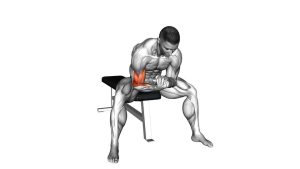
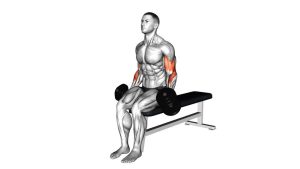
- Sit tall: Sit on a bench, box, or sturdy chair with feet flat on the floor.
- Hold a bottle in each hand: Let the arms hang naturally at your sides.
- Set posture: Keep your chest up, shoulders down, and core lightly braced.
- Keep elbows close: Your elbows should stay near your torso throughout the movement.
- Start neutral: Begin with both arms extended and wrists straight.
Tip: Sitting down helps reduce cheating and makes it easier to keep tension on the biceps instead of using the hips or lower back.
Execution (Step-by-Step)
- Brace and stay tall: Keep your spine neutral and shoulders relaxed.
- Curl one bottle upward: Flex the elbow and bring the bottle toward shoulder height in a controlled motion.
- Keep the elbow pinned: Avoid letting the elbow drift far forward as you lift.
- Squeeze at the top: Pause briefly when the biceps are fully contracted.
- Lower slowly: Return the bottle to the starting position under control.
- Alternate sides: Perform the same motion with the opposite arm while the first arm stays down.
- Repeat for reps: Continue alternating until both arms complete the target number of reps.
Pro Tips & Common Mistakes
- Use full control: Lift smoothly and lower even more slowly to increase tension on the biceps.
- Keep wrists neutral: Don’t bend the wrist backward to “help” the bottle up.
- Don’t swing: Avoid rocking the torso or using the shoulders to create momentum.
- Keep elbows close to the body: Excess elbow travel shifts tension away from the biceps.
- Match both sides: Alternate evenly and avoid rushing the weaker arm.
- Choose balanced bottles: Uneven or unstable homemade weights can disrupt form.
FAQ
Is a bottle-weighted biceps curl effective?
Yes. As long as the bottle provides enough resistance and you perform the curl with control, it can be an effective home-based biceps exercise, especially for beginners.
Should I do this exercise seated or standing?
Both can work, but the seated version usually makes it easier to reduce swinging and keep the focus on the biceps.
How heavy should the bottles be?
Use a weight you can curl without leaning back, shrugging, or jerking the bottle upward. You should be able to control both the lifting and lowering phases.
Do I curl both arms at the same time?
In this variation, you alternate arms. One arm curls while the other stays down, which can help improve focus and control on each side.
Where should I feel this exercise most?
You should feel it mainly in the front of the upper arm, especially the biceps. The forearms will also assist with gripping and stability.
Recommended Equipment
- Adjustable Dumbbells — a convenient upgrade when bottle weights become too light
- Adjustable Workout Bench — provides a more stable seat for strict seated curls
- Resistance Bands Set — useful for adding extra arm training variety at home
- Workout Gloves — can improve grip comfort when using smooth bottles or handles
- Durable Weighted Water Bottles / Handled Bottles — practical household tools that can double as light training resistance
Tip: Household items work well for beginners, but consistent strength progress is usually easier once you move to more stable and adjustable resistance.