Dumbbell Seated Side Bend: Form, Sets, Tips & FAQ
Learn the Dumbbell Seated Side Bend to train obliques with strict seated form, controlled reps, setup cues, common mistakes, FAQs, and gear.
Dumbbell Seated Side Bend
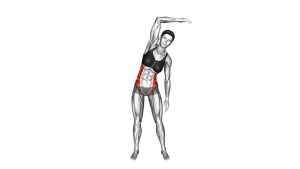
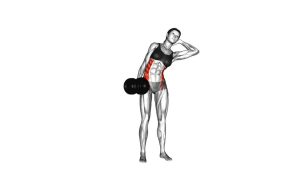
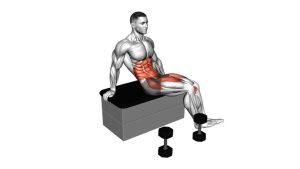
This exercise works best when the dumbbell hangs naturally at the side and the torso moves in a clean side-bending path. In the video, the lifter stays seated, keeps the hips planted, lowers the dumbbell beside the thigh, and then returns to a tall upright position without twisting. As a result, the movement targets the side of the waist while still demanding posture, balance, and trunk control.
Quick Overview
| Body Part | Core |
|---|---|
| Primary Muscle | Obliques |
| Secondary Muscle | Quadratus lumborum, deep core stabilizers, erector spinae |
| Equipment | Dumbbell and stable bench or chair |
| Difficulty | Beginner to Intermediate |
Sets & Reps (By Goal)
- Technique practice: 2–3 sets × 8–10 reps per side with a light dumbbell.
- Core strength: 3–4 sets × 10–12 reps per side with slow control.
- Muscle endurance: 2–4 sets × 12–20 reps per side using a moderate tempo.
- Warm-up activation: 1–2 sets × 8–12 reps per side before heavier core or lower-body work.
Progression rule: Add reps first, then add a slightly heavier dumbbell. However, never increase load if the torso starts rotating or the shoulder begins pulling the weight.
Setup / Starting Position
- Sit tall: Sit on a stable bench or chair with your feet planted and hips steady.
- Hold one dumbbell: Let the dumbbell hang beside one thigh with the arm relaxed.
- Set your posture: Keep the chest open, shoulders level, and spine long before moving.
- Brace lightly: Engage your core enough to control the torso without holding your breath.
- Keep the opposite side quiet: Rest the free hand comfortably so it does not push or pull the body.
Start with a light dumbbell. Since this movement loads the side of the trunk, strict control is more important than heavy weight.
Execution (Step-by-Step)
- Begin upright: Sit tall with the dumbbell hanging naturally at your side.
- Bend toward the dumbbell: Slowly lower the dumbbell down the side of your thigh by bending your torso sideways.
- Avoid twisting: Keep your chest facing forward and your shoulders from rotating.
- Control the bottom position: Pause briefly when you feel a controlled stretch through the opposite side of the waist.
- Return to center: Use your obliques to bring your torso back to the upright starting position.
- Reset before the next rep: Re-stack the ribs, shoulders, and head before repeating.
Pro Tips & Common Mistakes
- Move in one plane: Bend sideways only. Do not rotate your torso to chase extra range.
- Use a controlled tempo: Lower for 2–3 seconds, pause briefly, then return smoothly.
- Keep your hips planted: If one hip lifts from the seat, the range is too large or the weight is too heavy.
- Do not shrug: The shoulder holding the dumbbell should stay relaxed, not pulled up toward the ear.
- Avoid leaning backward: Stay tall and keep the ribs stacked instead of arching through the low back.
- Train both sides: Complete the same number of reps on each side to maintain balanced core development.
- Prioritize the return: The lifting phase is where the obliques must work hard, so avoid bouncing out of the bottom.
FAQ
What muscles does the Dumbbell Seated Side Bend work?
It mainly works the obliques, especially during the controlled return to upright. Additionally, the quadratus lumborum, erector spinae, and deep core stabilizers help support the trunk.
Should I use one dumbbell or two?
Use one dumbbell. Holding a dumbbell on both sides can counterbalance the movement and reduce the training effect. Therefore, one-side loading is better for targeting lateral core control.
How heavy should the dumbbell be?
Start light enough to keep the torso controlled and the hips planted. If your shoulder shrugs, your body twists, or the dumbbell swings, the weight is too heavy.
Is the seated version easier than the standing side bend?
In many cases, yes. Because you are seated, the lower body has less involvement. As a result, it can be easier to focus on the obliques and keep the movement strict.
Can this exercise reduce love handles?
It can strengthen the muscles around the waist, but it does not directly burn fat from one area. For visible changes, combine core training with full-body strength work, nutrition, and consistent activity.
Should I bend as far as possible?
No. Use a comfortable range that you can control without pain or twisting. A moderate, clean side bend is usually more effective than forcing a deep range with poor form.
Recommended Equipment
- Adjustable Dumbbell — allows easy weight changes as your oblique strength improves.
- Rubber Hex Dumbbell — simple, durable option for strict side bends and other core exercises.
- Flat Weight Bench — provides a stable seated surface for better posture and control.
- Exercise Mat — useful for warm-ups, mobility work, and other core exercises.
- Weightlifting Gloves — may improve grip comfort when holding a dumbbell for higher-rep sets.
Choose equipment that helps you stay stable and controlled. For this exercise, clean technique matters more than using the heaviest dumbbell possible.