Dynamic Plank Mountain Climber: Form, Benefits, Sets, Tips & Core Workout Guide
Learn the Dynamic Plank Mountain Climber for stronger abs, hip flexors, shoulders, and cardio conditioning with proper form, sets, tips, and FAQs.
Dynamic Plank Mountain Climber
This exercise works best when the body stays long and controlled, even as the legs move quickly. Instead of bouncing the hips high or letting the lower back sag, keep your shoulders stacked over your wrists, brace your abs, and drive each knee forward with rhythm. Therefore, the goal is not only speed; it is also clean plank alignment under repeated movement.
Quick Overview
| Body Part | Core |
|---|---|
| Primary Muscle | Rectus abdominis and deep core stabilizers |
| Secondary Muscle | Hip flexors, shoulders, chest, triceps, glutes, and quads |
| Equipment | No equipment required; exercise mat optional |
| Difficulty | Beginner to Intermediate, depending on speed and duration |
Sets & Reps (By Goal)
- Beginner core control: 2–3 sets × 20–30 seconds, slow tempo, 45–60 seconds rest
- Cardio conditioning: 3–5 sets × 30–45 seconds, moderate tempo, 30–45 seconds rest
- Core endurance: 3–4 sets × 40–60 seconds, steady rhythm, 45–75 seconds rest
- HIIT finisher: 4–8 rounds × 20 seconds work / 10 seconds rest
Progression rule: First improve control, then increase time, and finally add speed. If your plank position breaks, reduce the pace before adding more work.
Setup / Starting Position
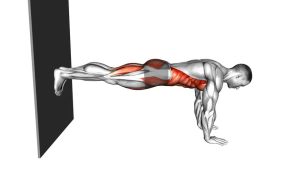
- Start in a high plank: Place your hands under your shoulders with arms straight.
- Extend both legs back: Keep your feet on the floor and your body in one long line.
- Brace your core: Pull your ribs down slightly and tighten your abs before moving.
- Set your shoulders: Push the floor away gently so your upper back stays active.
- Keep your head neutral: Look slightly down, not forward, so your neck stays aligned.
Tip: Use a firm exercise mat if your hands or feet slide. However, avoid soft surfaces that make your wrists unstable.
Execution (Step-by-Step)
- Hold the plank: Begin with shoulders over wrists, hips level, and legs extended.
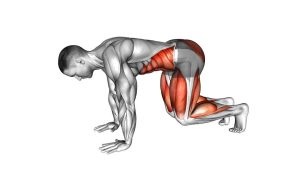
- Drive one knee forward: Bring one knee toward your chest while the opposite leg stays extended.
- Return the foot back: Step or lightly hop the working leg back into the plank position.
- Switch sides: Drive the opposite knee forward while keeping your upper body steady.
- Continue alternating: Move right-left-right-left with a controlled, repeatable rhythm.
- Maintain alignment: Keep your hips from bouncing high, sagging low, or rotating side to side.
Pro Tips & Common Mistakes
- Keep shoulders stacked: Do not let your body drift backward as the knees drive forward.
- Brace before speed: Fast reps only help if your abs stay engaged and your spine stays neutral.
- Avoid hip bouncing: Excessive bouncing reduces core tension and turns the movement sloppy.
- Do not sag your lower back: If your hips drop, shorten the set or slow the tempo.
- Use quiet footwork: Light steps help you control rhythm and reduce joint impact.
- Breathe continuously: Exhale during knee drives and avoid holding your breath.
- Modify when needed: Step the feet instead of hopping if the fast version feels unstable.
FAQ
What muscles do Dynamic Plank Mountain Climbers work?
They mainly train the abs and deep core stabilizers. In addition, the hip flexors drive the knees forward, while the shoulders, chest, triceps, glutes, and legs help hold the plank position.
Are mountain climbers good for cardio?
Yes. Because the legs alternate quickly while the body holds a plank, this exercise can raise heart rate and build conditioning. However, the cardio benefit depends on pace, set length, and overall effort.
Should I do mountain climbers fast or slow?
Start slow until your plank stays stable. Then, gradually increase speed while keeping your hips level and your shoulders stacked. Clean control should come before intensity.
Why does my lower back hurt during mountain climbers?
Lower-back discomfort often happens when the hips sag or the core relaxes. To fix this, shorten the set, slow the reps, brace your abs, and keep your ribs from flaring.
Can beginners do this exercise?
Yes. Beginners can perform a slower step-in version instead of a fast running version. As strength and control improve, the tempo can gradually increase.
Recommended Equipment
- Exercise Mat — adds comfort and grip for hands and feet during plank-based exercises
- Core Sliders — useful for slower sliding mountain climbers and extra core tension
- Push-Up Handles — can reduce wrist extension for people who prefer a neutral grip
- Resistance Bands Set — helpful for pairing mountain climbers with glute, core, and full-body circuits
- Workout Towel — keeps hands dry and helps maintain grip during sweaty cardio sets
Tip: Choose equipment that improves stability instead of making the movement harder too soon. Better grip and control usually lead to better mountain climber form.