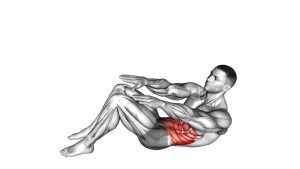
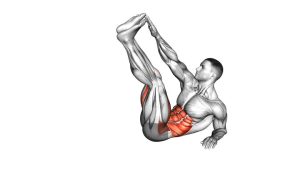
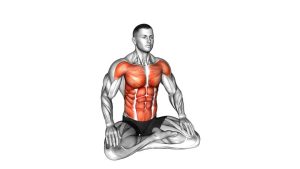
Band Upper Crunch: Proper Form, Sets, Tips & FAQ
Learn the Band Upper Crunch to train your abs with smooth resistance. Includes setup, step-by-step form, sets, mistakes, FAQs, and gear.
Band Upper Crunch
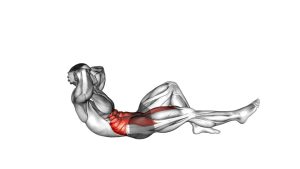
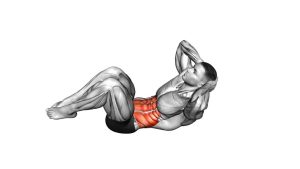
This exercise is best performed with a slow tempo and a small range of motion. Because the band creates extra resistance, the goal is not to pull with the arms or swing the torso upward. Instead, brace the abs, curl the upper spine, pause briefly at the top, and return to the floor with control.
Quick Overview
| Body Part | Core |
|---|---|
| Primary Muscle | Rectus abdominis, especially upper abdominal fibers |
| Secondary Muscle | Deep core stabilizers, obliques, and hip stabilizers |
| Equipment | Resistance band and a secure anchor point |
| Difficulty | Beginner to Intermediate, depending on band resistance |
Sets & Reps (By Goal)
- Core control: 2–3 sets × 8–12 reps with a slow, clean tempo
- Muscle endurance: 3–4 sets × 12–20 reps with moderate band tension
- Ab strength: 3–5 sets × 8–10 reps with stronger band resistance
- Warm-up activation: 1–2 sets × 8–10 reps using light resistance
Progression rule: Add reps first, then increase band tension. However, only progress when you can lift and lower without neck pulling, hip rocking, or momentum.
Setup / Starting Position
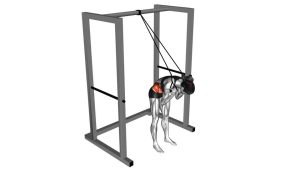
- Anchor the band: Secure the resistance band behind or above your head so it creates tension during the crunch.
- Lie on your back: Bend your knees and keep your feet planted on the floor.
- Hold the band: Grip the band near your head or upper chest with your elbows bent.
- Set your body: Keep your hips stable, ribs controlled, and lower back close to the floor.
- Prepare your neck: Keep the head relaxed and avoid pulling the chin aggressively toward the chest.
Start with light band tension. Then, adjust the anchor distance only after your crunch stays smooth and controlled.
Execution (Step-by-Step)
- Brace your core: Exhale slightly and tighten your abs before lifting.
- Begin the crunch: Curl your head, shoulders, and upper back away from the floor.
- Keep the range short: Lift only high enough to flex the upper spine; do not turn it into a full sit-up.
- Hold the top position: Pause briefly while keeping the abs tight and the band under control.
- Lower slowly: Return your upper back, shoulders, and head to the floor without dropping suddenly.
- Reset with control: Keep light tension in the band before starting the next repetition.
Pro Tips & Common Mistakes
- Use the band as resistance, not a handle: Do not yank yourself upward with your arms.
- Keep the hips quiet: Avoid rocking the pelvis or lifting the feet from the floor.
- Control the lowering phase: The return is just as important as the lift.
- Do not chase height: A short upper crunch targets the abs better than a rushed sit-up motion.
- Relax your neck: Keep the head supported by abdominal control, not by aggressive chin pulling.
- Match resistance to form: If the band makes you jerk, shrug, or lose control, use a lighter band.
FAQ
What muscles does the Band Upper Crunch work?
The exercise mainly works the rectus abdominis, especially the upper abdominal region. It also involves the deep core and obliques for stability.
Is the Band Upper Crunch good for beginners?
Yes, it can be beginner-friendly when the band tension is light. However, beginners should focus on a short range, slow tempo, and clean abdominal contraction before using stronger resistance.
Should I pull the band with my arms?
No. Your hands should hold the band, but your abs should create the crunch. If your arms pull the movement, reduce the resistance and keep your elbows steady.
How high should I lift during the crunch?
Lift only your head, shoulders, and upper back from the floor. The lower back should stay controlled, and the exercise should not become a full sit-up.
Why do I feel this in my neck?
Neck tension usually happens when you pull the head forward, rush the rep, or use too much resistance. Reduce the band tension, keep the movement smaller, and focus on curling from the ribs.
Recommended Equipment
- Resistance Bands Set — useful for adjusting the difficulty of band upper crunches
- Door Anchor for Resistance Bands — helps create a secure band anchor point for floor crunch variations
- Exercise Mat — adds comfort and support while lying on the floor
- Heavy-Duty Resistance Loop Bands — provides stronger resistance for advanced core training
- Ab Workout Mat — supports the lower back during crunch-based floor exercises
Tip: Choose equipment that allows smooth resistance. If the band pulls unevenly or the anchor feels unstable, stop and reset before continuing.