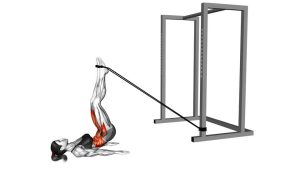
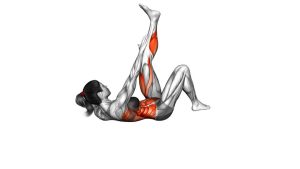
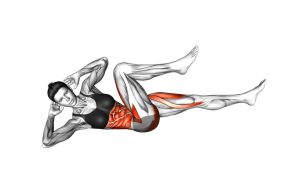
Weighted V-Up Passes with Pad: Core Form, Sets, Tips & FAQ
Learn Weighted V-Up Passes with Pad for abs, hip flexors, and core control. Includes setup, step-by-step form, sets, mistakes, FAQs, and gear.
Weighted V-Up Passes with Pad
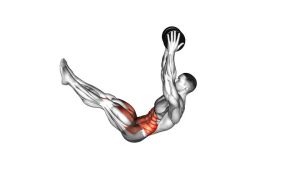
This exercise works best when your body rises and lowers as one connected unit. First, your arms and legs lift together. Then, your torso curls upward as you pass the pad at the top. After that, you lower with control while keeping your core braced. As a result, the movement trains more than simple ab strength; it also builds timing, body control, and tension management through the entire front side of the body.
Quick Overview
| Body Part | Core |
|---|---|
| Primary Muscle | Rectus abdominis |
| Secondary Muscle | Hip flexors, obliques, deep core stabilizers, and upper abs |
| Equipment | Pad, cushion, light medicine ball, or soft weighted object |
| Difficulty | Intermediate to advanced because it requires core strength, mobility, and coordination |
Sets & Reps (By Goal)
- Core control: 2–3 sets × 6–8 controlled reps, resting 60–90 seconds between sets.
- Ab strength: 3–4 sets × 8–12 reps, using a slow lowering phase and clean pad transfers.
- Core endurance: 2–3 sets × 12–16 total passes, using a light pad and steady breathing.
- Workout finisher: 1–2 sets near technical fatigue, stopping before form breaks.
Progression rule: Add reps first. Then, increase the object weight only when you can pass it smoothly without dropping your legs, swinging your arms, or arching your lower back.
Setup / Starting Position
- Lie on your back: Start flat on the floor with your legs extended and together.
- Hold the pad overhead: Keep both arms extended behind your head while holding the pad securely.
- Brace your core: Gently pull your ribs down and keep your lower back controlled against the floor.
- Set your legs: Keep your knees mostly straight, but avoid locking them aggressively.
- Prepare the pass: Keep the pad centered so it can move cleanly from your hands to your feet.
Tip: If your hamstrings feel tight or your lower back lifts early, bend your knees slightly. This makes the exercise easier while keeping the same core pattern.
Execution (Step-by-Step)
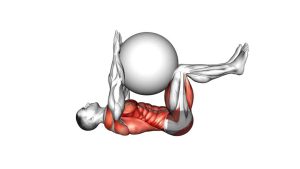
- Lift arms and legs together: Raise your legs and bring your arms forward at the same time.
- Curl into the V position: Lift your upper back from the floor as your legs come upward.
- Pass the pad to your feet: At the top, place the pad between your feet or ankles with control.
- Lower slowly: Extend your arms overhead while your legs lower with the pad.
- Repeat the lift: Raise your arms and legs again, then pass the pad from your feet back to your hands.
- Reset with control: Lower back toward the starting position without dropping your legs or losing core tension.
Pro Tips & Common Mistakes
- Move with control: Smooth reps train your abs better than fast, swinging reps.
- Avoid lower-back arching: If your back lifts off the floor during the descent, reduce the range or use a lighter object.
- Do not throw the pad: Place it from hands to feet and feet to hands with precision.
- Keep the neck relaxed: Look toward the pad, but avoid yanking your head forward.
- Control the bottom position: Do not let your heels slam down after each pass.
- Use a soft object: A pad or cushion is safer than a hard weight when learning the transfer.
- Breathe steadily: Exhale as you rise into the V position, then inhale as you lower with control.
FAQ
What muscles do Weighted V-Up Passes with Pad work?
This exercise primarily targets the rectus abdominis. In addition, it trains the hip flexors, obliques, and deep core stabilizers because your body must lift, pass, and lower the pad under control.
Is this exercise beginner-friendly?
Not usually. Weighted V-Up Passes with Pad require strong core control and coordination. Beginners should start with bent-knee V-ups, dead bugs, tuck-ups, or regular V-ups before adding the pad pass.
Should I use a heavy pad or medicine ball?
Start light. A soft pad, cushion, or very light medicine ball is best because the goal is clean control. Once your form stays consistent, you can slowly increase resistance.
Why does my lower back arch during the movement?
Your lower back may arch if the object is too heavy, your legs lower too far, or your core loses tension. To fix it, reduce the range of motion, bend your knees slightly, and lower more slowly.
How many passes count as one rep?
You can count one full cycle as hands-to-feet and feet-to-hands. However, for easier tracking, many people count every successful transfer as one pass.
Recommended Equipment
- Soft Medicine Ball — useful when you want a slightly more challenging weighted V-up pass.
- Exercise Pad Cushion — a safer soft object for practicing hand-to-foot transfers.
- Thick Exercise Mat — supports your spine and hips during repeated floor-based core work.
- Small Pilates Ball — a light option for learning the pass without adding too much load.
- Core Slider Discs — useful for pairing this exercise with other advanced ab and stability drills.
Tip: Choose soft equipment first. Since this exercise includes a transfer between your hands and feet, a forgiving object helps reduce impact and makes the movement easier to control.