Floor Triceps Dip: Proper Form, Sets, Muscles Worked & FAQ
Learn how to do the Floor Triceps Dip with proper form. Discover muscles worked, setup, step-by-step execution, sets and reps by goal, common mistakes, FAQs, and recommended equipment.
Floor Triceps Dip
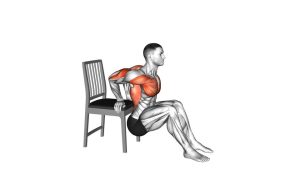
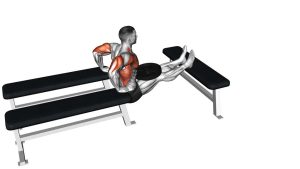
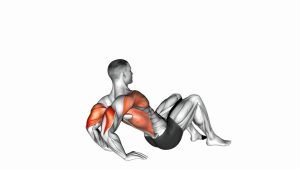
This exercise works best when performed with a slow, controlled tempo and a moderate range of motion. It is especially useful for beginners who want to build arm strength at home without using a bench or dip station. In the video, the movement is performed with bent knees, feet flat on the floor, hands placed behind the hips, and the hips lifting slightly as the elbows bend and extend. Focus on pressing through the palms, keeping the chest open, and letting the triceps do most of the work.
Quick Overview
| Body Part | Arms / Triceps |
|---|---|
| Primary Muscle | Triceps brachii |
| Secondary Muscle | Anterior deltoids, chest (minor assistance), core stabilizers |
| Equipment | Bodyweight only (exercise mat optional) |
| Difficulty | Beginner |
Sets & Reps (By Goal)
- General strength: 3–4 sets × 8–12 reps, 45–75 sec rest
- Muscle endurance: 2–4 sets × 12–20 reps, 30–60 sec rest
- Beginner practice: 2–3 sets × 6–10 reps, slow tempo, 45–60 sec rest
- Warm-up activation: 1–2 sets × 8–12 controlled reps
Progression rule: First improve control and elbow tracking, then add reps. Once the movement feels easy, progress to a greater range of motion, slower eccentrics, bench dips, or dip-bar variations.
Setup / Starting Position
- Sit on the floor: Bend your knees and place your feet flat on the ground about hip-width apart.
- Place your hands behind you: Set your palms on the floor slightly behind the hips, with fingers pointing forward or slightly outward if needed for comfort.
- Lift the chest: Open the chest and keep the shoulders pulled down away from the ears.
- Brace lightly: Engage the core and glutes just enough to stabilize the pelvis.
- Start with straight arms: Press into the hands to lift the hips slightly off the floor or hover just above it.
Tip: Keep the hands close enough to the body that the elbows can bend mostly backward rather than flaring wide.
Execution (Step-by-Step)
- Begin at the top: Support your body with your hands and feet while keeping the arms extended and the chest open.
- Bend the elbows: Lower your hips toward the floor in a slow and controlled motion.
- Keep the elbows back: Let the elbows travel behind you instead of pushing them out to the sides.
- Lower only as far as comfortable: Stop when your triceps are under tension and your shoulders still feel stable.
- Press through the palms: Extend the elbows to raise the hips back up to the start position.
- Repeat smoothly: Maintain rhythm and avoid dropping or bouncing at the bottom.
Pro Tips & Common Mistakes
- Keep the elbows close: This improves triceps emphasis and reduces unnecessary shoulder stress.
- Use a controlled tempo: Lower for about 2 seconds and press up smoothly.
- Do not dip too deep: Going too low can overload the front of the shoulder, especially in beginners.
- Avoid shrugging: Keep the shoulders down and the neck relaxed.
- Keep the chest open: A collapsed torso can make the movement feel awkward and reduce control.
- Modify wrist angle if needed: Slightly turning the hands outward may feel better for some people.
- Do not rush reps: Momentum reduces muscle tension and makes the movement less effective.
FAQ
What muscles does the Floor Triceps Dip work?
The main muscle worked is the triceps brachii. The exercise also involves the front shoulders, chest to a lesser degree, and the core for stability.
Is the Floor Triceps Dip good for beginners?
Yes. It is a beginner-friendly option because it uses bodyweight and a relatively small range of motion. It can be a useful stepping stone before harder dip variations.
Should my hips stay high during the movement?
Not necessarily very high. The key is maintaining control and keeping tension on the triceps while avoiding shoulder discomfort. A small, controlled lift is often enough.
Why do I feel this more in my shoulders than my triceps?
That usually happens when the shoulders roll forward, the hands are placed too far away from the body, or the depth is too aggressive. Bring the hands a bit closer, reduce the range, and keep the chest open.
Can I do this exercise without a bench?
Yes. That is one of the main advantages of the Floor Triceps Dip. It can be done directly on the floor with no bench required.
Recommended Equipment
- Exercise Mat — adds comfort for floor-based arm and bodyweight training
- Tricep Dip Bars / Parallel Bars — useful when progressing from floor dips to harder bodyweight triceps variations
- Foldable Workout Bench — helpful if you want to progress later into bench dips and other upper-body exercises
- Resistance Bands Set — great for triceps warm-ups, pushdowns, and joint-friendly accessory work
- Wrist Support Wraps — useful for people who need extra wrist support during pressing movements
These are practical Amazon categories related to this exercise. Dip-bar listings currently include adjustable parallel-bar options, foldable benches remain widely available, and Amazon also shows broad selections for exercise mats and resistance bands.