Half Jackknife: Proper Form, Core Benefits, Sets, Tips & FAQ
Learn the Half Jackknife to strengthen abs, improve core control, and train hip flexion with step-by-step form, sets, mistakes, FAQs, and gear.
Half Jackknife
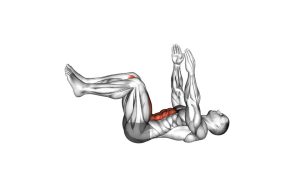
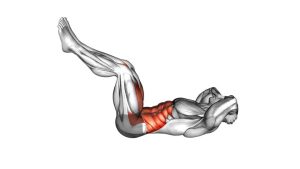
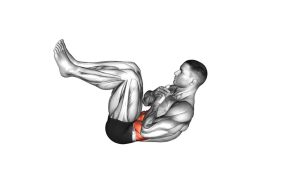
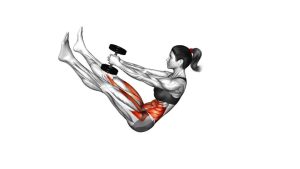
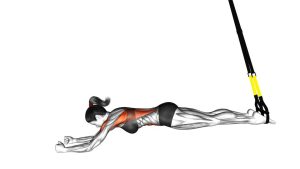
This movement is best performed with a smooth tempo and strict control. The goal is not to swing the arms or kick the legs upward. Instead, the abs should initiate the lift while the hip flexors assist the leg raise. A clean rep starts from a long, extended position, reaches a compact partial V shape, then returns slowly.
Quick Overview
| Body Part | Core |
|---|---|
| Primary Muscle | Rectus abdominis |
| Secondary Muscle | Hip flexors, obliques, transverse abdominis |
| Equipment | No equipment required; optional exercise mat |
| Difficulty | Intermediate |
Sets & Reps (By Goal)
- Core control: 2–3 sets × 8–12 reps with a slow lowering phase.
- Abs strength: 3–4 sets × 10–15 reps with clean form and full control.
- Beginner progression: 2–3 sets × 6–10 reps with bent knees or smaller range.
- Core endurance: 2–4 sets × 12–20 reps using a steady, non-rushed tempo.
Progression rule: Add reps first, then slow the eccentric phase, then increase range. Do not progress if your lower back loses contact or your reps become momentum-based.
Setup / Starting Position
- Lie on your back: Start on a mat with your body long and your legs extended.
- Reach the arms overhead: Keep the arms long without shrugging the shoulders.
- Brace the core: Gently pull the ribs down and keep the lower back controlled.
- Set the legs: Keep the legs straight or slightly bent if your hamstrings or lower back limit control.
- Prepare to lift together: The torso and legs should move at the same time.
Execution (Step-by-Step)
- Start from extension: Keep your arms overhead and legs extended while maintaining a braced midsection.
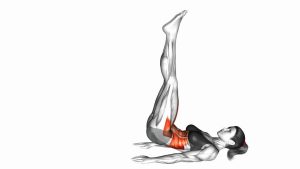
- Lift the torso: Curl your upper back off the floor as your arms travel forward.
- Raise the legs: Bring the legs upward at the same time, using the abs to control the movement.
- Reach toward the feet: Form a partial V shape without collapsing the chest or yanking the neck.
- Pause briefly: Hold the top position for a short moment while keeping balance on the glutes/sacrum.
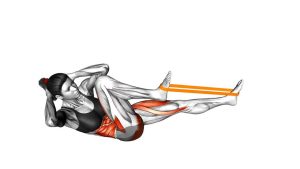
- Lower with control: Return the arms and legs toward the floor slowly without letting the lower back arch.
Pro Tips & Common Mistakes
- Move both halves together: The torso and legs should rise at the same time.
- Avoid swinging: Do not use arm momentum to throw yourself upward.
- Control the descent: The lowering phase is where the abs work hardest.
- Keep the neck neutral: Look forward/upward instead of pulling the chin aggressively to the chest.
- Modify when needed: Bend the knees slightly if straight legs cause back arching.
- Do not chase height: A smaller, cleaner V shape is better than a high but sloppy rep.
FAQ
Is the Half Jackknife the same as a full V-up?
No. The Half Jackknife uses a shorter range of motion than a full V-up. It still lifts the torso and legs together, but the top position is usually more controlled and less extreme.
What muscles does the Half Jackknife work?
It mainly targets the rectus abdominis. The hip flexors assist with leg elevation, while the obliques and deep core muscles help stabilize the trunk.
Why does my lower back hurt during this exercise?
Lower-back discomfort often happens when the legs lower too far without enough abdominal control. Reduce the range, bend your knees, slow down, and keep the ribs pulled down.
Is the Half Jackknife good for beginners?
It can be challenging for complete beginners. A bent-knee version, dead bug, reverse crunch, or tuck-up variation may be better before progressing to the full Half Jackknife.
How can I make the Half Jackknife harder?
Slow the lowering phase, pause longer at the top, keep the legs straighter, or hold a light medicine ball. Only add difficulty when your form stays controlled.
Recommended Equipment
- Exercise Mat — adds comfort and grip for floor-based core training.
- Thick Yoga Mat — useful if your lower back or tailbone needs more cushioning.
- Medicine Ball — optional tool for advanced loaded jackknife variations.
- Ankle Weights — advanced progression for stronger core athletes.
- Core Sliders — helpful for related core exercises like pikes, knee tucks, and mountain climbers.
Tip: Start with only a mat. Add external resistance only after you can perform every rep without swinging, back arching, or neck strain.