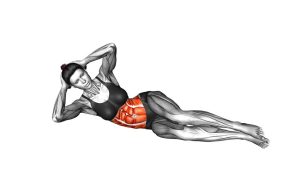
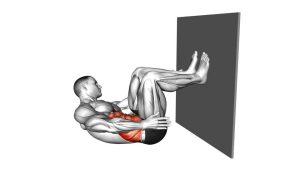
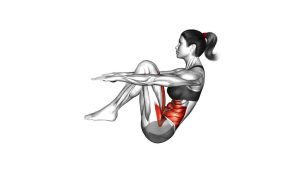
Sitting Side Crunch on a Padded Stool: Oblique Form, Sets, Tips & FAQ
Learn the Sitting Side Crunch on a Padded Stool to train your obliques with controlled seated side bends, proper form, sets, tips, FAQs, and equipment.
Sitting Side Crunch on a Padded Stool
This exercise is useful when you want a low-impact way to train the side abs without lying on the floor. Since the body stays seated, the padded stool provides support while the core controls the lateral bend. Additionally, the movement can help beginners understand how to contract the obliques without using fast momentum or excessive range.
Quick Overview
| Body Part | Obliques |
|---|---|
| Primary Muscle | Internal and external obliques |
| Secondary Muscle | Rectus abdominis, transverse abdominis, and spinal stabilizers |
| Equipment | Padded stool |
| Difficulty | Beginner |
Sets & Reps (By Goal)
- Beginner control: 2–3 sets × 8–10 reps per side with slow movement.
- Core endurance: 3 sets × 12–15 reps per side with steady breathing.
- Oblique focus: 3–4 sets × 10–12 reps per side with a brief squeeze at the bottom.
- Warm-up activation: 1–2 sets × 8 reps per side before a core session.
Progression rule: First improve control and range consistency. Then, add reps slowly. Avoid progressing by swinging faster, because speed reduces the oblique training effect.
Setup / Starting Position
- Sit on the stool: Position yourself securely on a padded stool with your feet planted on the floor.
- Stack your torso: Sit tall with your chest lifted, ribs controlled, and spine upright.
- Set your arm position: Place one hand near the side of the head or keep the upper body position comfortable and stable.
- Anchor the lower body: Keep your hips steady on the stool so the movement comes from the side of the torso.
- Prepare the core: Lightly brace your midsection before bending to the side.
Tip: A stable stool matters. If the stool shifts or rocks, the exercise becomes harder to control and less effective.
Execution (Step-by-Step)
- Start upright: Sit tall on the padded stool with your feet grounded and your torso centered.
- Bend to one side: Lower your shoulder toward the same-side hip by shortening the side of your waist.
- Keep the motion lateral: Avoid rotating your chest or folding forward as you crunch.
- Squeeze briefly: Pause for a moment when the elbow and hip feel closest together.
- Return to center: Lift your torso back to the upright position with control.
- Repeat or switch sides: Continue for the target reps, then perform the same motion on the opposite side.
Pro Tips & Common Mistakes
- Keep your hips still: The stool should support you while the waist performs the side bend.
- Do not twist: Rotation changes the exercise and reduces the pure side-crunch effect.
- Avoid leaning forward: Stay tall so the movement happens through lateral trunk flexion.
- Move slowly: Controlled reps build better core awareness than fast swinging reps.
- Use a comfortable range: Bend only as far as you can without losing posture or balance.
- Breathe naturally: Exhale as you crunch down, then inhale as you return to center.
- Match both sides: Use the same speed and range on the left and right side.
FAQ
What muscles does the Sitting Side Crunch on a Padded Stool work?
It mainly targets the obliques, which are the muscles along the sides of the waist. Additionally, the rectus abdominis and deeper core stabilizers assist by helping control posture and balance.
Is this exercise good for beginners?
Yes. Because it is performed from a seated position, it is beginner-friendly and easy to control. However, beginners should keep the range small and focus on smooth side bending instead of fast repetitions.
Should I twist during the movement?
No. Based on the visible movement pattern, this exercise is a side bend rather than a twisting exercise. Therefore, keep your chest facing forward and move the torso directly toward the side.
How can I make the exercise more effective?
Slow the tempo, pause briefly at the bottom, and return to the starting position with control. As a result, the obliques stay engaged longer and the movement becomes cleaner.
What should I avoid during seated side crunches?
Avoid bouncing, twisting, pulling on the neck, lifting the hips off the stool, or collapsing forward. Instead, keep your lower body stable and let the side of your waist create the movement.
Recommended Equipment
- Padded Workout Stool — provides a comfortable seated base for controlled side crunches.
- Exercise Mat — helps improve floor grip under the stool and protects your workout area.
- Non-Slip Fitness Mat — useful if the stool moves during seated core exercises.
- Adjustable Fitness Bench — can be used as an alternative seated surface for core training.
- Core Training Resistance Bands — helpful for adding other oblique and anti-rotation exercises to your routine.
Equipment note: The exercise shown uses a padded stool. Choose a stable surface first, because balance and control are more important than adding resistance.