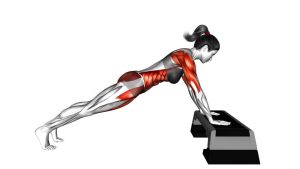
Plank to Pike: Core Strength, Form, Sets, Tips & FAQ
Learn the Plank to Pike for stronger abs, shoulder stability, and better core control with step-by-step form, sets, mistakes, FAQs, and gear.
Plank to Pike
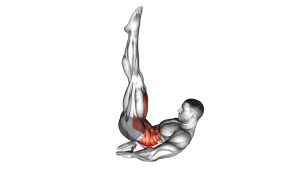
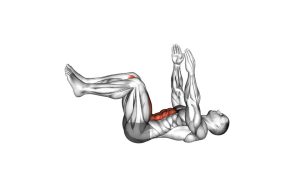
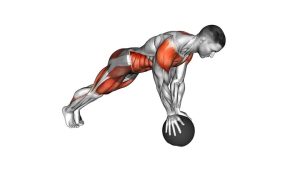
This exercise is effective because it challenges your abs, shoulders, and hip flexors at the same time. First, the high plank teaches total-body stiffness. Then, the pike phase adds controlled hip flexion and core compression. As a result, the movement works well for building stronger trunk control, better shoulder stability, and smoother bodyweight strength.
Quick Overview
| Body Part | Core |
|---|---|
| Primary Muscle | Rectus abdominis and deep core stabilizers |
| Secondary Muscle | Shoulders, hip flexors, serratus anterior, quads, and upper back stabilizers |
| Equipment | None required; optional exercise mat or sliders |
| Difficulty | Intermediate because it requires plank strength, shoulder control, and coordinated hip movement |
Sets & Reps (By Goal)
- Core control: 2–3 sets × 6–10 slow reps with 45–60 seconds rest
- Muscular endurance: 3–4 sets × 10–15 reps with steady breathing
- Strength-focused bodyweight training: 3–5 sets × 6–8 controlled reps with a strong pause at the top
- Warm-up activation: 1–2 sets × 5–8 easy reps before planks, push-ups, or calisthenics work
Progression rule: Add reps only when your hips rise smoothly and your plank return stays controlled. After that, increase difficulty by slowing the tempo or adding a brief pause in the pike position.
Setup / Starting Position
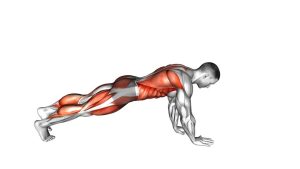
- Start in a high plank: Place your hands under your shoulders with your arms straight.
- Set your feet: Keep your legs extended behind you with your feet close enough to stay balanced.
- Brace your core: Draw your ribs down slightly and keep your body in a straight line from head to heels.
- Stack the upper body: Press the floor away so your shoulders stay active and stable.
- Keep your neck neutral: Look slightly down instead of lifting your head or dropping it loosely.
Your starting plank should look stable before you move. Therefore, avoid beginning the pike if your hips are already sagging or your shoulders are collapsing.
Execution (Step-by-Step)
- Begin in a firm plank: Keep your hands planted, arms straight, and core tight.
- Lift your hips upward: Drive your hips toward the ceiling while keeping your legs mostly straight.
- Shift into the pike: Allow your shoulders to move slightly back as your body forms an inverted V shape.
- Control the top position: Pause briefly with your hips high, arms long, and core engaged.
- Return to plank: Lower your hips slowly until your body returns to a straight plank line.
- Reset before the next rep: Re-brace your abs, stabilize your shoulders, and repeat with the same smooth rhythm.
Pro Tips & Common Mistakes
- Keep your arms straight: Bending the elbows turns the exercise into an unstable press instead of a core-focused pike.
- Lift with control: Avoid jumping or snapping your hips upward. Instead, use a smooth core-driven motion.
- Do not let the hips sag: When returning to plank, stop at a strong straight-body position.
- Press through the floor: Active shoulders help protect the wrists and improve upper-body stability.
- Keep the neck relaxed: Avoid looking forward aggressively because that can strain the neck.
- Use a shorter range if needed: If your hamstrings or shoulders limit the pike, lift only as high as you can control.
- Breathe through each rep: Exhale as the hips rise, then inhale as you return to plank.
FAQ
What muscles does the Plank to Pike work?
The Plank to Pike mainly works the abs and deep core stabilizers. However, it also trains the shoulders, serratus anterior, hip flexors, quads, and upper-body stabilizers because you must support your body while moving your hips.
Is the Plank to Pike good for beginners?
It can be challenging for complete beginners. Therefore, master a strong high plank first. Once you can hold a stable plank without hip sagging or shoulder collapse, you can add small pike reps with a shorter range of motion.
Should my legs stay straight during the movement?
Your legs should stay mostly straight if possible. However, a slight knee bend is acceptable when hamstring flexibility limits your range. The main goal is controlled hip elevation, not forcing perfect flexibility.
Why do my shoulders feel this exercise?
Your shoulders support your body weight throughout the movement. As a result, they work isometrically to keep your upper body stable. If you feel sharp pain or pinching, reduce the range, check your hand position, or stop the exercise.
How can I make the Plank to Pike harder?
You can slow the tempo, pause longer at the top, increase reps, or perform the movement with sliders. However, only progress when you can return to plank without losing core tension.
Recommended Equipment (Optional)
- Exercise Mat — adds comfort for hands, feet, and floor-based core training
- Core Sliders — useful for a smoother and more advanced plank-to-pike variation
- Workout Wrist Wraps — provide light wrist support during plank-based movements
- Push-Up Handles — may reduce wrist extension during high plank exercises
- Ab Wheel — helpful for progressing core strength after mastering plank stability
Tip: Equipment is optional. However, a mat or sliders can make the exercise more comfortable and easier to progress safely.