Sitting Alternate Knee to Elbow Twist: Core Form, Benefits & Tips
Learn the Sitting Alternate Knee to Elbow Twist to train abs, obliques, and seated core control with safe form, sets, tips, FAQs, and equipment.
Sitting Alternate Knee to Elbow Twist
This exercise works best when each repetition stays smooth, upright, and controlled. Instead of rushing the elbow toward the knee, rotate through the torso while lifting the opposite knee toward the midline. As a result, the core performs the work while the neck, shoulders, and lower back stay relaxed.
In addition, the seated position makes the movement easier to manage than floor-based bicycle crunches. However, the goal is still quality movement. Keep your chest lifted between reps, breathe steadily, and avoid pulling on the head with your hands.
Quick Overview
| Body Part | Core |
|---|---|
| Primary Muscle | Obliques |
| Secondary Muscle | Rectus abdominis, hip flexors, deep core stabilizers |
| Equipment | Chair or bench |
| Difficulty | Beginner |
Sets & Reps (By Goal)
- Beginner core control: 2–3 sets × 8–10 reps per side with a slow, steady tempo.
- General core endurance: 3–4 sets × 12–16 total alternating reps with 30–45 seconds of rest.
- Low-impact cardio core: 3–5 rounds × 30–45 seconds while keeping posture tall and controlled.
- Warm-up activation: 1–2 sets × 8 reps per side before a full-body or core workout.
- Office or chair workout reset: 1–3 easy rounds × 20–30 seconds without forcing the twist.
Progression rule: First, increase control and range of motion. Then, add more reps or time. Finally, progress to a slightly faster tempo only if your spine stays tall and your breathing remains steady.
Setup / Starting Position
- Choose a stable chair: Sit on a firm chair or bench that does not roll or slide.
- Sit near the front edge: Position your hips close enough to the edge so your knees can lift freely.
- Plant your feet: Keep both feet flat on the floor, roughly hip-width apart.
- Set your posture: Lengthen your spine, keep your chest open, and gently brace your core.
- Place your hands lightly: Keep your fingertips near your ears or temples without pulling on your neck.
- Look forward: Keep the head neutral before each rep, then rotate from the torso rather than the neck alone.
Tip: A slightly forward seat position gives your hips more room to move. However, keep enough contact with the chair so you feel stable.
Execution (Step-by-Step)
- Brace gently: Sit tall and tighten your core as if preparing for a light cough.
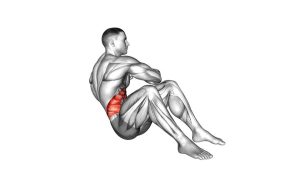
- Lift one knee: Raise your right knee toward your torso without leaning backward.
- Rotate toward the knee: Turn your upper body and bring your left elbow toward the lifted right knee.
- Control the contact: Touch or nearly touch elbow to knee, but avoid collapsing your chest.
- Return to center: Lower the right foot and rotate your torso back to the starting position.
- Switch sides: Lift the left knee and rotate your right elbow toward it.
- Continue alternating: Repeat side to side with a smooth rhythm and steady breathing.
Pro Tips & Common Mistakes
Pro Tips
- Rotate through the ribs: Think about turning your chest toward the knee instead of only moving the elbow.
- Stay tall between reps: Return to an upright seated posture before switching sides.
- Use a controlled exhale: Exhale as the knee and elbow move together, then inhale as you return.
- Keep the movement compact: A smaller clean twist is better than a large sloppy crunch.
- Maintain even pressure: Avoid shifting too far onto one side of the chair.
Common Mistakes
- Pulling on the neck: Hands should guide position, not yank the head forward.
- Rounding the whole spine: Slight flexion is natural, but excessive slumping reduces core control.
- Using momentum: Swinging the leg makes the exercise easier and less effective.
- Leaning backward: This often shifts work away from the abs and into the hip flexors.
- Holding the breath: Regular breathing helps maintain posture and rhythm.
FAQ
What muscles does the Sitting Alternate Knee to Elbow Twist work?
It mainly works the obliques, which rotate the torso. In addition, it trains the rectus abdominis, hip flexors, and deep core stabilizers.
Is this exercise good for beginners?
Yes. Since it is performed while seated, it is easier to control than many floor-based twisting exercises. Nevertheless, beginners should move slowly and keep the range comfortable.
Should my elbow touch my knee every rep?
Not necessarily. The goal is controlled rotation and knee lift. If touching causes you to round your back or pull your neck, stop just short of contact.
Can I use this exercise for weight loss?
It can support a calorie-burning routine, especially when done for time. However, fat loss depends mostly on total activity, strength training, nutrition, and consistency.
How can I make the exercise harder?
You can increase the time per set, slow down each rep, pause briefly at the top, or use a light ankle weight. However, only progress when your posture stays controlled.
Who should avoid this movement?
People with sharp back pain, recent spinal injury, severe hip pain, or dizziness during rotation should avoid forcing the movement and seek professional guidance when needed.
Recommended Equipment
- Sturdy Workout Chair — provides a stable base for seated core exercises and chair workouts.
- Adjustable Weight Bench — useful for seated core drills, strength training, and home gym routines.
- Non-Slip Exercise Mat — helps keep the chair or bench more secure on smooth floors.
- Light Ankle Weights — optional progression for advanced users who can maintain clean seated control.
- Fitness Interval Timer — helpful for timed chair workouts, low-impact cardio rounds, and core circuits.
Tip: Start with only a chair. Then, add equipment gradually if it improves control rather than creating strain.