Sitting Lotus Pose Twisting Front-Back Tap: Form, Core Tips & FAQ
Learn the Sitting Lotus Pose Twisting Front-Back Tap for controlled core rotation, seated mobility, oblique engagement, form tips, sets, and FAQs.
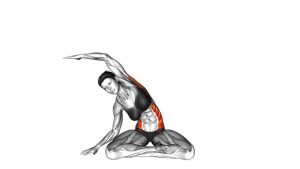
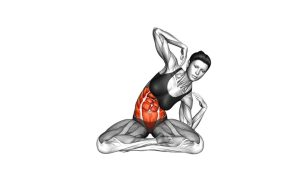
Sitting Lotus Pose Twisting Front-Back Tap
This exercise works best when the taps are smooth, light, and intentional. Instead of swinging the arms quickly, rotate through the torso while keeping the hips grounded. As a result, the movement becomes a precise core-control drill rather than a loose arm-reaching motion.
Quick Overview
| Body Part | Core |
|---|---|
| Primary Muscle | Obliques |
| Secondary Muscle | Rectus abdominis, deep core stabilizers, lower back stabilizers, hip stabilizers |
| Equipment | None |
| Difficulty | Beginner to Intermediate, depending on hip mobility and rotation control |
Sets & Reps (By Goal)
- Core activation: 2–3 sets × 8–12 taps per side with slow control
- Mobility practice: 2–3 sets × 30–45 seconds at a relaxed pace
- Oblique endurance: 3–4 sets × 12–20 taps per side with steady rhythm
- Warm-up flow: 1–2 sets × 30 seconds before a core or mobility session
Progression rule: First improve smoothness and range control. Then, add more reps or slightly increase the tempo while keeping both hips grounded.
Setup / Starting Position
- Sit on the floor: Use a lotus-style or comfortable cross-legged position.
- Ground the hips: Keep both sitting bones connected to the floor throughout the movement.
- Lengthen the spine: Sit tall without forcing the chest upward aggressively.
- Relax the shoulders: Let the arms move naturally with the torso rotation.
- Prepare the tap path: You will tap once in front of the body and once behind the hips as you rotate.
If your knees or hips feel restricted, sit on a folded mat or cushion. This can make the cross-legged position more comfortable.
Execution (Step-by-Step)
- Start tall: Sit upright with your legs crossed and your torso facing forward.
- Rotate to one side: Turn your chest and shoulders while keeping your hips grounded.
- Tap in front: Reach one hand toward the floor in front of your legs and make a light tap.
- Continue the twist: Rotate through the torso as the opposite hand travels behind the body.
- Tap behind: Lightly touch the floor behind the hip without collapsing your posture.
- Return through center: Bring the torso back under control before switching sides.
- Repeat the pattern: Alternate side to side with a smooth front-tap to back-tap rhythm.
Pro Tips & Common Mistakes
- Keep the taps light: Touch the floor softly instead of slapping or dropping into the tap.
- Rotate from the ribs and torso: Avoid moving only the arms while the trunk stays stiff.
- Stay grounded: Do not let one hip lift high as you reach behind.
- Control the return: Move back through center smoothly before changing sides.
- Avoid rushing: Faster is not better if the spine collapses or the taps become messy.
- Modify the leg position: Use a regular cross-legged seat if lotus position creates knee or hip discomfort.
- Use your eyes naturally: Let the head follow the torso without snapping the neck.
FAQ
What muscles does the Sitting Lotus Pose Twisting Front-Back Tap work?
It mainly targets the obliques because the torso rotates from side to side. Additionally, the deep core, rectus abdominis, lower back stabilizers, and hip stabilizers help control the seated position.
Do I need to sit in full lotus position?
No. Although the video shows a lotus-style seated base, a comfortable cross-legged position works well. The key goal is controlled torso rotation with both hips grounded.
Should the taps be fast or slow?
Start slow. Once the movement feels controlled, you can use a steady rhythm. However, avoid rushing because speed can turn the exercise into arm swinging instead of core rotation.
Why do I feel this in my hips?
The seated position requires hip mobility and stability. If the hips feel tight, sit on a cushion, reduce the rotation range, or use a simpler cross-legged position.
Is this exercise good for beginners?
Yes, it can be beginner-friendly when the range is small and the pace is controlled. However, people with limited hip mobility may need to modify the seated position.
Can I use this as a warm-up?
Yes. It works well as a warm-up for core training, mobility sessions, yoga-style flows, or bodyweight workouts because it gently introduces rotation and trunk control.
Recommended Equipment (Optional)
- Exercise Mat — provides floor comfort for seated core and mobility work
- Yoga Blocks — useful for support if hip mobility limits your seated position
- Meditation Cushion — elevates the hips and may reduce pressure during cross-legged sitting
- Yoga Knee Pad — adds extra cushioning for knees, ankles, or sensitive joints
- Stretching Strap — helpful for improving hip and lower-body flexibility over time
Tip: Equipment is optional. However, a mat or cushion can make the seated base more comfortable and help you focus on clean rotation.