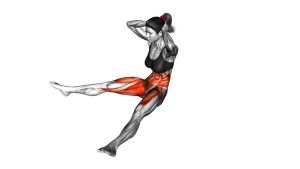
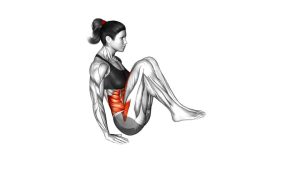
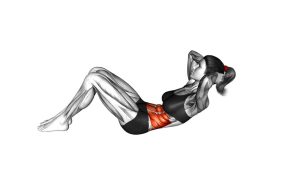
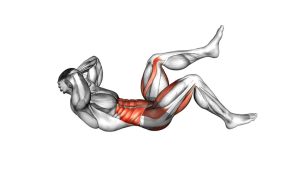
Seated Frog Half-to-Full Sit-Up: Form, Core Benefits, Sets & Tips
Learn the Seated Frog Half-to-Full Sit-Up for stronger abs, better core control, hip mobility, safe form, sets, tips, FAQs, and gear.
Seated Frog Half-to-Full Sit-Up
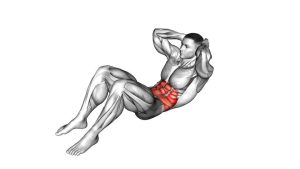
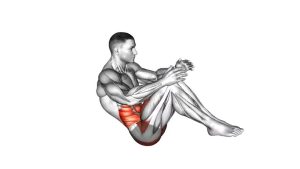
This exercise is useful for building abdominal strength because it combines a controlled crunch pattern with a fuller sit-up range. The frog-leg position changes the lower-body setup, reduces the need to keep the feet anchored, and encourages the lifter to use the core instead of pulling aggressively with the legs.
Quick Overview
| Body Part | Core |
|---|---|
| Primary Muscle | Rectus abdominis |
| Secondary Muscle | Hip flexors, obliques, adductors, deep core stabilizers |
| Equipment | No equipment required; optional exercise mat |
| Difficulty | Beginner to Intermediate |
Sets & Reps (By Goal)
- Beginner core control: 2–3 sets × 6–10 reps with slow tempo
- Core strength: 3–4 sets × 10–15 reps with controlled lowering
- Muscle endurance: 3–5 sets × 15–25 reps with steady breathing
- Warm-up activation: 1–2 sets × 8–12 reps before a core or full-body workout
Progression rule: First improve control and range of motion. Then add more reps, slower lowering, or a light medicine ball only when each repetition stays smooth and pain-free.
Setup / Starting Position
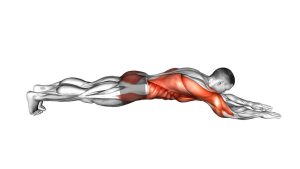
- Lie on your back: Start on an exercise mat with your spine relaxed and your arms extended overhead.
- Set the frog position: Bend your knees outward and bring the soles of your feet close together or near each other.
- Relax the hips: Let the knees open naturally without forcing the stretch.
- Brace lightly: Pull the ribs down, tighten the abs, and keep your lower back controlled against the floor.
- Prepare the arms: Keep the arms long overhead so they can travel forward as you sit up.
Tip: The frog position should feel stable, not forced. If your hips feel tight, keep the feet slightly farther away from the body.
Execution (Step-by-Step)
- Begin the curl: Exhale and lift your head, shoulders, and upper back from the floor.
- Reach forward: Swing the arms forward in a controlled path and reach toward your feet.
- Rise to the seated position: Continue curling the spine until your torso comes upright.
- Finish with control: At the top, keep the abs tight and avoid bouncing forward.
- Lower slowly: Inhale as you roll the spine back down to the floor one section at a time.
- Reset smoothly: Return the arms overhead and keep the frog-leg position ready for the next rep.
Pro Tips & Common Mistakes
- Use the abs first: Start by curling the ribs toward the pelvis instead of yanking the torso upward.
- Control the descent: The lowering phase builds strength, so do not drop quickly to the floor.
- Keep the neck neutral: Avoid leading with the chin or straining the front of the neck.
- Do not force the knees down: The frog position should come from comfortable hip rotation.
- Avoid momentum: A small arm swing is normal, but the core should drive the movement.
- Breathe with each rep: Exhale as you sit up and inhale as you lower down.
- Scale when needed: If the full sit-up is too hard, perform a half sit-up or crunch variation first.
FAQ
What muscles does the Seated Frog Half-to-Full Sit-Up work?
It mainly works the rectus abdominis, which is the front abdominal muscle. It also trains the hip flexors, obliques, adductors, and deep core muscles that help stabilize the pelvis and spine.
Is this exercise the same as a butterfly sit-up?
It is very similar. The frog-leg or butterfly-style lower-body position opens the hips while the upper body performs a sit-up pattern. The name may vary, but the movement goal is controlled abdominal flexion.
Is the Seated Frog Half-to-Full Sit-Up good for beginners?
Yes, it can be beginner-friendly when performed slowly and through a comfortable range. Beginners can start with half reps, assisted reps, or fewer repetitions before progressing to the full sit-up.
Why do I feel this in my hip flexors?
Hip flexor involvement is normal during full sit-up variations. However, if the hip flexors dominate the movement, slow down, brace the abs harder, and focus on curling the spine instead of simply folding at the hips.
Can this exercise hurt my lower back?
It should not hurt when performed with control. Lower back discomfort usually comes from excessive momentum, weak bracing, poor control during the lowering phase, or forcing a range of motion that is not ready yet.
Recommended Equipment
- Exercise Mat — provides cushioning for the spine, hips, and tailbone during floor-based core work
- Thick Yoga Mat — useful if you need extra comfort while rolling the back down to the floor
- Ab Mat — supports the lower back and can help improve sit-up range and comfort
- Light Medicine Ball — optional progression for advanced users who can already control bodyweight reps
- Resistance Bands Set — helpful for pairing this exercise with anti-rotation, hip, and full-core accessory drills
Tip: For this exercise, comfort and control matter more than heavy equipment. Start with a good mat before adding any external resistance.