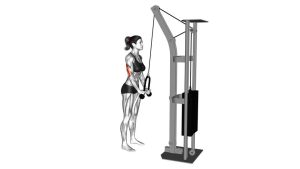
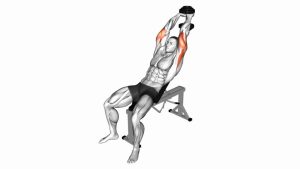
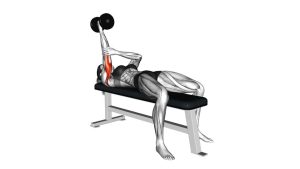
Cable Overhead Triceps Extension (Rope Attachment): Proper Form, Sets, Tips & FAQ
Learn how to do the Cable Overhead Triceps Extension with a rope attachment for bigger, stronger triceps. Includes proper form, sets and reps by goal, setup, execution tips, common mistakes, FAQs, and recommended equipment.
Cable Overhead Triceps Extension (Rope Attachment)
This exercise works best when you move with control and keep tension on the triceps from start to finish. The main motion should come from elbow extension, while your shoulders and torso stay stable. At the top, separate the rope slightly to maximize triceps contraction, then lower it under control to get a deep stretch. Avoid flaring the elbows too wide or arching the lower back just to move more weight.
Quick Overview
| Body Part | Triceps |
|---|---|
| Primary Muscle | Triceps brachii (especially the long head) |
| Secondary Muscle | Anconeus, shoulders for stabilization, core for posture support |
| Equipment | Cable machine with rope attachment |
| Difficulty | Beginner to Intermediate |
Sets & Reps (By Goal)
- Muscle growth: 3-4 sets x 10-15 reps with 45-75 seconds rest
- Strength-focused arm training: 3-5 sets x 6-10 reps with 75-120 seconds rest
- Technique and control: 2-3 sets x 12-15 reps with slow eccentrics and moderate load
- Workout finisher / pump work: 2-3 sets x 15-20 reps with short 30-45 seconds rest
Progression rule: Add reps first, then increase weight gradually once you can keep your elbows steady, fully stretch at the bottom, and lock out cleanly without swinging or leaning.
Setup / Starting Position
- Attach the rope: Set a rope attachment on a high cable pulley.
- Face away from the machine: Grab the rope and step forward so the cable runs behind your head.
- Set your stance: Stand with feet about hip-width apart or use a staggered stance for better balance.
- Bring arms overhead: Position your elbows bent and pointing up, with the rope held behind your head.
- Brace your torso: Tighten your abs, keep your chest stacked over your hips, and avoid excessive lower-back arch.
Tip: A split stance often makes this exercise feel more stable, especially when using heavier loads.
Execution (Step-by-Step)
- Start from the stretch: With elbows bent and close to your head, feel the triceps loaded at the bottom position.
- Extend the elbows: Press the rope upward and slightly forward by straightening your arms overhead.
- Separate the rope: Near the top, let the rope ends move apart slightly to increase the peak contraction.
- Squeeze the triceps: Pause briefly at full extension without aggressively snapping the elbows.
- Lower under control: Slowly bend your elbows and return the rope behind your head for a full stretch.
- Repeat smoothly: Keep tension on the triceps and avoid using momentum from the torso or hips.
Pro Tips & Common Mistakes
- Keep elbows tucked in: A little natural movement is fine, but avoid letting them flare excessively.
- Use full range of motion: Get a deep stretch at the bottom and a strong extension at the top.
- Do not rush the eccentric: Lowering slowly improves tension and control.
- Brace your core: Do not lean back or turn the rep into a standing press.
- Separate the rope at the top: This helps you finish the rep with a harder triceps squeeze.
- Choose a manageable load: Too much weight usually causes elbow flare, shortened reps, and lower-back compensation.
- Avoid shoulder takeover: The movement should come mainly from elbow extension, not shoulder flexion.
FAQ
What part of the triceps does this exercise target most?
This variation strongly emphasizes the long head of the triceps because the overhead arm position places it under more stretch. It still trains the entire triceps, but it is especially useful for adding upper-arm size.
Should I use a rope or a straight bar?
The rope is often more comfortable for the wrists and elbows, and it allows you to separate the ends at the top for a stronger contraction. Many lifters prefer it for both comfort and feel.
How heavy should I go on overhead cable triceps extensions?
Use a weight that allows you to keep your elbows stable, get a full stretch, and avoid leaning back. Clean reps with constant tension are more effective than swinging heavy weight.
Is this better than cable pushdowns?
It is not necessarily better, but it is different. Overhead extensions tend to place more emphasis on the long head due to the overhead angle, while pushdowns are often easier to stabilize and load. Both can work very well in a triceps program.
Can beginners do this exercise?
Yes. Beginners can use this movement effectively as long as they start with a moderate load, focus on posture, and keep the motion controlled. A staggered stance can also make the setup easier to stabilize.
Recommended Equipment
- Tricep Rope Cable Attachment — the main attachment used for comfortable overhead triceps extensions
- Cable Machine for Home Gym — ideal if you want to perform this exercise at home with smooth adjustable resistance
- Weightlifting Belt — optional support for lifters who need extra torso bracing during heavier sets
- Wrist Wraps — helpful if wrist stability becomes a limiting factor during cable arm work
- Exercise Mat — useful for comfort and footing in your training area
Tip: Prioritize a smooth cable station and a durable rope attachment first. Those two make the biggest difference in exercise comfort and consistency.