90 Degree Heel Touch: Oblique Form, Sets, Tips & FAQ
Learn the 90 Degree Heel Touch to train obliques and core control with clean floor form, step-by-step cues, sets, mistakes, FAQs, and gear.
90 Degree Heel Touch
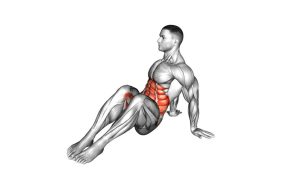
This exercise works best when the movement stays small, smooth, and deliberate. Because the shoulders remain slightly lifted, the abs stay active throughout the set. Meanwhile, each side reach challenges the obliques to shorten and control the torso without using momentum.
Although the movement looks simple, clean form matters. Keep your feet planted, knees bent, lower back controlled, and neck relaxed. Then, reach toward one heel, return through center, and repeat toward the opposite heel with the same range.
Quick Overview
| Body Part | Core |
|---|---|
| Primary Muscle | Obliques |
| Secondary Muscle | Rectus abdominis, deep core stabilizers, hip flexors lightly for position support |
| Equipment | No equipment required; optional exercise mat |
| Difficulty | Beginner to intermediate, depending on tempo and time under tension |
Sets & Reps (By Goal)
- Core activation: 2 sets × 10–14 total touches, using a slow and controlled pace.
- Oblique endurance: 3 sets × 16–24 total touches, resting 30–45 seconds between sets.
- Beginner ab training: 2–3 sets × 8–10 touches per side, keeping the shoulders lifted lightly.
- Finisher work: 2–4 rounds × 20–30 seconds, while maintaining clean heel-to-heel rhythm.
Progression rule: First improve control and equal range on both sides. After that, increase reps, extend set duration, or slow the tempo before adding intensity.
Setup / Starting Position
- Lie on your back: Start on the floor with your spine supported and your arms resting beside your body.
- Bend the knees: Place both feet flat on the floor and keep the knees bent at roughly 90 degrees.
- Set the feet: Keep the feet close enough that your hands can reach toward the heels without lifting the hips.
- Lift the upper body slightly: Raise your head and shoulders just enough to create abdominal tension.
- Relax the neck: Keep the chin slightly tucked and avoid pulling the head forward aggressively.
- Brace gently: Tighten the abs before moving so the lower back does not arch or rock.
Tip: If your neck gets tired before your abs, reduce the shoulder lift slightly and keep the movement smaller.
Execution (Step-by-Step)
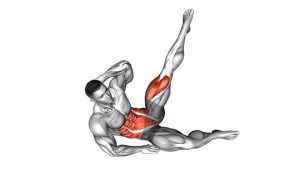
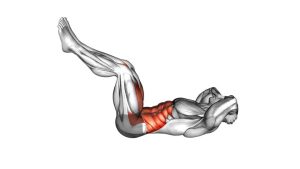
- Start centered: Keep your shoulders lifted, arms long, feet planted, and knees steady.
- Reach to one heel: Bend your torso sideways and slide one hand toward the same-side heel.
- Squeeze the side abs: Briefly contract the obliques as your hand approaches the heel.
- Return through center: Move back with control without dropping your shoulders to the floor.
- Reach to the other heel: Repeat the same side-bending action toward the opposite heel.
- Keep alternating: Continue right and left with a steady rhythm and equal range.
Pro Tips & Common Mistakes
Pro Tips
- Keep constant tension: Maintain a small shoulder lift throughout the set to keep the abs active.
- Move side to side: Think about shortening one side of your waist rather than rotating your chest.
- Control the center: Return through the middle smoothly before reaching to the other side.
- Match both sides: Use the same reach distance to the right and left to avoid uneven movement.
- Breathe naturally: Exhale gently as you reach, then inhale as you pass through center.
Common Mistakes
- Pulling the neck forward: This can create strain and reduce abdominal focus.
- Dropping between reps: Resting the shoulders on every rep removes continuous core tension.
- Using momentum: Fast swinging makes the exercise easier but less effective for the obliques.
- Lifting the hips: Keep the pelvis stable so the movement stays in the trunk.
- Reaching too far: Excessive range can cause twisting or shoulder compensation.
FAQ
What muscles does the 90 Degree Heel Touch work?
The 90 Degree Heel Touch mainly targets the obliques. In addition, the rectus abdominis and deep core muscles help keep the shoulders lifted and the torso controlled during each side reach.
Is the 90 Degree Heel Touch good for beginners?
Yes. It is beginner-friendly because it uses bodyweight only and has a short range of motion. However, beginners should move slowly, keep the neck relaxed, and avoid forcing the reach.
Should my shoulders stay off the floor?
Yes, your shoulders should stay slightly lifted during the working part of the set. This keeps the abs engaged. Still, the lift should feel controlled, not like you are straining the neck.
Is this exercise a twist or a side bend?
It is mostly a side-bending movement. You may see a small natural shift in the torso, but the main goal is reaching sideways toward each heel rather than rotating aggressively.
How can I make 90 Degree Heel Touches harder?
You can slow the tempo, increase total reps, extend the set duration, or pause briefly near each heel. For better control, progress gradually instead of rushing the movement.
Recommended Equipment (Optional)
- Thick Exercise Mat — adds cushioning for the spine, shoulders, and hips during floor core work.
- Non-Slip Yoga Mat — helps keep the body stable while alternating side-to-side heel touches.
- Ab Workout Mat — supports repeated ab exercises with extra comfort under the lower back.
- Fitness Towel — useful under the head or upper back if you need light comfort support.
- Core Sliders — useful for future core progressions, plank variations, and controlled ab training.
Tip: The 90 Degree Heel Touch does not require equipment. However, a comfortable mat can make the movement easier to practice consistently, especially during higher-rep core sessions.