Cable One-Arm Curl: Proper Form, Muscles Worked, Sets, Tips & FAQ
Learn how to perform the Cable One-Arm Curl with proper form to build stronger biceps with constant tension. Includes muscles worked, setup, execution, sets and reps by goal, common mistakes, FAQs, and recommended equipment.
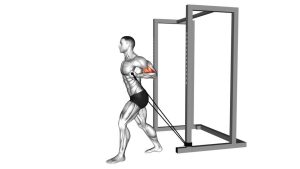
Cable One-Arm Curl
This exercise is ideal for lifters who want more control than a dumbbell curl and more continuous resistance than a free-weight variation. Because the cable keeps pulling through the full range, the biceps work hard at both the bottom and top of the rep. It fits well in arm days, upper-body hypertrophy sessions, or as a focused accessory after rows and pulldowns.
Quick Overview
| Body Part | Biceps |
|---|---|
| Primary Muscle | Biceps brachii |
| Secondary Muscle | Brachialis, brachioradialis, forearm flexors |
| Equipment | Cable machine with single handle attachment |
| Difficulty | Beginner to Intermediate |
Sets & Reps (By Goal)
- Muscle growth: 3–4 sets × 8–15 reps per arm, 45–75 sec rest
- Strength-focused arm work: 3–5 sets × 6–10 reps per arm, 60–90 sec rest
- Technique and control: 2–3 sets × 10–15 reps per arm with a slow lowering phase
- Finisher / pump work: 2–3 sets × 12–20 reps per arm, short rest, lighter load
Progression rule: Add reps first, then increase weight slightly while keeping the elbow position stable and the eccentric controlled.
Setup / Starting Position
- Set the pulley: Place the cable at the lowest setting and attach a single handle.
- Choose your stance: Stand tall with feet about hip- to shoulder-width apart for balance.
- Grip the handle: Use an underhand grip and let the working arm extend fully without locking out aggressively.
- Tuck the elbow: Keep the elbow close to your side and slightly in front of the torso if that feels stronger and smoother.
- Brace lightly: Keep the ribs down, chest tall, shoulders relaxed, and wrist neutral before starting the rep.
Tip: Step slightly away from the machine if needed so the cable stays taut even at the bottom.
Execution (Step-by-Step)
- Start from full stretch: Let the arm straighten while maintaining tension on the cable and keeping the shoulder quiet.
- Curl the handle upward: Bend the elbow and pull the handle toward your shoulder in a smooth arc.
- Keep the upper arm still: Avoid letting the elbow swing forward or drift backward to cheat the rep.
- Squeeze at the top: Pause briefly when the biceps are fully shortened and focus on a hard contraction.
- Lower under control: Resist the cable on the way down until the arm returns to the stretched starting position.
- Repeat evenly: Complete all reps on one side or alternate sides depending on your program.
Pro Tips & Common Mistakes
- Use the elbow as the hinge: The cleaner your elbow path, the more tension stays on the biceps.
- Don’t rush the lowering phase: A 2–3 second eccentric makes this exercise much more effective.
- Keep the wrist neutral: Excessive wrist curling can shift tension away from the biceps and irritate the forearm.
- Avoid torso swing: Don’t lean back or use body English to finish the rep.
- Train both sides honestly: Match reps and control from arm to arm to reduce imbalances.
- Use moderate loads well: This movement usually works best with strict form rather than maximal weight.
FAQ
What muscles does the Cable One-Arm Curl work?
It primarily targets the biceps brachii, with support from the brachialis, brachioradialis, and forearm flexors.
Is a cable curl better than a dumbbell curl?
Not always better, but different. Cable curls provide more constant tension through the full range, while dumbbells depend more on gravity and arm angle. Both can be excellent.
Should I do all reps on one arm first or alternate arms?
Either works. Doing all reps on one side can improve focus and consistency, while alternating arms may help manage fatigue.
How heavy should I go?
Use a weight that lets you keep the elbow close to the body, reach a full stretch, and lower the handle under control without torso swing.
Can beginners use this exercise?
Yes. It is a beginner-friendly biceps isolation movement because the cable path is predictable and the single-arm setup helps you concentrate on form.
Recommended Equipment
- Single D-Handle Cable Attachment — the main attachment for smooth one-arm cable curls
- Single Handle Cable Grip — a compact option for unilateral arm isolation work
- Arm Blaster — helps keep the elbows more fixed if you tend to cheat curls
- Lifting Straps — useful if grip fatigue limits your pulling and arm sessions
- Resistance Band Set — a simple backup for warm-ups, curls, and extra arm volume at home
Tip: Prioritize a comfortable cable handle first. It usually gives the biggest improvement in feel and control for this exercise.