Reverse Dumbbell Curl: Proper Form, Muscles Worked, Sets, Tips & FAQ
Learn how to perform the Reverse Dumbbell Curl with proper form to build forearms, brachialis, and biceps strength. Includes muscles worked, setup, execution, sets by goal, mistakes, FAQs, and recommended equipment.
Reverse Dumbbell Curl
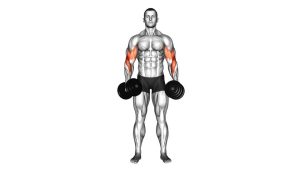
This exercise is excellent for building stronger forearms, thicker upper arms, and better elbow-flexion strength. Compared with a standard dumbbell curl, the reverse grip makes the movement feel tougher and usually limits the load you can use. The best reps are controlled, clean, and free of shoulder swing or wrist collapse.
Quick Overview
| Body Part | Biceps |
|---|---|
| Primary Muscle | Brachioradialis |
| Secondary Muscle | Brachialis, Biceps Brachii, Forearm Extensors |
| Equipment | Pair of dumbbells |
| Difficulty | Beginner to Intermediate |
Sets & Reps (By Goal)
- Muscle growth: 3–4 sets × 8–12 reps
- Forearm and grip emphasis: 3–4 sets × 10–15 reps
- Strength focus: 4–5 sets × 5–8 reps
- Technique and tendon conditioning: 2–3 sets × 12–15 reps with lighter weight
Progression rule: Add reps first, then increase load in small steps only when you can keep the wrists straight, elbows pinned, and the lowering phase controlled.
Setup / Starting Position
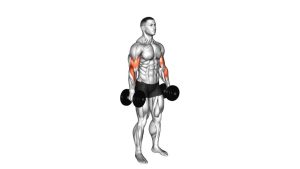
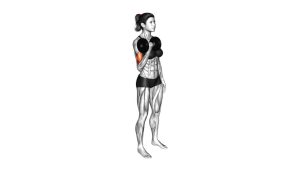
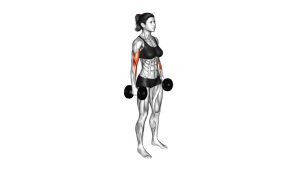
- Stand tall: Place your feet about hip-width apart and brace your core lightly.
- Hold the dumbbells with a pronated grip: Palms face down or slightly backward toward your thighs.
- Let the arms hang naturally: Keep the dumbbells close to your outer thighs with elbows fully extended but not hyperextended.
- Set your shoulders: Chest up, shoulders down, and upper arms close to your torso.
- Neutral wrists: Avoid bending the wrists back as the set starts.
Tip: Start with a lighter pair of dumbbells than your standard curl weight. Reverse curls become challenging quickly because of the grip position.
Execution (Step-by-Step)
- Begin from the bottom: Dumbbells start near the thighs with palms facing down.
- Curl by bending the elbows: Raise the dumbbells in a smooth arc while keeping your upper arms mostly fixed.
- Keep the wrists straight: Do not let the hands fold backward under the weight.
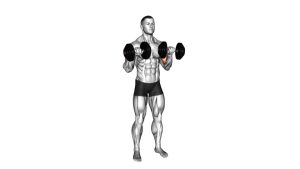
- Lift to the top under control: Bring the dumbbells toward the lower chest or upper waist depending on your mobility and limb length.
- Squeeze briefly: Pause for a moment without letting the shoulders roll forward.
- Lower slowly: Extend the elbows with control until the dumbbells return to the start position.
- Repeat without swinging: Maintain a stable torso and consistent tempo for every rep.
Pro Tips & Common Mistakes
- Use less weight than regular curls: Reverse grip mechanics reduce leverage, so strict form matters more than load.
- Keep elbows tucked: Let the forearms move, not the shoulders.
- Control the eccentric: Lowering slowly increases forearm and brachialis tension.
- Do not swing the torso: Momentum turns the exercise into a less effective partial rep.
- Do not over-curl: Stop where you can still maintain a clean wrist and elbow position.
- Train it after heavy pulls or curls: It fits well later in an arm workout as a focused accessory movement.
- Avoid wrist collapse: Bent wrists can shift stress away from the target muscles and irritate the joints.
FAQ
What muscles does the reverse dumbbell curl work most?
The reverse dumbbell curl mainly emphasizes the brachioradialis and brachialis, while the biceps brachii still assists during elbow flexion.
Why does this feel harder than a normal dumbbell curl?
The pronated grip reduces your mechanical advantage and limits how much the biceps can dominate the movement, which makes the exercise feel tougher with lighter weights.
Should I go heavy on reverse dumbbell curls?
Usually, moderate loads work best. Most lifters get better results from controlled reps than from going very heavy and losing wrist or elbow position.
Is this exercise good for forearm size?
Yes. Reverse curls are one of the best dumbbell options for training the forearms, especially the brachioradialis, when performed through a full, controlled range of motion.
Can beginners use reverse dumbbell curls?
Yes, but beginners should start light and focus on form first. The wrists and forearms often fatigue quickly, so clean technique is more important than heavy loading.
Recommended Equipment
- Adjustable Dumbbell Set — the main tool for progressive overload on reverse curls
- Forearm Wrist Roller — useful for extra forearm and grip work after curls
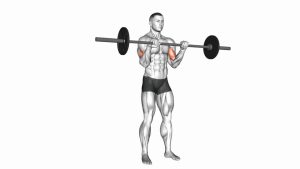
- EZ Curl Bar — a great alternative for reverse curls if you want bilateral loading
- Lifting Straps — optional for other pulling movements when your grip gets fatigued from forearm training
- Grip Strength Trainer — convenient for adding extra hand and forearm work between sessions
Adjustable dumbbells, EZ curl bars, wrist rollers, and forearm trainers are all active Amazon shopping categories/products, making them practical add-ons for a reverse-curl-focused setup.