Lever Preacher Curl (Plate-Loaded): Proper Form, Sets, Tips & FAQ
Learn how to perform the Lever Preacher Curl (Plate-Loaded) with proper form to isolate the biceps and minimize cheating. Includes setup, execution, sets by goal, common mistakes, FAQs, and recommended equipment.
Lever Preacher Curl (Plate-Loaded)
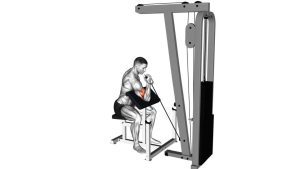
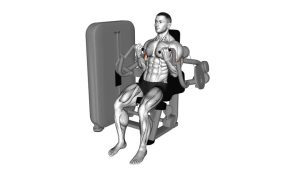
The plate-loaded lever preacher curl is excellent for lifters who want more controlled elbow flexion and less cheating than free-weight curls. Because the machine stabilizes the path, you can focus on tension in the biceps, especially in the mid-range and peak contraction. It is a great choice for hypertrophy work, accessory arm training, or finishing a pull day with strict reps.
Quick Overview
| Body Part | Biceps |
|---|---|
| Primary Muscle | Biceps brachii |
| Secondary Muscle | Brachialis and brachioradialis |
| Equipment | Plate-loaded preacher curl machine |
| Difficulty | Beginner to Intermediate |
Sets & Reps (By Goal)
- Muscle growth: 3-4 sets × 8-12 reps with 60-90 seconds rest
- Strength-focused machine curls: 4-5 sets × 5-8 reps with 90-120 seconds rest
- Finisher / pump work: 2-3 sets × 12-15 reps with 45-60 seconds rest
- Technique practice: 2-3 sets × 10-12 reps using slow tempo and moderate load
Progression note: Add load only when you can control the lowering phase, keep your elbows fixed on the pad, and complete every rep without bouncing or shortening the range.
Setup / Starting Position
- Load the machine: Add an appropriate amount of weight plates to the lever arms before sitting down.
- Set your body position: Sit so your chest is supported and your upper arms rest comfortably along the preacher pad.
- Align the elbows: Place your elbows in a stable position so they stay fixed throughout the exercise.
- Grip the handles: Use the machine’s built-in handles with a supinated grip unless the design offers another fixed option.
- Start near full extension: Lower the handles until your arms are almost straight, but avoid forcing a hard lockout.
Tip: Your armpits and upper triceps should stay anchored to the pad so the biceps do the work instead of the shoulders or torso.
Execution (Step-by-Step)
- Brace and stay still: Keep your chest against the pad, shoulders down, and wrists neutral before starting the curl.
- Curl the handles upward: Flex at the elbows and drive the lever through a smooth arc until your forearms approach the top position.
- Squeeze the biceps: Pause briefly at peak contraction without letting your elbows lift off the pad.
- Lower under control: Reverse the motion slowly and return to the stretched position while keeping tension on the biceps.
- Repeat with strict form: Maintain the same arm path and tempo on every repetition without using momentum.
Pro Tips & Common Mistakes
- Do not bounce from the bottom: Let the biceps stretch, but never crash into elbow extension to start the next rep.
- Keep your chest planted: Lifting your torso to help the lever move reduces isolation and turns it into a sloppy cheat curl.
- Control the eccentric: The lowering phase is where a lot of muscle-building tension happens.
- Use a full but safe range: Work through as much motion as you can without elbow discomfort.
- Don’t overgrip: Squeezing too hard with the hands can shift more effort into the forearms.
- Match the load to the pad position: If you cannot keep the elbows anchored, the weight is too heavy.
FAQ
What muscles does the Lever Preacher Curl (Plate-Loaded) work?
It mainly targets the biceps brachii, while the brachialis and brachioradialis assist during elbow flexion. The preacher pad reduces momentum so the biceps stay highly involved.
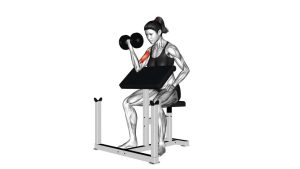
Is a lever preacher curl better than a dumbbell preacher curl?
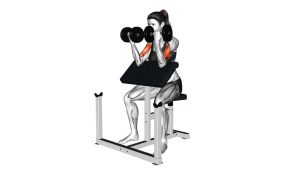
Neither is always better. The lever machine offers more stability and makes it easier to keep strict form, while dumbbells may provide a slightly freer movement path. The machine is excellent when you want consistency and reduced cheating.
Should I lock out at the bottom?
No. You can approach full extension, but avoid aggressively locking the elbows. Keep the bottom position controlled so tension stays on the biceps and stress on the joint stays lower.
How heavy should I go on this machine?
Use a load that lets you complete every rep with your upper arms fixed to the pad and the lowering phase controlled. If you have to lift your chest or jerk the handles, it is too heavy.
Where should I feel this exercise the most?
You should feel it primarily in the front of the upper arms, especially through the middle and top of the curl. If you mostly feel your wrists, elbows, or shoulders, check your setup and reduce the load.
Recommended Equipment
- Weight Lifting Gloves — helpful for grip comfort during machine-based arm work
- Olympic Weight Plates — needed for loading most plate-loaded preacher curl machines
- Barbell Collars / Plate Clamps — useful for securing plates on compatible machine sleeves
- Elbow Sleeves — optional support for lifters who want extra warmth and comfort around the elbows
- Workout Log Book — useful for tracking machine load, reps, tempo, and progression over time
Tip: This exercise responds well to consistent progression, so tracking load and rep quality is often more useful than chasing heavy, sloppy reps.