Dumbbell Incline Biceps Curl: Proper Form, Sets, Muscles Worked & FAQ
Learn how to perform the Dumbbell Incline Biceps Curl with proper form. Discover muscles worked, setup, step-by-step execution, sets and reps by goal, common mistakes, FAQs, and recommended equipment.
Dumbbell Incline Biceps Curl
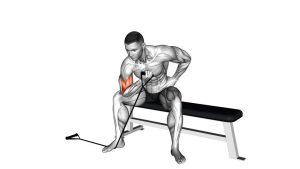
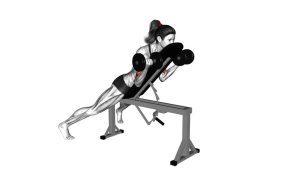
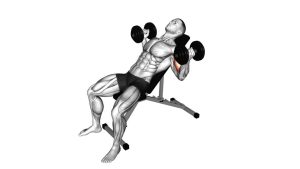
This exercise works best when performed with strict form, a controlled tempo, and a full stretch at the bottom. Because the bench angle places the shoulders slightly behind the torso, the biceps begin each rep from a lengthened position, making this variation excellent for muscle growth and arm development. Focus on moving only at the elbows while keeping the shoulders quiet and the wrists neutral.
Quick Overview
| Body Part | Biceps |
|---|---|
| Primary Muscle | Biceps brachii (especially the long head) |
| Secondary Muscle | Brachialis, brachioradialis, forearm flexors |
| Equipment | Dumbbells and an incline bench |
| Difficulty | Beginner to Intermediate |
Sets & Reps (By Goal)
- Muscle growth: 3–4 sets × 8–12 reps with 60–90 seconds rest
- Strength-focused arm work: 4–5 sets × 6–8 reps with 90–120 seconds rest
- Technique and control: 2–3 sets × 10–15 reps with light to moderate weight
- Finisher / pump work: 2–3 sets × 12–15 reps with slow lowering and short rest
Progression rule: Increase the load only after you can complete all target reps with full range of motion, a strong stretch at the bottom, and no swinging or elbow drift.
Setup / Starting Position
- Set the bench: Adjust an incline bench to about 45–60 degrees.
- Sit back fully: Rest your upper back and head against the bench for support.
- Hold the dumbbells: Let your arms hang straight down with a supinated grip, palms facing forward.
- Keep your chest open: Shoulders stay back and down without shrugging.
- Start from a stretch: The elbows should remain slightly behind the torso, creating tension in the biceps before the curl begins.
Tip: Keep your feet planted firmly on the floor so the torso stays stable throughout the set.
Execution (Step-by-Step)
- Brace and stay still: Keep your back against the bench and your shoulders relaxed.
- Begin the curl: Bend your elbows to raise the dumbbells upward in a smooth arc.
- Keep elbows fixed: Do not let the upper arms swing forward as the weights rise.
- Reach peak contraction: Curl until the dumbbells approach shoulder level and squeeze the biceps at the top.
- Lower with control: Slowly return the dumbbells to the starting position until your arms are fully extended.
- Repeat smoothly: Start the next rep without bouncing or losing posture.
Pro Tips & Common Mistakes
- Use full range: Let the biceps stretch fully at the bottom, but stay in control.
- Don’t swing: Momentum reduces tension on the biceps and shifts work away from the target muscles.
- Keep elbows back: Letting the elbows drift forward turns the lift into a more standard curl.
- Control the lowering phase: A slow eccentric improves tension and muscle-building stimulus.
- Keep wrists neutral: Avoid excessive wrist curling to keep tension where it belongs.
- Choose the right bench angle: A moderate incline usually feels best for biceps stretch without irritating the shoulders.
FAQ
What makes the incline biceps curl different from a regular dumbbell curl?
The incline position places your arms behind your torso, which increases the stretch on the biceps, especially the long head. This usually makes the exercise feel harder and more isolating than a standard standing curl.
What part of the biceps does this exercise emphasize?
It strongly emphasizes the long head of the biceps because the shoulder position lengthens the muscle at the bottom of the lift.
Should I curl both dumbbells at the same time or alternate them?
Both options work. Curling both together is efficient, while alternating reps can help you focus more on each arm and maintain strict control.
Why do my shoulders feel tired during incline curls?
This can happen if the bench angle is too steep, the dumbbells are too heavy, or your shoulders are rolling forward. Lower the weight, keep the chest open, and make sure the bench supports your upper back well.
Is the incline biceps curl good for muscle growth?
Yes. It is one of the best dumbbell curl variations for hypertrophy because it challenges the biceps in a stretched position and encourages strict technique.
Recommended Equipment
- Adjustable Dumbbells — convenient for progressive overload without needing multiple dumbbell pairs
- Adjustable Incline Weight Bench — essential for setting the proper angle and supporting strict form
- Lifting Straps — optional support if grip fatigue limits your reps before your biceps do
- Weightlifting Gloves — can improve comfort and grip during higher-rep arm sessions
- Resistance Bands Set — useful for warm-ups, elbow prep, and extra arm training volume
Tip: The most important pieces here are a stable incline bench and a pair of dumbbells you can control through a full range of motion.