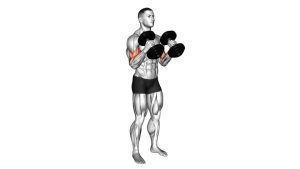
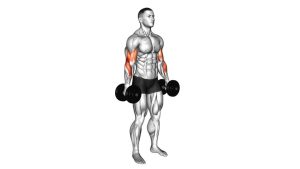
Dumbbell Reverse Grip Biceps Curl: Form, Sets, Tips & FAQ
Learn the Dumbbell Reverse Grip Biceps Curl to build forearms, brachioradialis, and arm strength. Includes proper form, sets by goal, common mistakes, FAQs, and recommended equipment.
Dumbbell Reverse Grip Biceps Curl
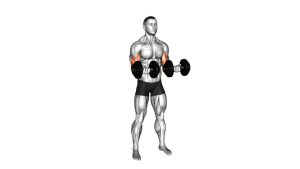
This exercise works best with moderate weight and disciplined form. Because the reverse grip reduces your leverage compared with a standard curl, you will usually use less load. Keep your elbows close to your sides, your chest tall, and your wrists straight. You should feel strong tension through the top of the forearms and the front of the upper arms, especially as the dumbbells pass the mid-range.
Quick Overview
| Body Part | Forearms |
|---|---|
| Primary Muscle | Brachioradialis |
| Secondary Muscle | Brachialis, Biceps Brachii, Wrist Extensors |
| Equipment | Pair of dumbbells |
| Difficulty | Beginner to Intermediate |
Sets & Reps (By Goal)
- Forearm hypertrophy: 3–4 sets × 8–12 reps, 60–90 sec rest
- Arm strength: 4–5 sets × 5–8 reps, 90–120 sec rest
- Accessory work after rows or curls: 2–3 sets × 10–15 reps, 45–75 sec rest
- Grip and forearm endurance: 2–3 sets × 12–20 reps, controlled tempo, 45–60 sec rest
Progression rule: First improve control, then add reps, then add small amounts of weight. Reverse curls respond best to clean reps, stable wrists, and full control on the lowering phase.
Setup / Starting Position
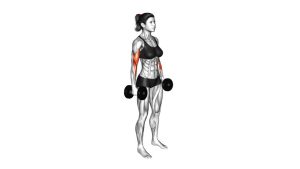
- Stand tall: Keep your feet about hip- to shoulder-width apart and brace your torso lightly.
- Hold the dumbbells with a reverse grip: Your palms should face backward/down rather than forward.
- Let the arms hang naturally: Start with the dumbbells by your sides and the elbows fully extended but not hyperextended.
- Set the shoulders: Keep them down and back without shrugging.
- Lock in the wrists: Maintain a straight, neutral wrist position before every rep.
Tip: Use a lighter weight than your normal dumbbell curl. The pronated grip makes this variation harder and more forearm-dominant.
Execution (Step-by-Step)
- Start from the bottom: Stand tall with the dumbbells hanging at your sides and palms facing down/back.
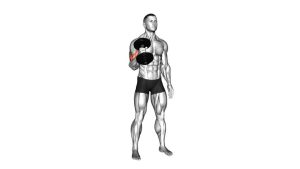
- Curl the weights upward: Bend at the elbows and raise the dumbbells in a smooth arc toward the front of your torso.
- Keep the elbows close: Do not let them drift far forward or flare away from your body.
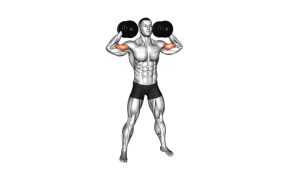
- Hold the top briefly: Pause for a moment near the top while keeping the wrists neutral and the shoulders relaxed.
- Lower under control: Slowly return the dumbbells to the starting position without dropping them.
- Reset and repeat: Re-establish posture and wrist position before the next repetition.
Pro Tips & Common Mistakes
- Keep the wrists straight: Letting them curl or collapse reduces efficiency and can irritate the wrists.
- Use less weight than standard curls: The reverse grip is mechanically weaker, so strict form matters more than load.
- Control the eccentric: Lowering slowly increases forearm tension and keeps the movement cleaner.
- Don’t swing from the hips: Momentum takes stress off the target muscles.
- Don’t shrug the shoulders: Keep the traps relaxed so the elbows remain the main moving joint.
- Train it after big pulling work: This exercise fits well after rows, pull-ups, or standard curls.
FAQ
What muscles does the dumbbell reverse grip biceps curl target most?
It mainly emphasizes the brachioradialis in the forearm, while also training the brachialis and biceps. That is why it is popular for building thicker forearms and stronger elbow flexors.
Why does this exercise feel harder than a normal dumbbell curl?
The pronated grip places your arms in a weaker mechanical position, so you usually cannot lift as much weight as you can with a supinated curl. That is normal and expected.
Should I do reverse curls for forearm growth?
Yes. Reverse curls are one of the best simple options for adding direct forearm work, especially for the brachioradialis. They also help balance out arm training if you already do many standard curls.
Can beginners use this exercise?
Absolutely. Beginners should start with light dumbbells and focus on slow, strict reps before trying to increase the load.
What is the biggest mistake with reverse grip dumbbell curls?
The most common mistake is using too much weight, which leads to swinging, wrist bending, and shoulder involvement. A clean reverse curl should stay controlled from start to finish.
Recommended Equipment
- Adjustable Dumbbells — ideal for progressive overload as your reverse curl strength improves
- Fat Gripz / Thick Dumbbell Grips — useful if you want extra grip and forearm demand during curls and carries
- Weightlifting Wrist Wraps — helpful for lifters who want added wrist support during arm training
- Flat Weight Bench — useful for seated curls and other upper-body accessory work
- Resistance Bands Set — great for warm-ups, elbow prep, and adding extra forearm and arm volume
Tip: Prioritize a comfortable dumbbell handle, manageable load jumps, and stable wrist position before adding specialty grip tools.