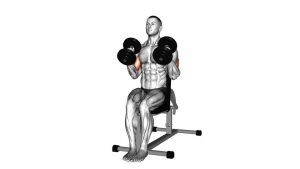
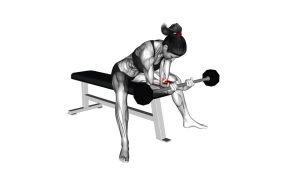
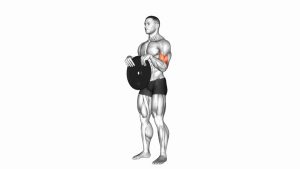
Dumbbell Standing Reverse Curl: Proper Form, Sets, Tips & FAQ
Learn how to do the Dumbbell Standing Reverse Curl with proper form to build forearms, brachioradialis, and grip strength. Includes setup, execution, sets by goal, common mistakes, FAQs, and recommended equipment.
Dumbbell Standing Reverse Curl
This exercise works best when you focus on strict elbow flexion rather than swinging the weights. The goal is to raise the dumbbells smoothly with a pronated grip while keeping the shoulders quiet and the torso stable. You should feel strong tension through the brachioradialis and the muscles of the forearm, with some secondary assistance from the biceps and brachialis.
Quick Overview
| Body Part | Forearms |
|---|---|
| Primary Muscle | Brachioradialis |
| Secondary Muscle | Forearm extensors, brachialis, biceps brachii |
| Equipment | Dumbbells |
| Difficulty | Beginner to Intermediate |
Sets & Reps (By Goal)
- Forearm muscle growth: 3–4 sets × 8–12 reps, 60–90 sec rest
- Grip and arm strength: 4–5 sets × 5–8 reps, 90–120 sec rest
- Technique and control: 2–3 sets × 10–15 reps, light-to-moderate weight, 45–75 sec rest
- Finisher after pull or arm workouts: 2–3 sets × 12–15 reps with strict form
Progression rule: Increase the load only when you can keep your elbows stable, wrists neutral, and the eccentric phase controlled without leaning back or using momentum.
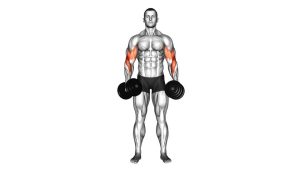
Setup / Starting Position
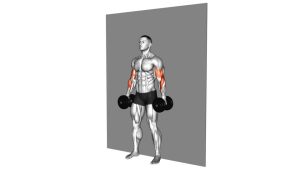
- Stand tall: Place your feet about hip- to shoulder-width apart and brace your core lightly.
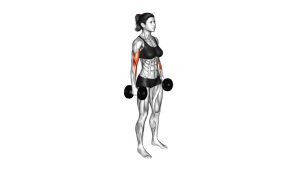
- Hold the dumbbells with a pronated grip: Your palms should face behind you or slightly downward in front of the thighs.
- Set the arms: Let the arms hang naturally with the elbows close to your sides.
- Keep the wrists neutral: Do not let them fold backward or curl forward.
- Lift the chest slightly: Keep the shoulders down and back without over-arching the lower back.
Tip: Start with lighter dumbbells than you would use for a standard curl. The pronated grip makes this exercise much tougher.
Execution (Step-by-Step)
- Brace and lock in: Tighten your core slightly and keep your torso still.
- Curl the dumbbells upward: Bend the elbows and raise the weights in a smooth arc while keeping the palms facing down.
- Keep elbows pinned: The elbows should stay close to the body instead of drifting far forward.
- Reach the top under control: Curl until the forearms are near vertical or until you reach a strong contraction without losing wrist position.
- Pause briefly: Squeeze the forearms and brachioradialis for a moment at the top.
- Lower slowly: Return the dumbbells to the starting position with a controlled eccentric phase.
- Reset and repeat: Keep tension and posture consistent on every rep.
Pro Tips & Common Mistakes
- Use a true pronated grip: Turning the hands too much toward neutral shifts emphasis away from the reverse curl.
- Keep wrists straight: Bent wrists reduce force transfer and may irritate the joint.
- Avoid swinging: Leaning back to move the dumbbells turns the rep into a cheat curl.
- Control the lowering phase: The eccentric builds forearm strength and helps reinforce proper mechanics.
- Don’t over-curl at the top: Lift only as high as you can while maintaining tension and clean elbow tracking.
- Use moderate loads: Reverse curls are more about tension and control than moving heavy weight.
- Pair it smartly: This exercise fits well after rows, pull-ups, hammer curls, or direct arm training.
FAQ
What muscles does the dumbbell standing reverse curl work?
It mainly targets the brachioradialis, which is a major forearm muscle involved in elbow flexion. It also works the forearm extensors, brachialis, and to a lesser extent the biceps.
Is the reverse curl better for forearms than a regular curl?
For direct forearm emphasis, yes. The pronated grip makes the forearms and brachioradialis work harder than they do during a standard supinated curl.
Why does this exercise feel harder than a normal dumbbell curl?
The pronated grip places the elbow flexors in a weaker mechanical position, so you typically need less weight than you would for standard curls.
Should I do reverse curls heavy or light?
Most lifters do best with light-to-moderate loads and strict form. Heavy weights often cause wrist breakdown and body swing.
Can beginners do dumbbell standing reverse curls?
Yes. Beginners can use very manageable dumbbells and focus on control, wrist position, and smooth reps before progressing in load.
Recommended Equipment
- Adjustable Dumbbells — versatile for progressive loading as your reverse curl strength improves
- Rubber Hex Dumbbells — durable fixed-weight option for strict curls and general strength training
- Wrist Wraps — helpful for lifters who need extra wrist support during pronated curling work
- Forearm Grip Strengthener — useful for adding extra grip and forearm endurance work outside of curls
- Weightlifting Gloves — can improve comfort and grip feel during higher-rep dumbbell training
Tip: For most people, a pair of adjustable dumbbells and good wrist positioning are more valuable than using excessive weight too early.