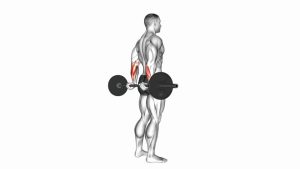
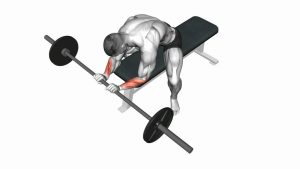
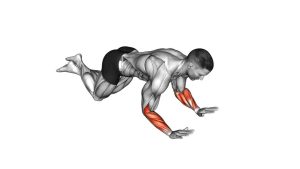
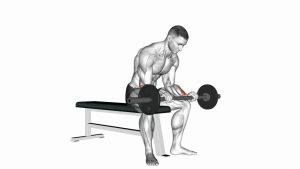
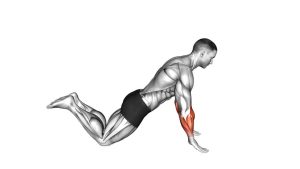
Band Reverse Wrist Curl: Proper Form, Sets, Benefits & FAQ
Learn how to perform the Band Reverse Wrist Curl for stronger forearm extensors, better wrist stability, and improved grip balance. Includes setup, execution, sets by goal, mistakes, FAQ, and recommended equipment.
Band Reverse Wrist Curl
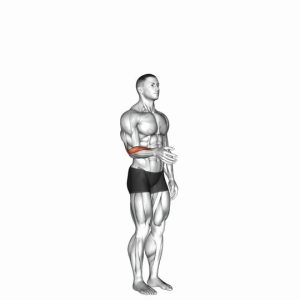
This exercise works best when performed with strict wrist isolation and steady tension. You should feel the effort in the upper forearm extensors, not in the shoulders or upper arms. Keep the movement controlled, avoid swinging, and focus on lifting the back of the hands upward without letting the elbows drift or the forearms bounce.
Quick Overview
| Body Part | Forearms |
|---|---|
| Primary Muscle | Wrist extensors (extensor carpi radialis, extensor carpi ulnaris, extensor digitorum) |
| Secondary Muscle | Brachioradialis, grip stabilizers, small wrist-supporting muscles |
| Equipment | Resistance band |
| Difficulty | Beginner |
Sets & Reps (By Goal)
- General forearm strength: 3-4 sets × 10-15 reps
- Muscle growth / endurance: 3-4 sets × 12-20 reps with slow lowering
- Warm-up / joint prep: 2-3 sets × 15-20 light reps
- Rehab-style control: 2-3 sets × 8-12 reps with very light tension and strict tempo
Progression rule: Increase band tension only after you can complete all reps with smooth control, no elbow movement, and no wrist pain. For many lifters, slower eccentrics are a better progression than simply using a stronger band.
Setup / Starting Position
- Anchor the band: Secure the resistance band under your feet or another low stable point.
- Take a pronated grip: Hold the band with palms facing down.
- Support the forearms: Rest your forearms on your thighs or a bench so only the wrists can move freely.
- Set the wrist position: Start with the wrists neutral or slightly flexed downward.
- Brace lightly: Keep the elbows still, shoulders relaxed, and torso quiet.
Tip: A seated position with forearms supported usually makes this exercise cleaner and easier to control.
Execution (Step-by-Step)
- Start under tension: Hold the band firmly with palms down and keep the forearms fixed.
- Extend the wrists upward: Lift the backs of your hands toward your forearms without moving the elbows.
- Reach peak contraction: Stop when you feel a strong squeeze in the top side of the forearms.
- Pause briefly: Hold the top for 1 second without shrugging or gripping excessively hard.
- Lower slowly: Return to the start position under control, keeping tension on the band.
- Repeat evenly: Use the same tempo for every rep and avoid rushing the lowering phase.
Pro Tips & Common Mistakes
- Move only at the wrists: The forearms should stay planted and stable.
- Use a moderate grip: Squeezing too hard can create unnecessary tension in the hands and upper forearms.
- Control the eccentric: The lowering phase is where a lot of the training value happens.
- Don’t overload the band: Too much tension often causes jerking and poor wrist mechanics.
- Avoid excessive wrist bend: Lift high enough to contract the extensors, but do not force painful range.
- Train balance: Pair reverse wrist curls with regular wrist curls or grip work for better forearm development.
FAQ
What muscles does the Band Reverse Wrist Curl work?
It mainly targets the wrist extensor muscles on the top side of the forearm. These muscles help extend the wrist and support grip-related movements.
Is this different from a regular wrist curl?
Yes. A regular wrist curl usually trains the wrist flexors with palms facing up, while a reverse wrist curl uses a palms-down position to emphasize the extensors.
Should I do this exercise with both hands at once or one at a time?
Both options work. Training both wrists together is more efficient, while one-arm work can help you focus on symmetry, control, and side-to-side strength differences.
How heavy should the resistance band be?
Use a band that allows you to move through a full controlled range without elbow movement or wrist pain. If you have to swing or rush the rep, the tension is too high.
Can this help with wrist strength for lifting or sports?
Yes. Stronger wrist extensors can help support wrist balance, grip endurance, and forearm resilience for lifting, climbing, racket sports, and general upper-body training.
Recommended Equipment
- Resistance Bands Set — useful for scalable tension, warm-ups, forearm work, and many other upper-body exercises
- Wrist Roller — a classic forearm strength tool that pairs well with reverse wrist curls
- Forearm Exerciser — great for extra wrist and forearm training outside of your main workout
- Adjustable Hand Gripper — helps build grip strength to complement extensor-focused forearm work
- Hand / Finger Resistance Bands — useful for finger extension and balanced lower-arm training
Tip: For this exercise, a standard resistance band set is the most versatile first purchase. Then add a wrist roller or hand gripper if you want more focused forearm work.