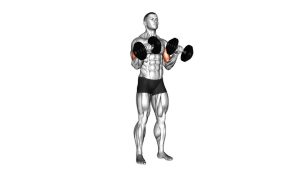
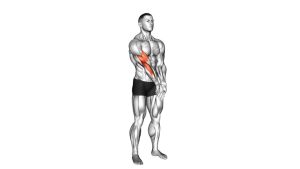
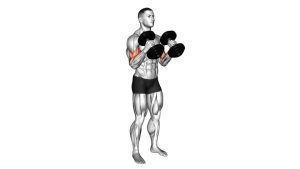
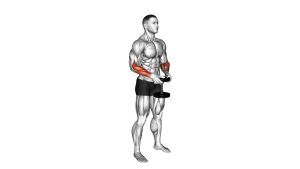
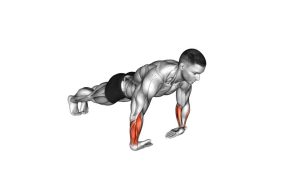
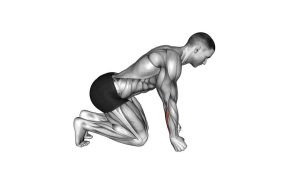
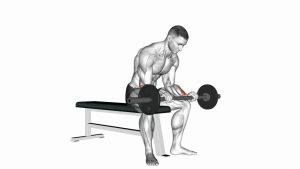
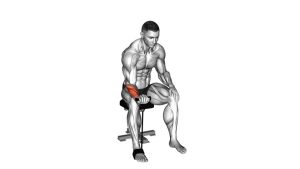
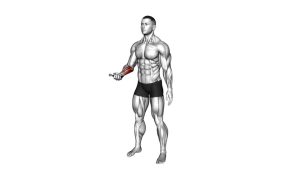
Wrist Adduction: Proper Form, Forearm Muscles, Sets, Tips & FAQ
Learn the Wrist Adduction exercise to strengthen ulnar-side forearm muscles, improve wrist control, and build better grip stability. Includes form cues, sets, mistakes, FAQs, and equipment.
Wrist Adduction
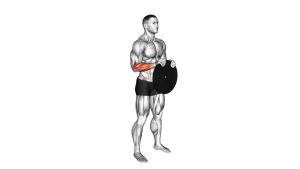
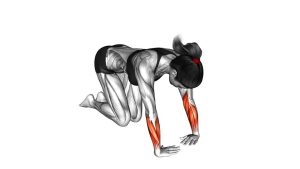
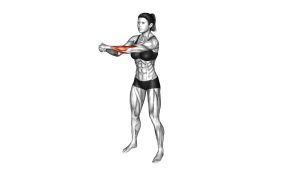
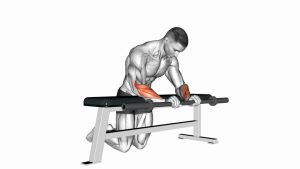
Wrist adduction is best used as a precision strength and control drill. The movement range is naturally small, so the goal is not to swing the hand aggressively. Instead, focus on moving the hand smoothly toward the pinky side, pausing briefly, and returning to neutral with control. This makes it useful for forearm strengthening, wrist stability, grip support, and balanced lower-arm development.
Quick Overview
| Body Part | Forearms |
|---|---|
| Primary Muscle | Flexor carpi ulnaris |
| Secondary Muscle | Extensor carpi ulnaris, wrist stabilizers, grip-support muscles |
| Equipment | No equipment, light dumbbell, resistance band, or wrist roller handle |
| Difficulty | Beginner |
Sets & Reps (By Goal)
- Wrist control / mobility: 2–3 sets × 12–15 slow reps per side
- Forearm strengthening: 3–4 sets × 10–15 reps per side
- Grip support: 2–4 sets × 12–20 reps using light resistance
- Rehab-style control: 2–3 sets × 8–12 reps with a 2–3 second pause
Progression rule: Add control before load. Increase hold time, tempo, or reps first. Use heavier resistance only when the wrist stays smooth and pain-free.
Setup / Starting Position
- Position your arm: Bend the elbow around 90 degrees and keep the forearm stable.
- Set the wrist neutral: Start with the wrist straight, not bent forward, backward, or twisted.
- Choose your resistance: Use no weight first, then progress to a very light dumbbell or band if needed.
- Relax the shoulder: Keep the shoulder down and avoid shrugging or rotating the arm.
- Brace lightly: Keep the elbow still so the movement comes only from the wrist.
Tip: This movement is easiest to learn with the forearm supported on a bench, table, or thigh.
Execution (Step-by-Step)
- Start neutral: Keep the wrist straight and the hand aligned with the forearm.
- Move toward the pinky side: Slowly pull the hand into wrist adduction / ulnar deviation.
- Pause briefly: Hold the end position for 1–2 seconds without forcing the range.
- Return with control: Bring the wrist back to neutral slowly instead of letting it snap back.
- Repeat clean reps: Keep each repetition small, smooth, and isolated at the wrist.
Pro Tips & Common Mistakes
- Use a small range: Wrist adduction is naturally limited. Do not force extra motion.
- Avoid forearm rotation: Keep the palm and forearm position stable throughout the set.
- Do not use momentum: Swinging reduces muscle tension and can irritate the wrist.
- Keep the grip light: Over-gripping can create unnecessary forearm tension.
- Control the return: The lowering phase is just as important as the lifting phase.
- Start light: Heavy resistance can quickly overload the small wrist structures.
FAQ
What is wrist adduction?
Wrist adduction is the movement of the hand toward the pinky side. It is also called ulnar deviation.
What muscles does wrist adduction work?
The main muscles are the flexor carpi ulnaris and extensor carpi ulnaris. Smaller wrist stabilizers also help control the movement.
Is wrist adduction good for grip strength?
Yes. It supports grip strength by improving wrist stability and forearm control, especially during lifting, pulling, carrying, and racket or club-style sports.
Should I use heavy weight for this exercise?
No. This is a small wrist movement, so light resistance is usually best. Focus on smooth reps, clean control, and pain-free range.
Why does my wrist click during the movement?
Some clicking can happen without pain, but painful clicking, sharp discomfort, or instability should not be ignored. Reduce the range, remove load, and seek professional guidance if symptoms continue.
Recommended Equipment
- Adjustable Dumbbell Set — useful for controlled wrist adduction progressions with light loading
- Light Resistance Bands Set — great for smooth wrist control and low-load forearm training
- Wrist Strengthener / Forearm Trainer — helps train wrist stability, grip support, and forearm endurance
- Wrist Wraps / Wrist Support — optional support for heavier workouts or sensitive wrists
- Forearm Wrist Roller — useful for broader forearm strength and grip conditioning
Tip: Use equipment only if it improves control. If resistance causes pain, reduce load or return to bodyweight wrist movement.