Wrist Extension: Proper Form, Forearm Extensor Strength, Sets, Tips & FAQ
Learn how to perform Wrist Extension with proper form to strengthen the forearm extensors, improve wrist control, and support grip balance. Includes setup, execution, sets, mistakes, FAQs, and equipment.
Wrist Extension
This exercise is especially useful because many gripping and curling movements overwork the wrist flexors, while the wrist extensors are often undertrained. A controlled wrist extension helps balance the forearm, supports stronger pressing and pulling mechanics, and may help build better wrist control during training, sports, and daily activities.
Quick Overview
| Body Part | Forearms |
|---|---|
| Primary Muscle | Wrist extensors |
| Secondary Muscle | Finger extensors, brachioradialis, wrist stabilizers |
| Equipment | Light dumbbell, resistance band, or cable handle |
| Difficulty | Beginner |
Sets & Reps (By Goal)
- Beginner control: 2–3 sets × 12–15 reps per side, light weight, slow tempo
- Forearm strength: 3–4 sets × 8–12 reps per side, controlled full range
- Muscle endurance: 2–4 sets × 15–25 reps with a lighter load
- Rehab-style wrist control: 2–3 sets × 10–15 reps, very light resistance, pain-free range
- Grip balance accessory work: 2–3 sets × 12–20 reps after upper-body training
Progression rule: Increase reps first, then increase weight slowly. Wrist extension responds best to controlled, moderate loading—not heavy swinging.
Setup / Starting Position
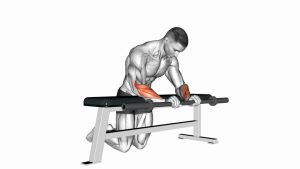
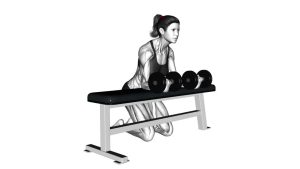
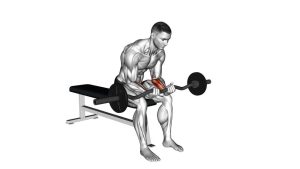
- Sit beside a bench or stable surface: Place your forearm on the surface with your wrist hanging slightly off the edge.
- Use a light weight: Hold a dumbbell with your palm facing down. Start lighter than you think you need because the wrist extensors are small muscles.
- Anchor the forearm: Keep the forearm, elbow, and upper arm still throughout the movement.
- Start with the wrist slightly lowered: Let the hand move into a comfortable bottom position without forcing the stretch.
- Keep your grip controlled: Hold the dumbbell securely, but avoid squeezing so hard that the forearm becomes overly tense.
Tip: The cleaner your setup, the better the isolation. If your elbow lifts or your shoulder moves, the load is probably too heavy.
Execution (Step-by-Step)
- Brace the forearm: Keep the forearm planted on the bench, thigh, or support surface.
- Begin from the lowered position: Allow the wrist to start slightly flexed, with the hand angled downward.
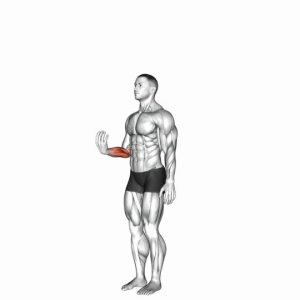
- Extend the wrist upward: Raise the back of the hand toward the ceiling using only the wrist joint.
- Squeeze briefly at the top: Pause for about 1 second when the wrist reaches its highest comfortable position.
- Lower slowly: Control the weight back down until the wrist returns to the starting position.
- Repeat with smooth reps: Keep each repetition slow, clean, and consistent.
Pro Tips & Common Mistakes
- Use light resistance: Wrist extensions are not meant to be loaded like heavy curls. Too much weight usually leads to poor form.
- Move only at the wrist: The elbow, forearm, and shoulder should stay quiet and stable.
- Do not rush the lowering phase: A slow eccentric helps build stronger and more resilient forearm extensors.
- Avoid gripping too aggressively: Excessive grip tension can make the movement feel stiff and reduce wrist control.
- Keep the range comfortable: Do not force the wrist into painful extension or flexion.
- Train both sides evenly: Perform the same number of sets and reps on each arm.
- Pair it with wrist curls: Combining wrist extension with wrist flexion work helps train the forearm more completely.
FAQ
What muscles does wrist extension work?
Wrist extension primarily targets the forearm extensors, which are located on the back side of the forearm. These muscles help lift the hand upward and stabilize the wrist during gripping, pressing, pulling, and daily hand use.
Should I use heavy weight for wrist extensions?
No. This exercise works best with light to moderate resistance and strict control. Heavy weight often causes swinging, elbow movement, or wrist strain.
Where should I feel wrist extension?
You should feel the work along the top/back side of the forearm. You may also feel some wrist stabilizer activity, but you should not feel sharp pain in the wrist joint.
Is wrist extension good for grip strength?
Yes. While the exercise does not train crushing grip directly, it helps balance the forearm by strengthening the wrist extensors. This can support better wrist position and stronger overall grip mechanics.
Can beginners do wrist extensions?
Yes. Beginners can start with a very light dumbbell, resistance band, or even no weight while learning the motion. The key is keeping the forearm supported and moving only through the wrist.
Why does my wrist hurt during wrist extensions?
Wrist pain may happen if the weight is too heavy, the range is forced, or the wrist is moving too quickly. Reduce the load, shorten the range, and focus on smooth control. Stop if pain continues.
Recommended Equipment
- Adjustable Dumbbells — ideal for gradually increasing wrist-extension resistance
- Light Dumbbell Set — useful for beginners and high-rep forearm training
- Resistance Bands with Handles — provides smooth tension for wrist-extension variations
- Forearm Wrist Roller — great for building wrist and forearm endurance
- Wrist Wraps — optional support for heavier training days and wrist comfort
Choose equipment that allows smooth, pain-free reps. For this exercise, control matters more than heavy loading.