Dumbbell Bench Dip: Proper Form, Muscles Worked, Sets, Tips & FAQ
Learn how to do the Dumbbell Bench Dip with proper form to build stronger triceps and upper arms. Includes setup, step-by-step execution, sets by goal, mistakes, FAQs, and equipment.
Dumbbell Bench Dip
The Dumbbell Bench Dip is best used when you already control a standard bench dip with clean form. Adding a dumbbell increases loading through the triceps, so the movement must stay smooth, stable, and deliberate. The most important detail is not simply going low; it is lowering only as far as your shoulders can tolerate while keeping the chest lifted, the elbows controlled, and the dumbbell steady on the thighs.
This exercise can be useful for building stronger triceps, improving upper-arm size, and increasing lockout strength for pressing movements. However, because the shoulder is placed behind the body during the dip, technique matters. A clean rep should feel like the triceps are doing the majority of the work, not like the front of the shoulders are being aggressively stretched or jammed.
Quick Overview
| Body Part | Triceps |
|---|---|
| Primary Muscle | Triceps brachii, especially the lateral and long heads |
| Secondary Muscle | Anterior deltoids, lower chest, serratus anterior, scapular stabilizers, core |
| Equipment | Two flat benches or one bench with feet on the floor, plus one dumbbell placed across the lap |
| Difficulty | Intermediate because the added dumbbell load increases shoulder and triceps demand |
Sets & Reps (By Goal)
- Muscle growth: 3–4 sets of 8–12 reps with a controlled 2–3 second lowering phase.
- Strength focus: 4–5 sets of 5–8 reps using a heavier dumbbell while keeping full control.
- Triceps endurance: 2–3 sets of 12–20 reps with lighter loading and smooth tempo.
- Beginner progression: Master bodyweight bench dips first, then add a light dumbbell for 2–3 sets of 8–10 reps.
- Finisher option: 1–2 high-quality sets near the end of an arm workout, stopping 1–2 reps before form breaks.
Progression rule: Increase reps before increasing dumbbell weight. Once you can perform every rep with stable shoulders, controlled elbows, and no bouncing at the bottom, add a small amount of weight.
Setup / Starting Position
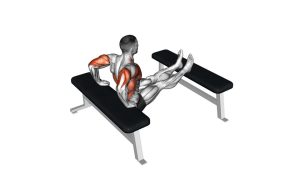
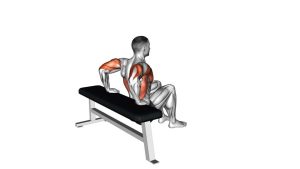
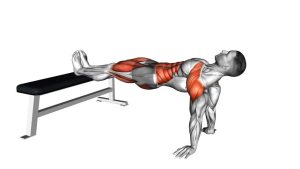
- Place the benches: Set one bench behind you for your hands and another bench in front for your heels. If you do not have two benches, keep your feet on the floor to make the exercise easier.
- Sit on the edge: Position your hands beside your hips on the edge of the rear bench. Keep the palms down, fingers pointing forward, and hands about shoulder-width apart.
- Add the dumbbell: Place one dumbbell securely across the upper thighs or lap. It should sit flat and stable, not near the knees where it may slide.
- Extend the legs: Place the heels on the front bench with the legs mostly straight. Keep the feet stable and avoid letting the body swing.
- Lift the hips off the bench: Slide forward slightly so the hips hover just in front of the bench edge. Keep the torso close to the bench throughout the movement.
- Set the shoulders: Pull the shoulders gently down and back. The chest should stay open without excessive arching.
- Prepare the elbows: Point the elbows backward instead of flaring them outward. This helps keep the movement triceps-focused and more controlled.
Setup tip: If the dumbbell feels unstable, ask a spotter to place it on your lap after you are in position. For solo training, start with a lighter dumbbell that you can position safely.
Execution (Step-by-Step)
- Start tall and stable: Begin with the arms straight, shoulders relaxed, chest lifted, and hips hovering close to the bench.
- Lower under control: Bend the elbows slowly and allow the body to move downward. Keep the elbows tracking mostly backward.
- Keep the dumbbell still: Maintain core tension so the dumbbell does not bounce, slide, or shift during the descent.
- Stop at a safe depth: Lower until the elbows are around 90 degrees or slightly deeper only if your shoulders feel comfortable.
- Avoid shoulder collapse: Do not let the shoulders roll forward at the bottom. The chest should remain open and the neck neutral.
- Press through the palms: Drive into the bench and extend the elbows to lift the body upward.
- Squeeze the triceps: Finish the rep by straightening the arms without aggressively locking the elbows.
- Reset before the next rep: Stabilize the shoulders, control the dumbbell, and repeat with the same smooth path.
Pro Tips & Common Mistakes
Pro Tips
- Use a controlled eccentric: Lower for 2–3 seconds to increase triceps tension and reduce joint stress.
- Keep the hips close to the bench: Staying close helps prevent excessive shoulder strain and keeps the movement efficient.
- Think elbows back: Backward elbow tracking makes the exercise feel more like a triceps dip instead of a shoulder-dominant movement.
- Stop before painful depth: A strong, pain-free range is better than forcing a deep dip with poor shoulder position.
- Use the dumbbell only when ready: If bodyweight reps are shaky, adding load will usually make the problem worse.
- Pair with overhead triceps work: Bench dips load the triceps differently from overhead extensions, so combining both can create a more complete arm workout.
Common Mistakes
- Going too deep: Excessive depth may place unnecessary stress on the front of the shoulder, especially with added weight.
- Letting elbows flare wide: Wide elbows reduce control and can shift tension away from the triceps.
- Bouncing at the bottom: Momentum removes tension from the target muscles and increases shoulder risk.
- Shrugging the shoulders: Elevated shoulders make the movement less stable and can create neck or trap tension.
- Using too much weight: A heavy dumbbell is not useful if range, tempo, and shoulder control disappear.
- Placing the dumbbell too low: If the dumbbell sits near the knees, it may slide or pull the legs out of position.
FAQ
What muscles does the Dumbbell Bench Dip work?
The main target is the triceps brachii, which extends the elbows during the press-up phase. The anterior deltoids, lower chest, and scapular stabilizers also assist, especially when the body is lowered under control.
Is the Dumbbell Bench Dip better than a regular bench dip?
It is not automatically better. The dumbbell version is harder because it adds resistance, making it useful for strength and muscle growth. However, a regular bench dip is better for learning control, building clean range, and protecting the shoulders before adding load.
How low should I go during a Dumbbell Bench Dip?
Lower until your elbows reach about 90 degrees or until you feel a strong but comfortable triceps stretch. Do not force extra depth if your shoulders roll forward, pinch, or feel unstable.
Should my feet be on a bench or on the floor?
Feet on a bench make the exercise harder because more bodyweight is supported by the arms. Feet on the floor make it easier and are a better option for beginners, warm-up sets, or anyone working on shoulder control.
Can I use this exercise for bigger arms?
Yes. The Dumbbell Bench Dip can help build bigger upper arms because it loads the triceps through a strong pressing pattern. For best results, combine it with other triceps movements such as cable pressdowns, overhead extensions, close-grip presses, and controlled bodyweight dips.
Why do I feel this exercise in my shoulders?
Some shoulder involvement is normal because the arms are behind the torso. However, sharp discomfort or excessive front-shoulder pressure usually means you are going too deep, using too much weight, flaring the elbows, or letting the shoulders roll forward.
Is the Dumbbell Bench Dip safe?
It can be safe when performed with proper depth, controlled tempo, and a load you can handle. People with shoulder pain, poor shoulder mobility, or previous shoulder injuries should use caution and may prefer safer triceps options such as cable pressdowns or assisted dip machines.
Recommended Equipment
- Adjustable Dumbbell — useful for progressively loading the bench dip without needing multiple fixed dumbbells.
- Flat Weight Bench — provides a stable hand support for dips and many other upper-body exercises.
- Pair of Exercise Benches — helpful if you want to place your hands on one bench and your heels on another.
- Weightlifting Gloves with Wrist Support — can improve grip comfort and reduce hand pressure on the bench edge.
- Thick Exercise Mat — useful under the benches or feet to improve comfort, stability, and floor protection.
Equipment tip: Stability matters more than load. Choose a bench that does not slide, wobble, or shift while you press through your hands.