Ring Russian Dip: Muscles Worked, Form, Sets, Tips & FAQ
Learn how to perform the Ring Russian Dip with proper form. Build advanced triceps, chest, shoulder, and ring stability with step-by-step execution, sets, mistakes, FAQs, and equipment.
Ring Russian Dip
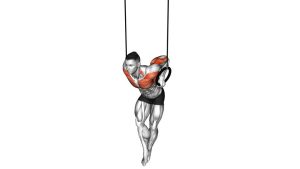
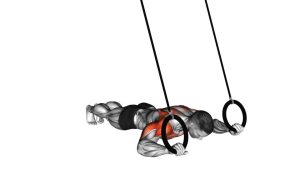
This exercise is best used by athletes who already have strong ring support holds, strict ring dips, and good shoulder control. The movement places the shoulders into a deep forward-leaning position, so it should never be rushed. Good Ring Russian Dips look smooth, tight, and controlled. The elbows bend deeply, the torso leans forward, and the rings stay close enough to the body to maintain strength instead of drifting wide and unstable.
Quick Overview
| Body Part | Triceps, Chest, Front Shoulders |
|---|---|
| Primary Muscle | Triceps brachii |
| Secondary Muscle | Pectoralis major, anterior deltoids, core, serratus anterior, scapular stabilizers, forearms |
| Equipment | Gymnastic rings with adjustable straps |
| Difficulty | Advanced |
Sets & Reps (By Goal)
- Skill learning: 3–5 sets × 2–4 slow reps, resting 90–150 seconds between sets.
- Strength development: 4–6 sets × 3–6 reps, using strict control and full lockout.
- Ring stability: 3–4 sets × 4–8 reps with a slower descent and controlled ring position.
- Advanced calisthenics preparation: 3–5 sets × 3–5 reps before muscle-up, ring dip, or planche accessory work.
- Assisted progression: 3–4 sets × 5–8 reps using band assistance or feet support.
Progression rule: Master strict ring dips first. Then practice shallow Russian dip transitions before moving into a deeper range. Increase depth only when your shoulders stay stable, elbows track cleanly, and the rings do not shake excessively.
Setup / Starting Position
- Set the rings: Adjust the gymnastic rings so they hang evenly and allow enough clearance for your body to dip deeply.
- Start in support: Jump or press into a top ring support position with arms straight and rings close to your hips.
- Lock the body: Brace your abs, squeeze your glutes lightly, and keep your legs together to reduce swinging.
- Depress the shoulders: Push down into the rings so your shoulders stay away from your ears.
- Control the rings: Keep the rings close to the body. A slight outward turn is fine, but do not let them drift wide.
- Prepare the lean: Keep your chest proud, elbows close, and eyes forward before starting the descent.
A strong support hold is mandatory. If you cannot hold the top ring position for 15–20 seconds without shaking heavily, build more ring support strength before training this exercise.
Execution (Step-by-Step)
- Begin from a stable ring support: Keep your elbows straight, shoulders down, chest lifted, and rings close to your sides.
- Start the descent: Bend your elbows slowly and lower your body like a strict ring dip. Keep your elbows tracking back instead of flaring aggressively outward.
- Lean forward into the Russian dip path: As you descend, allow your torso to angle forward. Your shoulders move slightly ahead of the rings while your elbows continue bending.
- Enter the deep bottom position: Lower until your elbows are deeply bent and your chest is close to the level of the rings. Maintain tension through your triceps, chest, shoulders, and core.
- Control ring width: The rings may move slightly outward, but they should not escape away from your body. Keep active pressure through your hands.
- Press back and up: Push strongly through the rings while bringing your torso back toward upright. Think of pressing down and slightly backward, not only straight up.
- Finish with full lockout: Extend your elbows fully, stabilize the rings beside your body, and return to a clean support hold.
- Reset before the next rep: Stop any ring swing, re-brace your core, and repeat only when the rings are stable again.
Pro Tips & Common Mistakes
Pro Tips
- Own the top support: A stable lockout makes every rep safer and cleaner.
- Lower slowly: The eccentric phase builds strength and teaches shoulder control.
- Keep the rings close: The farther the rings drift out, the harder and riskier the movement becomes.
- Use a tight body line: Braced abs and squeezed legs reduce swinging.
- Think “press back to support”: The ascent is a combination of pushing up and returning the torso upright.
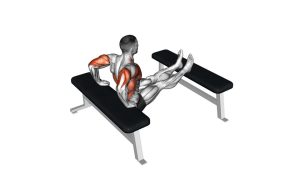
- Train progressions first: Parallel bar Russian dips, ring dips, and assisted ring dips build the foundation.
Common Mistakes
- Diving into the bottom: Dropping too fast increases stress on the shoulders and elbows.
- Letting the rings drift wide: This reduces pressing strength and can overload the shoulder joint.
- Shrugging the shoulders: Keep the shoulders depressed and controlled throughout the rep.
- Using momentum: Swinging may help you finish the rep, but it removes strength development and increases injury risk.
- Skipping lockout: Full support at the top trains ring stability and triceps control.
- Attempting it too early: This is not a beginner dip. Build strict ring dip strength first.
FAQ
What muscles does the Ring Russian Dip work?
The main working muscle is the triceps brachii. The chest, front shoulders, serratus anterior, core, forearms, and scapular stabilizers also work hard because the rings require constant control.
Is the Ring Russian Dip harder than a regular ring dip?
Yes. It is usually harder because the movement goes deeper and includes a forward-leaning Russian dip transition. The rings also create instability, which increases the demand on the shoulders, elbows, wrists, and core.
Can beginners do Ring Russian Dips?
Most beginners should not start with this variation. A better path is support holds, assisted ring dips, strict ring dips, parallel bar dips, and parallel bar Russian dips before attempting the full ring version.
Why do my rings shake during this exercise?
Ring shaking usually means your stabilizers are not strong enough yet, your body is swinging, or the rings are drifting too far away. Reduce the range of motion, slow down, and practice ring support holds.
Should I go as deep as possible?
No. Only go as deep as you can control without shoulder pain, elbow discomfort, or loss of ring position. Depth is useful only when your joints stay stable and the movement remains strict.
What is the best progression before Ring Russian Dips?
Start with parallel bar dips, strict ring dips, support holds, slow eccentric ring dips, and parallel bar Russian dips. Once those feel strong, use band assistance or light foot assistance to learn the ring Russian dip pattern.
Recommended Equipment
- Wooden Gymnastic Rings with Adjustable Straps — essential for performing Ring Russian Dips, ring dips, support holds, rows, and advanced calisthenics skills.
- Heavy Resistance Bands — useful for assisted Ring Russian Dip progressions and controlled eccentric practice.
- Calisthenics Parallettes — excellent for building Russian dip strength before progressing to unstable rings.
- Dip Belt — helpful for advanced athletes who want to strengthen regular dips before ring skill work.
- Liquid Chalk — improves grip on rings and reduces slipping during deep support and pressing phases.
Tip: Prioritize high-quality rings and secure straps first. Ring exercises depend heavily on stable setup, reliable grip, and safe anchor points.