Suspended Abdominal Fallout: Core Form, Benefits, Sets & Tips
Learn how to do the Suspended Abdominal Fallout with proper form, core control, sets, mistakes, FAQs, and equipment tips.
Suspended Abdominal Fallout
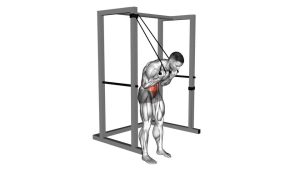
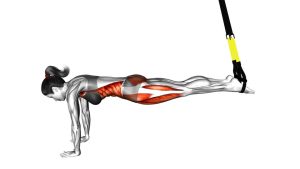
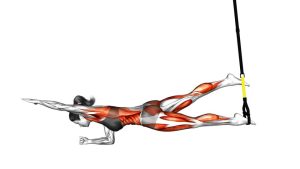
This exercise is similar to an ab wheel rollout, but the suspension straps allow you to control the angle and adjust the difficulty. A more upright body angle makes the exercise easier, while stepping farther back or leaning deeper makes it harder. Because the arms travel forward and the torso lengthens under tension, the abdominal wall must work hard to prevent the ribs from flaring and the lower back from sagging.
The Suspended Abdominal Fallout is best used when you already have solid plank control and can brace your core without holding your breath. Every rep should feel smooth, strict, and deliberate. If your hips drop, your back arches, or your shoulders lose control, shorten the range and rebuild tension before progressing.
Quick Overview
| Body Part | Core |
|---|---|
| Primary Muscle | Rectus abdominis |
| Secondary Muscle | Transverse abdominis, obliques, serratus anterior, lats, shoulders, hip flexors |
| Equipment | Suspension trainer / TRX-style straps |
| Difficulty | Intermediate to advanced |
Sets & Reps (By Goal)
- Core strength: 3–4 sets × 6–10 controlled reps with 60–90 seconds rest.
- Muscle endurance: 2–4 sets × 10–15 reps with a shorter but clean range of motion.
- Anti-extension control: 3 sets × 5–8 slow reps with a 1–2 second pause at the farthest point.
- Beginner progression: 2–3 sets × 5–8 partial reps from a more upright angle.
- Advanced challenge: 3–5 sets × 4–8 reps with a deeper lean and slower eccentric phase.
Progression rule: Increase range only when every rep stays strict. Do not progress by collapsing deeper. Instead, step back slightly, slow the tempo, or add a controlled pause while keeping your ribs down and hips aligned.
Setup / Starting Position
- Set the straps: Attach the suspension trainer securely above you. Adjust the handles so they hang around mid-torso to lower-chest height.
- Face away from the anchor: Hold one handle in each hand and extend your arms forward in front of your shoulders.
- Choose your angle: Step forward or backward until your body leans slightly into the straps. A more upright position is easier. A deeper lean is harder.
- Plant your feet: Keep your feet about hip-width apart. Press through the floor so your lower body stays stable.
- Brace your core: Pull your ribs down, lightly squeeze your glutes, and create a straight line from head to heels.
- Set your shoulders: Keep your shoulders packed and active. Avoid shrugging before you begin the rep.
- Start with control: Arms should be straight but not locked aggressively. Your body should feel firm before the movement begins.
Setup determines the difficulty. If the first rep feels too hard, reduce the body angle before continuing. A clean short rep is better than a long rep with poor spinal control.
Execution (Step-by-Step)
- Brace before moving: Take a small breath, tighten your abs, and keep your ribs stacked over your pelvis.
- Reach the handles forward: Let your arms move slowly away from your body while your torso leans forward as one unit.
- Keep your body straight: Maintain a long line from head to heels. Do not bend at the hips or let the lower back arch.
- Control the end range: Stop when you feel your abs working hard but before your spine loses position.
- Pause briefly: Hold the farthest position for a moment while keeping your shoulders stable and your core tight.
- Pull back with control: Use your abs, lats, and shoulders to guide the handles back toward the starting position.
- Reset each rep: Return to the original angle, breathe, re-brace, and repeat with the same strict pattern.
Pro Tips & Common Mistakes
Pro Tips
- Think “long plank”: Your body should stay rigid from head to heels during the entire rep.
- Move slowly: A controlled 2–3 second descent makes the abs work harder and reduces momentum.
- Keep the ribs down: This prevents lower-back arching and keeps tension on the core.
- Use the straps as guidance: Do not yank on the handles. Let your core control the movement.
- Stop before failure: End the set before your spine position breaks down.
- Adjust your stance: Widen your feet slightly if balance limits your performance.
Common Mistakes
- Arching the lower back: This shifts stress away from the abs and may irritate the lumbar spine.
- Going too deep too soon: A long range is only useful if you can control it.
- Bending the hips: Folding at the hips reduces core demand and changes the exercise pattern.
- Shrugging the shoulders: Keep the shoulders active but not jammed toward the ears.
- Pulling only with the arms: The return should come from a full-body brace, not just an arm pull.
- Holding the breath too long: Brace firmly, but keep your breathing controlled between reps.
FAQ
What muscles does the Suspended Abdominal Fallout work?
The main target is the rectus abdominis. The transverse abdominis and obliques also work hard to stabilize the trunk. The shoulders, lats, serratus anterior, glutes, and hip flexors assist by keeping the body aligned during the long-lever movement.
Is the Suspended Abdominal Fallout good for abs?
Yes. It is excellent for building strong abs because it trains the core to resist extension. This means your abs must prevent your lower back from arching as your arms move forward and your body lengthens.
Is this exercise beginner-friendly?
It can be modified for beginners, but the standard version is usually intermediate to advanced. Beginners should start with a more upright angle and a shorter range of motion. Mastering planks first is strongly recommended.
How do I make the Suspended Abdominal Fallout easier?
Stand more upright, reduce the forward reach, widen your feet, and slow down. You can also perform fewer reps and focus on perfect bracing before increasing the range.
How do I make it harder?
Step farther from the anchor, lean deeper, slow the lowering phase, pause at the end range, or narrow your stance. Only use these progressions if your lower back stays neutral.
Why do I feel this in my lower back?
Lower-back discomfort often means your abs are not controlling the movement, your ribs are flaring, or your range is too deep. Shorten the range, brace harder, and keep your hips from dropping.
Can this replace ab wheel rollouts?
It can be a strong alternative. Suspension straps allow easier angle adjustments, which makes the exercise more scalable than many ab wheel rollout variations.
Recommended Equipment
- Suspension Trainer — the main tool needed for Suspended Abdominal Fallouts and many core stability exercises.
- TRX Suspension Trainer — a popular strap system for adjustable bodyweight core training.
- Door Anchor for Suspension Trainer — useful for home setups when a ceiling or wall anchor is not available.
- Non-Slip Exercise Mat — helps improve foot grip and gives a safer training surface.
- Ab Wheel Roller — a related tool for progressing rollout-style anti-extension core strength.
Tip: Choose secure, high-quality suspension equipment and always test the anchor before training. Your setup should feel stable before you begin the first rep.