Cable Twist Down-Up: Form, Muscles Worked, Sets, Tips & FAQ
Learn the Cable Twist Down-Up for obliques, core rotation, and athletic power. Includes setup, execution, sets, mistakes, FAQ, and equipment.
Cable Twist (Down-Up)
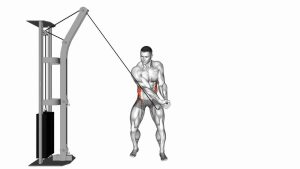
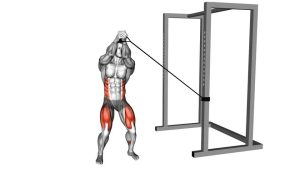
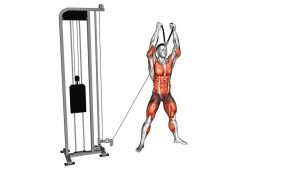
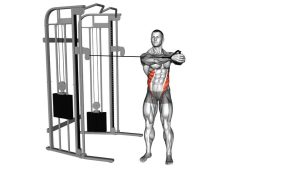
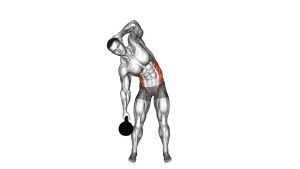
This exercise is best understood as a low-to-high cable woodchopper variation. You begin with the handle near the outside hip, then rotate your torso away from the machine while guiding the cable upward across the body. Your hips, ribs, shoulders, and hands should move together. When performed correctly, the movement builds rotational strength without forcing the lower back to twist aggressively.
The Cable Twist Down-Up is useful for athletes, lifters, and anyone who wants stronger obliques with better full-body coordination. It also teaches the core to transfer force between the lower body and upper body. Because the resistance comes from the side and slightly behind you, every repetition challenges balance, posture, and controlled trunk rotation.
Quick Overview
| Body Part | Core |
|---|---|
| Primary Muscle | Obliques |
| Secondary Muscle | Rectus abdominis, transverse abdominis, hip rotators, glutes, shoulders, lats, spinal stabilizers |
| Equipment | Cable machine with single handle attachment |
| Difficulty | Intermediate |
Sets & Reps (By Goal)
- Core activation: 2–3 sets of 10–12 reps per side using light weight and slow control.
- Muscle endurance: 3–4 sets of 12–15 reps per side with a steady tempo and short rest periods.
- Rotational strength: 3–4 sets of 8–10 reps per side using moderate resistance and strict form.
- Athletic power: 3–5 sets of 6–8 reps per side with crisp rotation, but only after mastering control.
- Core finisher: 2–3 sets of 15–20 reps per side with lighter resistance and continuous tension.
Progression rule: Increase the weight only when you can rotate without pulling from the arms, leaning back, losing balance, or snapping the cable during the return phase.
Setup / Starting Position
- Set the pulley low: Attach a single handle to the lowest cable position. The handle should start near ankle-to-shin height or slightly above the floor.
- Stand sideways to the machine: Position your body so the cable is beside you. The machine should be slightly behind and to one side.
- Use a wide athletic stance: Place your feet wider than hip-width. Bend the knees slightly so your hips can rotate without your lower back taking all the stress.
- Grip the handle with both hands: Keep both hands together around the handle. Start with the handle close to the outside hip nearest the machine.
- Brace your core: Keep your ribs controlled, chest tall, shoulders down, and spine neutral before you begin the pull.
- Pre-load the cable: Step far enough away from the machine to feel tension before the first rep. The weight stack should not rest completely between repetitions.
Start light. This exercise depends more on clean rotation and timing than heavy loading.
Execution (Step-by-Step)
- Start low near the outside hip: Let the handle begin close to the hip on the cable side. Your torso should be slightly rotated toward the machine.
- Brace before moving: Tighten your midsection as if preparing to absorb contact. Keep the shoulders relaxed and the arms long but not locked aggressively.
- Rotate through the torso: Begin turning away from the machine. Your ribs, shoulders, and hands should move together rather than letting the arms pull first.
- Drive the cable diagonally upward: Guide the handle from the low hip position toward the opposite upper side of the body. The path should look like a smooth diagonal line.
- Let the hips assist naturally: Pivot through the feet as needed. The hips should rotate with the torso so the lower back does not twist alone.
- Reach the top position with control: Finish with the handle high and across the body, around upper chest to shoulder height. Avoid leaning backward or shrugging.
- Pause briefly: Hold the top for a short moment while keeping your core tight and your balance stable.
- Return slowly: Reverse the same diagonal path. Let the cable move back toward the starting hip without allowing the weight stack to slam.
- Reset and repeat: Maintain tension, re-brace, and perform the next repetition with the same clean low-to-high rotation.
Pro Tips & Common Mistakes
Pro Tips
- Think “hip to opposite shoulder”: This cue keeps the cable path diagonal and prevents the movement from turning into a straight arm raise.
- Rotate as one unit: Your hands, chest, and shoulders should travel together through most of the rep.
- Use your feet: Allow a small pivot so your knees and hips stay comfortable during rotation.
- Control the return: The lowering phase trains anti-rotation and helps build real core control.
- Keep the ribs stacked: Avoid flaring the ribs or arching the lower back at the top.
Common Mistakes
- Pulling only with the arms: This reduces core involvement and makes the exercise less effective.
- Using too much weight: Heavy loads often cause leaning, jerking, and poor rotation.
- Twisting the lower back aggressively: Rotation should come from the whole body, especially the hips and upper torso.
- Letting the cable snap back: A fast return removes tension and increases injury risk.
- Shrugging the shoulders: Keep the traps relaxed so the obliques and core stay dominant.
- Standing too narrow: A narrow stance makes balance harder and can reduce power transfer.
FAQ
What muscles does the Cable Twist Down-Up work?
The Cable Twist Down-Up mainly works the obliques. It also trains the rectus abdominis, transverse abdominis, glutes, hip rotators, shoulders, lats, and spinal stabilizers. Because the movement is diagonal and rotational, it challenges the body as a full core-to-hip system.
Is this the same as a cable woodchopper?
Yes, it is very similar to a low-to-high cable woodchopper. The handle starts low near the outside hip and moves upward across the body. Some people call it a cable twist, cable chop, diagonal cable twist, or low-to-high cable wood chop.
Should I keep my arms straight during the exercise?
Keep your arms mostly extended, but do not lock your elbows aggressively. A slight bend is fine. The arms should act like a guide for the cable while the torso and hips create the rotation.
How heavy should I go on Cable Twist Down-Up?
Use a weight that allows smooth rotation, stable balance, and a controlled return. If you have to jerk the handle, lean backward, or twist your lower back hard, the weight is too heavy.
Can beginners do this exercise?
Beginners can perform it with very light resistance, but the exercise is usually better after learning basic core bracing and simple cable rotations. Start slowly and focus on the diagonal path before adding load.
Is Cable Twist Down-Up good for abs?
Yes. It is especially useful for the obliques and rotational core strength. However, it should be combined with other core exercises such as planks, dead bugs, Pallof presses, and controlled crunch variations for complete abdominal development.
Should I do both sides?
Yes. Train both sides evenly. Start with your weaker or less coordinated side first, then match the same reps and resistance on the stronger side.
Recommended Equipment
- Cable Machine Handle Attachment — ideal for secure two-hand gripping during cable twists and woodchoppers.
- Cable Attachment Strap Set — useful for cable machine variations and controlled accessory training.
- Adjustable Cable Machine — allows low, middle, and high pulley setups for rotational core exercises.
- Gym Training Gloves — helps improve grip comfort when performing repeated cable core sets.
- Exercise Mat — helpful for pairing this movement with floor-based core exercises after cable work.
Choose equipment that allows smooth cable travel and stable grip. Avoid attachments that slip, twist awkwardly, or force the wrists into an uncomfortable position.