Cable Twist Up-Down: Oblique Form, Sets, Benefits & Tips
Build stronger obliques with the Cable Twist Up-Down. Learn proper form, setup, reps, mistakes, FAQs, and equipment for rotational core training.
Cable Twist (Up-Down)
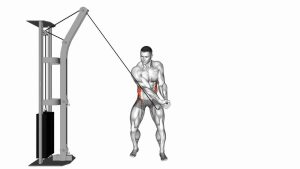
This cable twist variation works especially well for building rotational core strength because the cable creates constant tension from the beginning to the end of each repetition. In the video, the athlete stands sideways to the machine, grips the handle with both hands, and rotates the torso downward across the body. The movement resembles a high-to-low cable woodchopper, although the tempo stays controlled rather than explosive.
Athletes, lifters, and general fitness trainees can use this exercise to improve oblique strength, trunk control, and functional rotation. It also helps the body learn how to transfer force from the lower body through the core and into the upper body. For the best result, choose a weight that allows smooth motion, clean balance, and a strong core brace through every rep.
Quick Overview
| Body Part | Obliques |
|---|---|
| Primary Muscle | Obliques, especially the internal and external obliques |
| Secondary Muscle | Rectus abdominis, transverse abdominis, spinal stabilizers, glutes, shoulders, and forearms |
| Equipment | Cable machine with single handle, rope attachment, or short bar attachment |
| Difficulty | Intermediate because it requires balance, rotation control, and cable resistance management |
Sets & Reps (By Goal)
- Core activation: Perform 2–3 sets of 10–12 reps per side with light resistance and a slow tempo.
- Oblique hypertrophy: Use 3–4 sets of 10–15 reps per side with moderate cable resistance.
- Rotational strength: Complete 3–5 sets of 6–10 reps per side while maintaining strict control.
- Fat-loss circuits: Add 2–4 rounds of 12–20 reps per side with shorter rest periods.
- Sport-specific power: Choose 3–4 sets of 6–8 controlled powerful reps after mastering the standard version.
Progression rule: Add resistance only after your arms stay long, your torso rotates smoothly, and the return phase remains controlled.
Setup / Starting Position
- Adjust the pulley: Set the cable pulley above shoulder height so the handle can travel diagonally downward across your body.
- Select your attachment: Connect a single D-handle, rope, or short bar to the cable.
- Stand sideways: Position your body side-on to the cable stack with the handle starting high and slightly beside you.
- Create cable tension: Step away from the machine until the weight stack becomes lightly loaded.
- Set your stance: Place your feet about shoulder-width apart or use a slight split stance for better balance.
- Brace your trunk: Tighten your abs before moving so the lower back does not absorb the rotation.
- Prepare the arms: Hold the handle with both hands while keeping the elbows soft and mostly straight.
Tip: A lighter load is better at first. When the resistance is too heavy, the shoulders pull forward, the elbows bend, and the core loses control.
Execution (Step-by-Step)
- Start tall: Keep your chest lifted, ribs controlled, and shoulders relaxed before the first repetition.
- Build tension: Hold the handle high with both hands and keep the cable slightly loaded.
- Begin the rotation: Turn your torso away from the cable machine while the arms remain long.
- Guide the handle down: Move the cable diagonally across the body toward the outside of the opposite thigh, knee, or shin.
- Coordinate the hips: Allow the hips and feet to rotate naturally so the lower back does not twist alone.
- Pause at the bottom: Briefly hold the end position and feel the obliques working on the side of your waist.
- Return with control: Reverse the same diagonal path slowly and resist the cable as it pulls back upward.
- Repeat evenly: Finish all reps on one side, then turn around and perform the same number of reps on the other side.
Pro Tips & Common Mistakes
Pro Tips
- Lead with the torso: Think of your ribcage rotating the handle instead of your hands pulling it down.
- Keep the arms long: Soft elbows are fine, but the movement should not become a bent-arm cable pull.
- Use the same path every rep: Travel from high near the cable side to low near the opposite side.
- Control the return: The upward phase is just as important as the downward phase for oblique strength.
- Stay balanced: Keep pressure through the feet and avoid leaning too far away from the cable stack.
- Match both sides: Equal reps and equal resistance help prevent rotational strength imbalances.
Common Mistakes
- Going too heavy: Excessive resistance often causes jerking, leaning, and poor cable control.
- Bending the elbows: Turning the movement into an arm pull reduces oblique involvement.
- Rounding the back: A collapsed chest can shift stress away from the core and into the spine.
- Rushing the return: Letting the cable snap back removes tension and increases injury risk.
- Twisting only the lower back: Rotation should involve the trunk, hips, and feet together.
- Shrugging the shoulders: Keep the neck relaxed and the shoulders down throughout the set.
FAQ
What muscles does the Cable Twist Up-Down work?
The Cable Twist Up-Down mainly targets the obliques. During each rep, the abs, transverse abdominis, spinal stabilizers, glutes, shoulders, and forearms also assist. Because the cable pulls from a high angle, the core must rotate, stabilize, and resist the return at the same time.
Is the Cable Twist Up-Down the same as a cable woodchopper?
This exercise is very close to a high-to-low cable woodchopper. However, the Cable Twist Up-Down is often coached with a smoother rotational focus, while a woodchopper may be performed with a stronger chopping action.
Should my arms stay straight during this exercise?
Your elbows should stay soft, not locked. A long-arm position helps the obliques create the rotation, while too much elbow bend shifts the work into the shoulders and arms.
Where should I feel the Cable Twist Up-Down?
Most of the tension should be felt along the side of the waist, especially through the obliques. Some work in the abs, glutes, shoulders, and grip is normal. Sharp pressure in the lower back is not a good sign.
Is this exercise beginner-friendly?
Beginners can use this movement with very light resistance, but the exercise is usually considered intermediate. Balance, cable control, and clean rotation mechanics are required before adding heavier loads.
How heavy should I go on the Cable Twist Up-Down?
Choose a load that allows smooth reps without leaning, jerking, or pulling mostly with the arms. For most lifters, light to moderate resistance gives better core tension than heavy weight.
Can this exercise help build visible obliques?
Stronger obliques can be developed with this exercise when it is performed consistently. Visible definition also depends on nutrition, overall training volume, body-fat level, and recovery.
Recommended Equipment
- Cable Machine D-Handle Attachment — provides a secure grip for cable twists, chops, rows, and many single-handle cable exercises.
- Tricep Rope Cable Attachment — useful for neutral-grip cable twists, cable chops, face pulls, and pressdown variations.
- Cable Machine Accessory Set — includes multiple attachments so you can train abs, back, arms, shoulders, and functional movements.
- Adjustable Cable Machine for Home Gym — allows high-to-low cable twists, rows, pulldowns, presses, and other cable-based strength exercises at home.
- Weightlifting Gloves or Grip Gloves — improves handle control during repeated cable sets, especially when grip fatigue starts to build.
Tip: The most important equipment factor is smooth cable tension. A comfortable handle and stable pulley setup will help you keep the movement controlled.