Cocoons Exercise: Proper Form, Core Benefits, Sets, Tips & FAQ
Learn the Cocoons exercise for stronger abs, better core control, and tighter bodyweight crunch form with step-by-step cues, sets, tips, and FAQs.
Cocoons
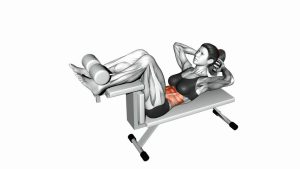
Cocoons are useful for lifters who want a stronger midsection without using machines or heavy equipment. Although the movement looks simple, it becomes very effective when you keep the lower back controlled and avoid swinging the legs. As a result, it fits well into home workouts, ab circuits, warm-ups, and bodyweight core sessions.
Unlike a basic crunch, this exercise brings the upper and lower body together at the same time. Therefore, your abs must shorten while your hips flex and your trunk stays balanced. For the best result, move through each repetition with a steady rhythm, breathe out as you crunch, and avoid pulling aggressively on the legs.
Quick Overview
| Body Part | Core |
|---|---|
| Primary Muscle | Rectus abdominis |
| Secondary Muscle | Hip flexors, obliques, transverse abdominis, quadriceps |
| Equipment | Bodyweight only; optional exercise mat |
| Difficulty | Beginner to intermediate |
Sets & Reps (By Goal)
- Beginner core control: 2–3 sets × 8–10 reps with slow, clean form.
- Ab hypertrophy: 3–4 sets × 10–15 reps with a 1-second squeeze at the top.
- Core endurance: 2–4 sets × 15–20 reps using a smooth, repeatable tempo.
- Bodyweight circuit: 30–45 seconds per round, resting 30–60 seconds between rounds.
- Finisher option: 2–3 rounds after your main workout, stopping before form breaks down.
Progression rule: First increase control and range. Then add reps. Finally, slow the lowering phase or pause longer at the top.
Setup / Starting Position
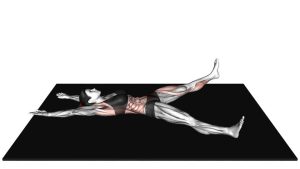
- Lie on your back: Use a mat if the floor feels hard. Keep your body long and centered.
- Reach your arms overhead: Extend the arms behind you without shrugging the shoulders toward your ears.
- Extend your legs: Keep the legs straight or slightly bent, depending on your flexibility and core control.
- Brace gently: Pull the ribs down and lightly tighten your abs before the first rep.
- Control your lower back: Keep the lower back from aggressively arching as your arms and legs lengthen.
- Relax your neck: Keep your chin slightly tucked instead of throwing the head forward.
If the full extended position feels too difficult, begin with the legs higher or keep the knees slightly bent. This makes the exercise easier while still training the same core pattern.
Execution (Step-by-Step)
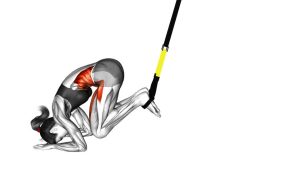
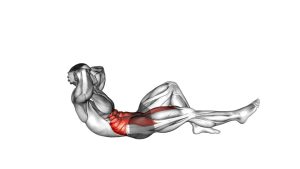
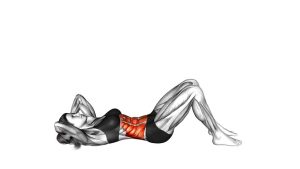
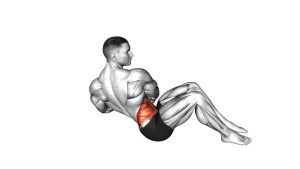
- Start long: Begin with your arms overhead and legs extended while your abs stay lightly braced.
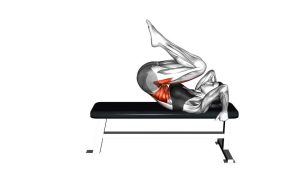
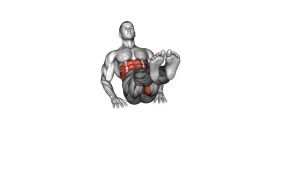
- Exhale and curl: Lift your head, shoulders, and upper back from the floor as you begin bringing the knees toward your chest.
- Reach forward: Sweep the arms forward toward your shins or ankles as your torso folds.
- Tuck into the cocoon: Bring your knees close to your chest and squeeze your abs at the top.
- Pause briefly: Hold the compact position for a moment without yanking on the legs.
- Lower with control: Extend your arms and legs away from each other while resisting the urge to drop quickly.
- Reset softly: Return to the starting position, keep tension in the core, and begin the next repetition only when stable.
Pro Tips & Common Mistakes
Pro Tips
- Exhale during the crunch: Breathing out helps the ribs come down and improves abdominal contraction.
- Think “fold,” not “swing”: Bring the torso and thighs together with control instead of momentum.
- Use a small top squeeze: A brief pause makes each rep more effective without needing extra weight.
- Control the eccentric phase: The lowering portion builds strength when you resist gravity.
- Adjust your leg angle: Keeping the legs higher makes the exercise easier, while lowering them closer to the floor makes it harder.
Common Mistakes
- Pulling hard on the legs: This reduces core work and can shift tension into the arms and hips.
- Arching the lower back: Excessive arching usually means the range is too long or the abs are losing control.
- Using momentum: Fast reps may look intense, but they usually reduce abdominal tension.
- Cranking the neck: Leading with the chin can create neck discomfort. Instead, curl from the ribs.
- Holding the breath: Breath-holding can increase unnecessary pressure and reduce rhythm.
FAQ
What muscles do Cocoons work?
Cocoons mainly work the rectus abdominis, which is the front abdominal muscle. In addition, the hip flexors, obliques, transverse abdominis, and quadriceps assist during the tuck and extension.
Are Cocoons good for beginners?
Yes, Cocoons can work for beginners when the range is controlled. However, beginners should keep the knees slightly bent, move slowly, and avoid extending the legs too low until the core is strong enough.
Should my lower back stay flat during Cocoons?
Your lower back should stay controlled and should not aggressively arch during the extension. A small natural curve may appear, but you should reduce the range if the lower back takes over.
How are Cocoons different from V-ups?
Cocoons are more compact than standard V-ups because the knees bend toward the chest. Therefore, they are often easier to control and more beginner-friendly than a full straight-leg V-up.
Can I do Cocoons every day?
You can do them often if the volume is low and your form stays clean. However, for harder sets, 2–4 sessions per week is usually enough because your abs need recovery like other muscles.
Why do I feel Cocoons in my hip flexors?
Some hip flexor involvement is normal because your thighs move toward your torso. Nevertheless, if the hip flexors dominate, slow down, exhale harder at the crunch, and focus on curling your ribs toward your pelvis.
Recommended Equipment
- Exercise Mat — adds comfort for floor-based core work and protects the spine from hard surfaces.
- Thick Yoga Mat — useful if you need extra cushioning during repeated ab exercises.
- Adjustable Ankle Weights — optional progression for advanced users who can already control bodyweight reps.
- Core Slider Discs — helpful for related bodyweight core movements and controlled knee-tuck variations.
- Foam Roller — supports warm-ups, recovery, and mobility work around the hips, back, and trunk.
Choose equipment that improves comfort and control. Although Cocoons require no equipment, a good mat can make the exercise easier to perform consistently.