Quarter Sit-Up: Proper Form, Core Benefits, Sets, Tips & FAQ
Learn how to do the Quarter Sit-Up with proper form to strengthen your abs safely. Includes setup, step-by-step execution, sets, tips, FAQs, and equipment.
Quarter Sit-Up
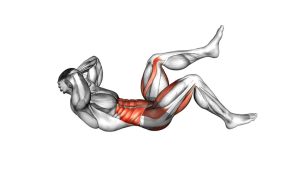
This exercise is ideal for learning how to contract the abs without rushing into a full sit-up. Because the range of motion is small, every repetition should feel clean, controlled, and deliberate. The feet stay planted, the knees remain bent, and the arms stay relaxed across the chest or near the torso. You should feel the front of the abdomen working, not the neck pulling, the hips swinging, or the lower back arching.
Quick Overview
| Body Part | Core |
|---|---|
| Primary Muscle | Rectus abdominis |
| Secondary Muscle | Deep core stabilizers, hip flexors, obliques |
| Equipment | No equipment required; optional exercise mat |
| Difficulty | Beginner |
Sets & Reps (By Goal)
- Beginner core control: 2–3 sets × 8–12 reps with slow, clean form.
- Ab endurance: 3–4 sets × 12–20 reps with steady breathing.
- Warm-up activation: 1–2 sets × 10–15 reps before larger core movements.
- Tempo focus: 3 sets × 8–10 reps using a 2-second lift and 3-second lower.
Progression rule: Add reps first, then slow the tempo. Only progress to harder sit-up or crunch variations when your lower back stays controlled and your neck remains relaxed.
Setup / Starting Position
- Lie on your back: Use a flat floor or an exercise mat for comfort.
- Bend your knees: Place both feet flat on the floor about hip-width apart.
- Set your arms: Cross your arms over your chest or keep your hands lightly near your torso.
- Relax your neck: Keep your chin slightly tucked without forcing your head forward.
- Brace gently: Tighten your abs as if preparing for a small controlled curl.
Your lower back should stay stable. Do not aggressively flatten or arch it. Aim for a natural, controlled position before each repetition.
Execution (Step-by-Step)
- Start from the floor: Keep your feet planted, knees bent, and shoulders relaxed.
- Exhale and curl slightly: Lift your head, shoulders, and upper back only a short distance.
- Stop at quarter range: Do not sit all the way up. The shoulder blades should lift just enough to create abdominal tension.
- Pause briefly: Hold the top position for a moment while keeping the abs engaged.
- Lower with control: Return your upper back and shoulders to the floor slowly.
- Reset before repeating: Avoid bouncing. Begin the next rep only after you regain control.
Pro Tips & Common Mistakes
- Use a short range of motion: This is a quarter sit-up, not a full sit-up.
- Lead with the ribs, not the head: Think about curling the upper ribs toward the pelvis.
- Keep your feet grounded: Avoid kicking, sliding, or using your legs to create momentum.
- Do not yank the neck: Keep the head relaxed and let the torso move as one unit.
- Control the lowering phase: The descent should be smooth, not a drop.
- Breathe properly: Exhale as you lift and inhale as you return to the floor.
- Avoid rushing: Fast reps usually reduce abdominal tension and increase compensation.
FAQ
What is the Quarter Sit-Up good for?
The Quarter Sit-Up is good for building basic abdominal strength, improving core control, and teaching beginners how to flex the trunk without relying on momentum.
Is the Quarter Sit-Up easier than a full sit-up?
Yes. The range of motion is shorter, so the exercise is usually easier to control. It also places less emphasis on the hip flexors compared with a full sit-up.
Where should I feel the Quarter Sit-Up?
You should feel it mainly in the front of your abs. Some light hip flexor involvement is normal, but the neck and lower back should not dominate the movement.
Can beginners do Quarter Sit-Ups?
Yes. This exercise is beginner-friendly when performed slowly. Start with fewer reps and focus on keeping the movement small, smooth, and pain-free.
Should I anchor my feet during Quarter Sit-Ups?
You usually do not need to anchor your feet. Keeping them planted naturally helps you avoid pulling too hard with the hip flexors. If your feet lift, reduce the range or slow the tempo.
Recommended Equipment
- Exercise Mat — adds comfort and support for floor-based ab training.
- Thick Yoga Mat — useful if your spine or tailbone feels uncomfortable on hard floors.
- Ab Mat — can support controlled trunk flexion during core exercises.
- Core Sliders — helpful for progressing into other bodyweight core movements.
- Resistance Bands Set — useful for pairing with anti-rotation drills, dead bugs, and core stability work.
Choose equipment that improves comfort and control. The Quarter Sit-Up does not require heavy gear, so your main priority should be stable positioning and smooth movement quality.