Twisting Crunch Straight Arms: Form, Sets, Tips & FAQ
Learn the Twisting Crunch Straight Arms exercise for stronger abs and obliques with proper form, sets, mistakes, FAQs, and equipment tips.
Twisting Crunch (Straight Arms)
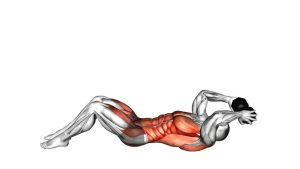
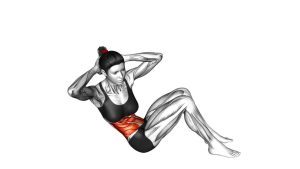
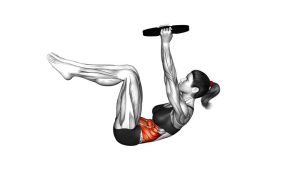
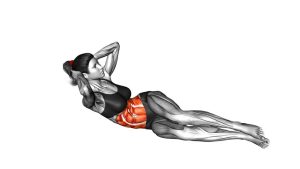
This exercise is useful when you want to train the rectus abdominis and obliques without using equipment. Moreover, the straight-arm position gives you a simple visual cue: your hands should travel with your chest instead of swinging ahead of the body. For best results, keep your feet planted, knees bent, and movement slow enough to feel the abdominal muscles doing the work.
Quick Overview
| Body Part | Core |
|---|---|
| Primary Muscle | Rectus abdominis and obliques |
| Secondary Muscle | Deep core stabilizers, hip flexors, and upper abdominal stabilizers |
| Equipment | No equipment required; exercise mat optional |
| Difficulty | Beginner to intermediate |
Sets & Reps (By Goal)
- Core activation: 2 sets × 8–10 reps per side with a slow tempo.
- Muscle endurance: 3 sets × 12–16 total reps while keeping each twist controlled.
- Oblique focus: 3–4 sets × 10–12 reps per side with a brief pause at the top.
- Beginner practice: 1–2 sets × 6–8 reps per side using a small range of motion.
Progression rule: First improve control and range quality. Then add reps, add a longer top pause, or slow the lowering phase.
Setup / Starting Position
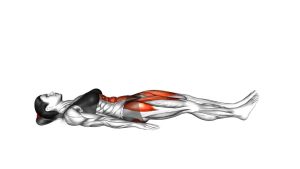
- Lie on your back: Place your body on the floor with your knees bent and feet flat.
- Set your legs: Keep the feet stable so the lower body does not rock during the twist.
- Extend your arms: Reach both arms forward with the elbows straight, matching the straight-arm position shown in the movement.
- Lift slightly: Raise the head and shoulders into a small crunch position before starting the rotation.
- Brace gently: Tighten the core enough to control the movement, but avoid holding your breath.
Tip: Keep the movement compact. A twisting crunch is not a full sit-up, so the shoulder blades only need to lift enough to create abdominal tension.
Execution (Step-by-Step)
- Start from the crunch position: Keep your arms straight and reach forward from the shoulders.
- Crunch upward: Lift the upper back slightly away from the floor while keeping the lower back controlled.
- Add the twist: Rotate the torso toward one side, allowing the shoulders and arms to turn together.
- Pause briefly: Hold the top position for a moment so the obliques can work without momentum.
- Return with control: Lower the upper body back toward the floor while reducing the rotation.
- Repeat to the other side: Continue alternating sides or complete all reps on one side before switching.
Pro Tips & Common Mistakes
- Keep the twist controlled: Rotate from the upper torso instead of yanking the shoulders.
- Use a short crunch range: The goal is abdominal contraction, not maximum height.
- Avoid pulling the neck: Since the arms stay forward, the neck should remain relaxed and neutral.
- Keep the feet planted: Stable feet help prevent the hips from shifting during each rep.
- Do not rush the lowering phase: Lower slowly so the abs stay active throughout the full repetition.
- Exhale on the crunch: Breathe out as you lift and twist, then inhale as you return.
- Avoid excessive rotation: A small, clean twist is better than forcing the spine into a large range.
FAQ
What muscles does the Twisting Crunch (Straight Arms) work?
It mainly works the abs and obliques. Additionally, the deep core muscles help stabilize the trunk while the upper body lifts and rotates.
Is this exercise beginner-friendly?
Yes, it can be beginner-friendly when the range of motion is small and controlled. However, beginners should avoid forcing the twist or lifting too high.
Should my arms stay straight the whole time?
Yes. In this variation, the arms remain extended forward. As a result, they act as a guide for the torso instead of helping with momentum.
Is this the same as a Russian twist?
No. A Russian twist is usually performed in a more seated position. Meanwhile, this exercise stays closer to a floor crunch and uses a smaller twisting range.
Why do I feel this in my neck?
Neck tension usually happens when the head leads the movement or the crunch is too high. Therefore, reduce the range, keep the chin relaxed, and focus on lifting through the ribs.
Can I do this exercise every day?
You can practice it often at low volume, especially for core control. However, for stronger training sessions, allow recovery between hard abdominal workouts.
Recommended Equipment (Optional)
- Exercise Mat — provides comfort for your back and shoulders during floor crunches.
- Thick Yoga Mat — useful if you need extra cushioning on hard floors.
- Ab Workout Mat — supports repeated core exercises with a dedicated floor-training surface.
- Non-Slip Exercise Mat — helps keep your body stable while rotating side to side.
- Core Sliders — optional tool for future core progressions and rotational bodyweight drills.
Tip: This exercise does not require equipment. However, a supportive mat can make the movement more comfortable and help you focus on clean abdominal control.