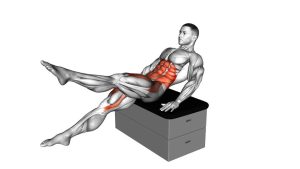
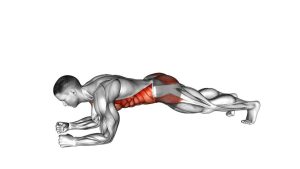
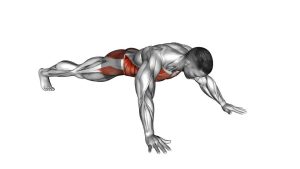
Leg Extension Plank: Form, Core Benefits, Sets, Tips & FAQ
Learn the Leg Extension Plank to strengthen your core, glutes, and shoulder stability with safe form, step-by-step cues, sets, tips, and FAQs.
Leg Extension Plank
This movement works best when the leg lift stays smooth and controlled. Although the leg moves, the main training goal is still stability. Therefore, your torso should remain quiet while your glutes lift the leg only to a comfortable height. Keep the lifted leg straight, avoid twisting the hips, and return each foot to the floor with control before switching sides.
Quick Overview
| Body Part | Core |
|---|---|
| Primary Muscle | Rectus abdominis and deep core stabilizers |
| Secondary Muscle | Glutes, hip stabilizers, shoulders, chest, triceps |
| Equipment | No equipment required; optional exercise mat |
| Difficulty | Intermediate because it requires plank strength, hip control, and anti-rotation stability |
Sets & Reps (By Goal)
- Core stability: 2–4 sets × 8–12 reps per side with a controlled tempo
- Glute activation: 2–3 sets × 10–15 reps per side with a brief squeeze at the top
- Strength endurance: 3–4 sets × 12–20 total alternating reps
- Warm-up control: 1–2 sets × 6–10 reps per side before lower-body or core training
Progression rule: First improve control, then add reps. If your hips twist or your lower back arches, reduce the leg height and slow the movement down.
Setup / Starting Position
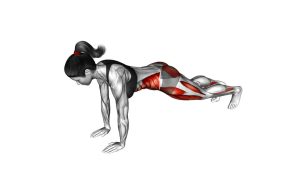
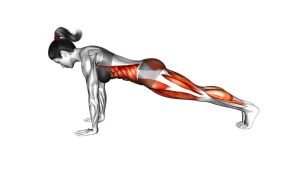
- Start in a high plank: Place your hands on the floor under your shoulders.
- Extend both legs back: Keep your feet on the floor and create a straight line from head to heels.
- Brace your core: Gently tighten your abs as if preparing to resist movement.
- Set your shoulders: Press the floor away without shrugging your neck.
- Keep your hips level: Before lifting, make sure your pelvis is not sagging, rotating, or rising too high.
Tip: A slightly wider foot stance can make the movement easier. However, a narrower stance makes the anti-rotation challenge harder.
Execution (Step-by-Step)
- Hold the plank: Keep your arms straight, shoulders stacked, and core braced.
- Lift one leg: Extend one straight leg slightly upward and backward without bending the knee.
- Control the hips: Keep both hip bones facing the floor instead of letting the body rotate.
- Pause briefly: Squeeze the glute at the top while keeping the lower back neutral.
- Lower with control: Return the foot to the floor softly and avoid dropping the leg.
- Switch sides: Repeat the same motion with the opposite leg while maintaining the same plank position.
Pro Tips & Common Mistakes
- Keep the movement small: A controlled low leg lift is better than a high lift with back extension.
- Do not rush: Move slowly enough to feel the core resist rotation.
- Avoid sagging hips: If the pelvis drops, reset your plank before continuing.
- Do not kick the leg: Lift smoothly and lower smoothly for better glute control.
- Keep your neck neutral: Look slightly ahead of your hands instead of dropping or lifting your head.
- Push through the floor: Strong shoulder support helps the torso stay stable.
- Breathe steadily: Exhale during the lift and inhale as the foot returns to the floor.
FAQ
What muscles does the Leg Extension Plank work?
The Leg Extension Plank mainly works the core because your abs must keep the torso stable. Additionally, the glutes help lift the leg, while the shoulders, chest, and triceps support the high-plank position.
Is the Leg Extension Plank good for abs?
Yes. It is especially useful for core stability because your abs resist hip rotation and lower-back arching while one leg moves. As a result, it trains control more than traditional crunch-style flexion.
Should I lift my leg high during this exercise?
No. A high leg lift often causes the lower back to arch. Instead, lift only as high as you can while keeping the hips level and the spine neutral.
Why do I feel this in my lower back?
You may be lifting the leg too high, losing abdominal tension, or letting the pelvis tilt forward. To fix this, lower the range of motion, brace harder, and focus on squeezing the glute without arching.
Can beginners do the Leg Extension Plank?
Beginners can try it after they can hold a strong high plank. However, if the full version feels unstable, start with shorter holds, slower reps, or a wider foot stance.
Recommended Equipment (Optional)
- Exercise Mat — adds comfort for hands and feet during plank work
- Push-Up Handles — can reduce wrist extension during high-plank exercises
- Resistance Loop Bands — useful for glute activation drills before plank variations
- Core Sliders — helpful for progressing plank stability and bodyweight core training
- Foam Roller — useful for warm-ups and recovery around the hips, glutes, and upper back
Tip: Equipment is optional. The main priority is clean plank alignment, controlled leg extension, and steady breathing.