Medicine Ball Lying Leg Raise: Core Form, Sets, Tips & FAQ
Learn the Medicine Ball Lying Leg Raise for stronger lower abs, hip flexors, and core control with step-by-step form, tips, sets, FAQs, and gear.
Medicine Ball Lying Leg Raise
This exercise works best when every repetition stays slow, stable, and precise. First, the medicine ball should remain secured between the feet or ankles. Next, the legs should rise together without bending heavily at the knees. Finally, the lowering phase should stay controlled so the lower back does not arch aggressively away from the floor.
Although the movement looks simple, the added ball makes it more demanding than a standard lying leg raise. Therefore, start with a light medicine ball and use a smaller range of motion if you cannot keep your core braced.
Quick Overview
| Body Part | Core |
|---|---|
| Primary Muscle | Rectus abdominis, especially the lower abdominal region |
| Secondary Muscle | Hip flexors, adductors, deep core stabilizers |
| Equipment | Medicine ball and exercise mat |
| Difficulty | Intermediate because the ball adds resistance, grip demand, and control challenge |
Sets & Reps (By Goal)
- Core control: 2–3 sets × 8–10 reps with a slow 2–3 second lowering phase.
- Lower-ab strength: 3–4 sets × 8–12 reps using a light-to-moderate medicine ball.
- Muscle endurance: 2–3 sets × 12–15 reps with a lighter ball and strict form.
- Beginner progression: 2 sets × 6–8 reps with a very light ball or shorter range of motion.
Progression rule: Increase control before increasing load. Once your legs can lower smoothly without back arching, then you can use a slightly heavier medicine ball.
Setup / Starting Position
- Lie on your back: Position your body flat on an exercise mat with your torso stable and your head relaxed.
- Place your arms out: Keep your arms slightly away from your sides with your palms down for balance.
- Secure the medicine ball: Hold the ball between your feet or ankles, then squeeze gently so it does not slip.
- Extend your legs: Start with both legs straight and together, hovering close to the floor if you can control it.
- Brace your core: Draw your ribs down slightly and keep your lower back from arching excessively.
Tip: If the ball feels unstable, choose a smaller or lighter medicine ball before increasing the range of motion.
Execution (Step-by-Step)
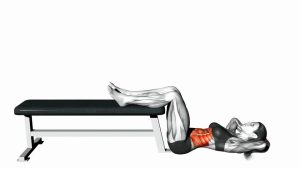
- Start with control: Keep the medicine ball squeezed between your feet and maintain a steady brace through your core.
- Lift both legs together: Raise your legs upward from the hips while keeping the movement smooth and coordinated.
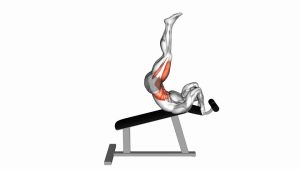
- Reach the top position: Bring your legs close to vertical. At the top, allow a small controlled hip lift if your abs can manage it.
- Pause briefly: Hold the top for a moment without swinging the ball or rushing the movement.
- Lower slowly: Bring your legs back down under control. However, stop before your lower back loses position.
- Repeat cleanly: Begin the next rep only after the ball is stable and your core is reset.
Pro Tips & Common Mistakes
Pro Tips
- Control the lowering phase: The descent is where your core works hardest, so lower slowly instead of dropping your legs.
- Squeeze the ball lightly but firmly: This keeps the medicine ball stable and adds inner-thigh involvement.
- Use your arms for support: Press your palms gently into the floor to improve balance without pushing your hips upward aggressively.
- Keep the movement strict: Smooth reps are better than high reps with swinging.
- Choose the right ball: A lighter medicine ball usually trains better technique than a heavy ball that breaks your form.
Common Mistakes
- Arching the lower back: If your back lifts too much during the descent, shorten the range or bend the knees slightly.
- Swinging the legs: Momentum reduces core tension and makes the exercise less effective.
- Using a ball that is too heavy: Excess load can shift stress into the lower back and hip flexors.
- Dropping the legs quickly: Fast lowering often means the abs are no longer controlling the movement.
- Letting the ball slip: Keep the feet and ankles active so the medicine ball stays centered.
FAQ
What muscles does the Medicine Ball Lying Leg Raise work?
It mainly trains the rectus abdominis, especially the lower abdominal region. Additionally, the hip flexors, adductors, and deep core stabilizers help control the medicine ball and leg path.
Is the Medicine Ball Lying Leg Raise good for lower abs?
Yes. Because the legs move against gravity and the medicine ball adds resistance, the lower-ab area must work hard to stabilize the pelvis. However, proper control matters more than using a heavy ball.
Should my hips lift at the top?
A small controlled hip lift is acceptable if it comes from your abs and not from swinging. If the lift feels jerky, keep your hips down and focus on a cleaner leg raise first.
What weight medicine ball should I use?
Start light. For most people, a small medicine ball is enough because holding it between the feet already increases difficulty. Progress only when your lower back stays controlled through the full rep.
Why does my lower back hurt during this exercise?
Lower-back discomfort usually happens when the legs lower too far, the ball is too heavy, or the core loses tension. Therefore, shorten the range, slow down, and use a lighter ball.
Can beginners do this exercise?
Beginners can use a very light ball and a shorter range of motion. Still, a standard lying leg raise without a ball may be a better first step if control is limited.
Recommended Equipment
- Soft Medicine Ball — easier to grip between the feet and more comfortable for controlled core training.
- Small Medicine Ball — useful for leg raises because a compact ball is easier to hold between the ankles.
- Thick Exercise Mat — supports the back and hips during supine core exercises.
- Textured Grip Medicine Ball — helps reduce slipping when the ball is held between the feet.
- Core Sliders — optional tool for pairing with other lower-ab and core-control movements.
Tip: For this exercise, comfort and control matter more than weight. Choose equipment that lets you keep the ball stable and your reps smooth.