Air Twisting Crunch: Core Rotation, Abs Form, Sets & Tips
Learn the Air Twisting Crunch for stronger abs and obliques. Master proper form, sets, reps, mistakes, FAQs, and equipment tips.
Air Twisting Crunch
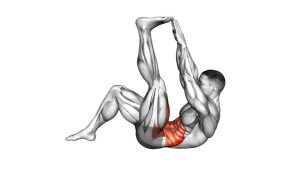
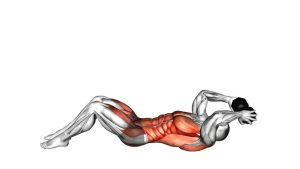
This exercise works best when each repetition is smooth, controlled, and compact. Because the legs stay elevated, the core must stay active throughout the set. Therefore, avoid rushing the twist or swinging the upper body. Instead, lift through the ribs, rotate through the torso, and keep the neck relaxed as you alternate sides.
Quick Overview
| Body Part | Core |
|---|---|
| Primary Muscle | Rectus abdominis and obliques |
| Secondary Muscle | Hip flexors, transverse abdominis, and deep core stabilizers |
| Equipment | No equipment required; optional exercise mat |
| Difficulty | Beginner to intermediate, depending on control and leg position |
Sets & Reps (By Goal)
- Core control: 2–3 sets × 8–12 reps per side with a slow tempo.
- Muscular endurance: 3–4 sets × 12–20 reps per side with steady breathing.
- Beginner practice: 2 sets × 6–10 reps per side with shorter range.
- Finisher work: 2–3 rounds × 30–45 seconds while maintaining clean rotation.
Progression rule: First improve control and symmetry. Then increase reps, time under tension, or total sets. However, do not progress if the lower back starts arching or the neck starts pulling forward.
Setup / Starting Position
- Lie on your back: Start supine on the floor or on an exercise mat.
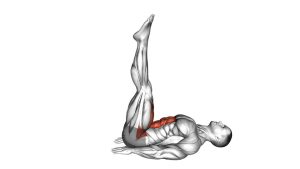
- Raise your legs: Lift both legs off the floor and bend the knees, keeping the lower body controlled.
- Position your arms: Place your hands lightly near the sides of your head with elbows open.
- Lift the shoulders: Bring the head and shoulders slightly off the floor before the twisting motion begins.
- Brace gently: Tighten the core enough to keep the movement stable, but avoid holding your breath.
Keep the hands light. They should support position, not pull the head or neck forward.
Execution (Step-by-Step)
- Start with control: Keep your legs raised, knees bent, and shoulders slightly lifted.
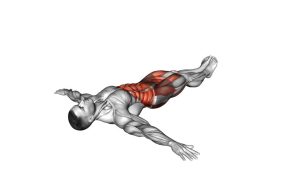
- Rotate to one side: Crunch and twist your torso so one elbow moves toward the opposite knee.
- Pause briefly: At the top, squeeze the abs and obliques without yanking the neck.
- Return toward center: Lower slightly with control, but avoid fully relaxing between reps.
- Switch sides: Rotate the opposite elbow toward the opposite knee and repeat the same controlled pattern.
- Continue alternating: Move side to side with a steady rhythm while keeping the legs elevated.
Pro Tips & Common Mistakes
- Use a small, clean twist: More rotation is not always better. A compact twist often creates better abdominal tension.
- Keep elbows open: Avoid closing the elbows around the head, because that usually encourages neck pulling.
- Control the return: Do not drop your shoulders quickly. Instead, lower just enough to reset for the next side.
- Avoid leg swinging: Since the legs stay elevated, keep them steady to make the abs work harder.
- Breathe with each rep: Exhale during the twist, then inhale as you return toward center.
- Protect the lower back: If your lower back arches, reduce the range or perform fewer reps.
- Do not rush: Fast reps can turn this into momentum instead of controlled core training.
FAQ
What muscles does the Air Twisting Crunch work?
The Air Twisting Crunch mainly works the rectus abdominis and obliques. Additionally, because the legs remain raised, the hip flexors and deep core stabilizers help maintain position.
Is the Air Twisting Crunch the same as a bicycle crunch?
No. In the visible movement, the legs stay raised and relatively stable rather than cycling through a large pedaling motion. Therefore, it is better described as an alternating twisting crunch with elevated legs.
Should my shoulders touch the floor between reps?
Not necessarily. In this version, the shoulders appear to stay slightly elevated throughout the set. However, beginners can briefly reset lower if they need better control.
Why do I feel this in my neck?
Neck strain usually happens when you pull with your hands or lead the movement with your head. Instead, keep the hands light, lift through the ribs, and rotate from the torso.
How can I make the Air Twisting Crunch easier?
Reduce the range of rotation, slow the pace, or perform fewer reps per side. Also, you can briefly lower the shoulders between reps if continuous tension causes form breakdown.
How can I make it harder?
Add more reps, increase time under tension, slow the lowering phase, or hold the top position for one second on each side. Still, keep the legs stable and avoid using momentum.
Recommended Equipment (Optional)
- Exercise Mat — provides cushioning for your back during floor-based core training.
- Thick Yoga Mat — useful if you need extra comfort under the spine and hips.
- Ab Workout Mat — helps support repeated crunch variations and bodyweight ab work.
- Core Sliders — helpful for pairing this exercise with other core stability drills.
- Resistance Bands Set — useful for adding anti-rotation, core bracing, and full-body warm-up work.
Tip: Equipment is optional for this exercise. However, a comfortable mat can make the movement easier to practice with better control and less distraction.