Sitting Side Crunch on a Padded Stool: Form, Benefits, Sets, Tips & FAQ
Learn the Sitting Side Crunch on a Padded Stool to train obliques, core control, and seated trunk stability with safe form, sets, tips, FAQs, and gear.
Sitting Side Crunch on a Padded Stool
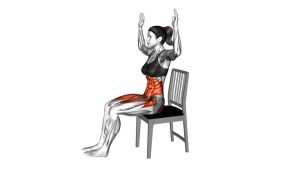
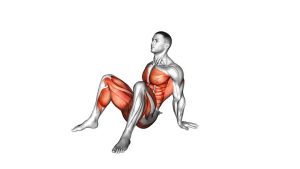
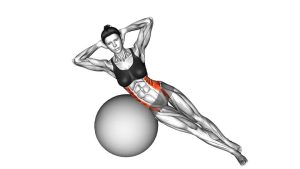
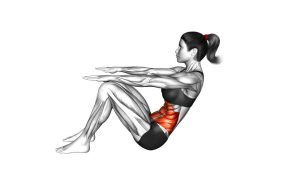
This exercise works best when the movement stays smooth, compact, and controlled. First, sit tall on the padded stool. Then, lift one knee while bending the torso toward that same side. As a result, the side of the waist shortens and the obliques perform most of the work. However, the neck and shoulders should stay relaxed so the crunch does not turn into a pulling motion from the hand behind the head.
Quick Overview
| Body Part | Core |
|---|---|
| Primary Muscle | Obliques |
| Secondary Muscle | Rectus abdominis, hip flexors, deep core stabilizers |
| Equipment | Padded stool or stable padded box |
| Difficulty | Beginner to intermediate |
Sets & Reps (By Goal)
- Beginner core control: 2–3 sets × 8–10 reps per side, resting 45–60 seconds.
- Oblique endurance: 3–4 sets × 12–15 reps per side, using a steady rhythm.
- Core warm-up: 1–2 sets × 8–12 reps per side before a full abdominal workout.
- Seated low-impact training: 2–3 sets × 10–12 reps per side with slow breathing and clean posture.
Progression rule: Add reps first, then slow the lowering phase. Additionally, keep the stool stable and avoid rushing the knee lift.
Setup / Starting Position
- Choose a stable stool: Sit on a padded stool or padded box that does not slide or wobble.
- Place your feet flat: Keep both feet on the floor with the knees bent comfortably.
- Sit tall: Stack your ribs over your hips and keep your chest lifted without over-arching the lower back.
- Set the arm position: Place one hand lightly behind the head while the other arm rests near the thigh for balance.
- Brace gently: Tighten the core slightly before moving so the trunk stays controlled.
The hand behind the head should guide position only. Therefore, avoid pulling the head or neck during the crunch.
Execution (Step-by-Step)
- Start seated upright: Keep your spine tall, shoulders relaxed, and feet grounded.
- Lift one knee: Raise the knee on the working side toward your torso in a controlled motion.
- Crunch to the side: At the same time, bend your torso toward the lifted knee.
- Bring elbow toward knee: Move the elbow closer to the knee without yanking the head forward.
- Pause briefly: Hold the shortened position for a moment while squeezing the side of the waist.
- Return with control: Lower the knee and bring the torso back to the tall seated position.
- Repeat evenly: Complete all reps on one side, then switch sides, or alternate sides if preferred.
Pro Tips & Common Mistakes
- Move from the waist: Focus on shortening the side of the torso instead of just lifting the leg.
- Do not pull the neck: Keep the hand light behind the head so the core performs the movement.
- Control the knee lift: Lift the knee smoothly rather than swinging it upward.
- Keep the stool stable: Avoid leaning so far that your hips shift or the stool tilts.
- Use a steady tempo: Crunch in, pause briefly, then return slowly to upright.
- Breathe naturally: Exhale as you crunch and inhale as you return to the starting position.
- Avoid collapsing forward: Since this is a side crunch, keep the movement angled toward the side, not straight down.
- Match both sides: Perform the same number of reps on each side to keep core training balanced.
FAQ
What muscles does the Sitting Side Crunch on a Padded Stool work?
It mainly works the obliques, which help bend and rotate the torso. Additionally, the rectus abdominis, hip flexors, and deep core muscles assist during the knee lift and seated stabilization.
Is this exercise good for beginners?
Yes. Because it is performed seated, it can be easier to control than many floor-based crunch variations. However, beginners should use a small range of motion and focus on clean posture before increasing reps.
Should my elbow touch my knee?
It does not have to touch. Instead, aim to move the elbow and knee closer together while keeping the movement controlled. Forcing contact may cause neck pulling or excessive rounding.
Can I do this exercise without a padded stool?
Yes, you can use a stable chair or bench. Still, the surface should be firm, safe, and high enough that your feet can stay flat.
How can I make the exercise harder?
First, slow down the lowering phase. Then, add more reps or a longer pause at the top. Advanced users may hold a light medicine ball, although bodyweight control should come first.
Why do I feel my hip flexors during this exercise?
Some hip flexor work is normal because the knee lifts toward the torso. However, if the hip flexors dominate, reduce the knee height and focus more on side bending from the waist.
Recommended Equipment
- Padded Workout Stool — provides a comfortable seated base for controlled core exercises.
- Padded Exercise Bench — a stable option for seated core drills and other strength exercises.
- Non-Slip Exercise Mat — helps keep the stool or bench area more secure during training.
- Light Medicine Ball — useful for advanced seated core variations after mastering bodyweight form.
- Adjustable Ankle Weights — optional progression tool for controlled knee-lift variations.
Tip: Choose stable equipment before adding resistance. Better control produces better core training than heavier loading.