Dumbbell Straight-Arm Crunch: Form, Abs Benefits, Sets, Tips & FAQ
Learn the dumbbell straight-arm crunch for stronger abs, better core control, safe setup, step-by-step form, common mistakes, FAQs, and gear.
Dumbbell Straight-Arm Crunch
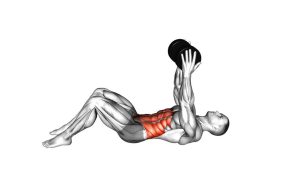
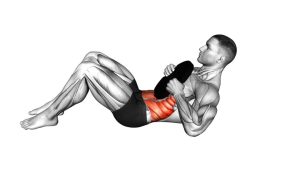
This exercise works best when the dumbbell stays steady and the torso moves with control. Because the arms remain straight, the weight creates a clear vertical target that encourages focused abdominal tension. However, the dumbbell should not swing forward or pull the body up. Instead, the abs should lift the shoulder blades from the floor while the lower back stays controlled.
Quick Overview
| Body Part | Abs |
|---|---|
| Primary Muscle | Rectus abdominis |
| Secondary Muscle | Deep core stabilizers, hip flexors lightly, shoulders isometrically |
| Equipment | Dumbbell and exercise mat |
| Difficulty | Beginner to intermediate, depending on dumbbell weight and control |
Sets & Reps (By Goal)
- Core control: 2–3 sets × 8–12 reps with a slow, smooth tempo.
- Ab strength: 3–4 sets × 10–15 reps using a moderate dumbbell.
- Muscle endurance: 2–4 sets × 15–20 reps with a lighter dumbbell.
- Beginner practice: 2 sets × 6–10 reps, focusing on clean shoulder-blade lift only.
Progression rule: Add reps before adding weight. Once every rep stays controlled and the dumbbell remains stable, increase the load slightly.
Setup / Starting Position
- Lie on your back: Bend your knees and keep both feet flat on the floor.
- Hold the dumbbell securely: Grip one dumbbell with both hands and extend your arms straight above your chest.
- Stack the weight: Keep the dumbbell above the chest and shoulder line rather than letting it drift forward.
- Brace gently: Tighten your abs slightly before the first rep so your lower back stays controlled.
- Set your neck: Keep the head neutral and avoid yanking the chin toward the chest.
Execution (Step-by-Step)
- Start with straight arms: Keep the elbows extended and the dumbbell steady above the upper chest.
- Exhale and crunch: Contract your abs to lift your head, shoulders, and upper back slightly from the floor.
- Keep the range short: Stop once the shoulder blades lift and the abs are strongly engaged.
- Hold briefly: Pause for a moment at the top without swinging the dumbbell.
- Lower with control: Return your upper back to the floor slowly while keeping your arms straight.
- Reset smoothly: Maintain tension before starting the next rep instead of dropping fully relaxed.
Pro Tips & Common Mistakes
- Use a small crunch: This is not a full sit-up. Lift the shoulders, then control the return.
- Keep the arms straight: Bending the elbows reduces the straight-arm loading effect.
- Avoid swinging: The dumbbell should not pull you upward. Your abs should create the movement.
- Do not rush the lowering phase: A slow eccentric makes the exercise more effective and safer.
- Relax the neck: If your neck strains, lower the weight and reduce the range.
- Keep feet grounded: Stable feet help you avoid rocking through the hips.
- Choose the right load: A light dumbbell with clean form is better than a heavy dumbbell with momentum.
FAQ
What muscles does the dumbbell straight-arm crunch work?
It mainly works the rectus abdominis, especially during the shoulder-lifting crunch phase. Additionally, the shoulders and deep core help stabilize the dumbbell and torso.
Should the dumbbell move during the exercise?
The dumbbell should stay mostly stable above the chest and shoulders. If it swings forward, the movement may become momentum-based instead of ab-focused.
Is this exercise better than a regular crunch?
It is not automatically better, but it adds resistance and a stability challenge. Therefore, it can be useful once you can perform regular crunches with good control.
How heavy should the dumbbell be?
Start light enough to keep your arms straight and your neck relaxed. For many beginners, a light dumbbell is enough because the goal is controlled abdominal contraction, not maximum loading.
Why do I feel this in my neck?
Neck tension usually happens when the head leads the movement or the dumbbell is too heavy. Reduce the weight, keep the chin relaxed, and think about lifting through the ribs and shoulders instead.
Recommended Equipment
- Hex Dumbbell — simple, stable option for weighted crunch variations.
- Adjustable Dumbbells — useful for gradually increasing resistance as your core gets stronger.
- Thick Exercise Mat — adds comfort for your spine, shoulders, and hips during floor crunches.
- Non-Slip Yoga Mat — helps keep your body stable while performing controlled reps.
- Workout Timer — helpful for tracking rest periods, tempo, and core circuits.
Tip: For this exercise, the most important tool is a dumbbell you can control without swinging. Therefore, start lighter than expected and progress gradually.