Standing Overhead Side Bend: Form, Benefits, Sets, Tips & FAQ
Learn the Standing Overhead Side Bend to stretch the obliques, improve side-body mobility, and build better trunk control with safe form.
Standing Overhead Side Bend
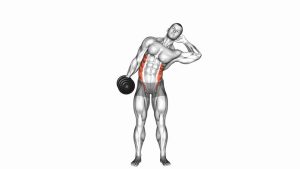
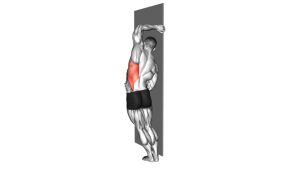
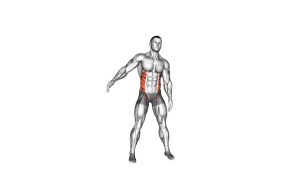
This exercise should feel like a clean, lengthening side bend rather than a rushed waist collapse. First, the feet stay planted and the body remains balanced. Then, the arms stay extended above the head as the torso bends gently to one side. After that, the body returns to center before repeating to the opposite side. As a result, the movement trains controlled lateral flexion without requiring equipment, heavy loading, or complex coordination.
For best results, keep the movement smooth and avoid bouncing. Additionally, keep your chest open and your arms close to your ears without forcing the shoulders. The goal is not to fold as far as possible. Instead, the goal is to create a steady side-body stretch while maintaining control from the feet through the fingertips.
Quick Overview
| Body Part | Core |
|---|---|
| Primary Muscle | Obliques |
| Secondary Muscle | Quadratus lumborum, intercostals, latissimus dorsi, shoulder stabilizers |
| Equipment | No equipment required |
| Difficulty | Beginner |
Sets & Reps (By Goal)
- Mobility warm-up: 2–3 sets × 6–10 reps per side with a slow, controlled rhythm.
- Side-body stretch: 2–3 sets × 20–30 seconds per side, using gentle breathing.
- Posture reset: 1–2 sets × 5–8 reps per side during a desk break or light movement session.
- Core control practice: 3 sets × 8–12 reps per side with a brief pause at the end range.
Progression rule: Add slower tempo or a longer pause before increasing range. However, do not force a deeper bend if your hips shift, shoulders pinch, or lower back compresses.
Setup / Starting Position
- Stand tall: Place your feet about hip-width to shoulder-width apart and keep both feet flat on the floor.
- Reach overhead: Extend both arms above your head and keep the elbows mostly straight.
- Stack your body: Keep your ribs, pelvis, and head aligned before you begin the side bend.
- Relax the shoulders: Reach upward without shrugging aggressively toward your ears.
- Brace gently: Lightly engage your core so the movement stays controlled from start to finish.
Starting tall matters because it gives the side bend more space. Therefore, avoid beginning with rounded shoulders, bent elbows, or a collapsed rib cage.
Execution (Step-by-Step)
- Begin in the upright position: Stand tall with both arms extended overhead and your gaze forward.
- Bend to one side: Slowly lean your torso sideways while keeping your arms long and aligned with your body.
- Control the end range: Pause briefly when you feel a gentle stretch through the opposite side of your waist and ribs.
- Return to center: Use your core to bring your torso back to the upright position without rushing.
- Repeat to the other side: Move with the same range, tempo, and control so both sides stay balanced.
Pro Tips & Common Mistakes
Pro Tips
- Reach before you bend: Create length through the arms and ribs first. Then move sideways.
- Move slowly: A controlled tempo helps you feel the obliques and side body more clearly.
- Keep your chest open: This helps prevent the exercise from turning into a forward fold.
- Breathe into the stretch: Inhale as you lengthen, then exhale gently as you return to center.
- Match both sides: Use a similar range of motion to avoid favoring one side.
Common Mistakes
- Bouncing at the bottom: This can irritate the spine or ribs. Instead, pause smoothly.
- Twisting the torso: Keep the movement side-to-side rather than rotating through the shoulders.
- Overarching the lower back: Keep the ribs controlled so the bend does not become a back extension.
- Letting the arms collapse: Keep the arms long overhead to maintain the full side-body line.
- Forcing range: A moderate bend with control is better than a deep bend with compensation.
FAQ
What muscles does the Standing Overhead Side Bend work?
The Standing Overhead Side Bend mainly works the obliques through lateral trunk control. Additionally, it can stretch the side body, intercostals, lats, and quadratus lumborum while the shoulders stabilize the overhead arm position.
Is the Standing Overhead Side Bend a stretch or a core exercise?
It can be both. When performed slowly, it works as a mobility drill and side-body stretch. However, because you must control the return to center, it also trains light core stability.
Should I use weight for this exercise?
The version shown is performed with no equipment. Therefore, start with bodyweight first. If you later add resistance, keep it light and avoid pulling yourself into an aggressive side bend.
Where should I feel the stretch?
You should feel a gentle stretch along the opposite side of the torso, especially near the waist, ribs, and possibly the lat area. You should not feel sharp compression in the lower back.
Can beginners do the Standing Overhead Side Bend?
Yes. This is a beginner-friendly movement when done slowly and within a comfortable range. Still, beginners should focus on posture, breathing, and control before trying to bend farther.
How do I stop my hips from shifting too much?
Use a smaller range and gently brace your core before each rep. Also, keep both feet evenly grounded and imagine your torso bending over a stable base instead of pushing the hips far to the side.
Recommended Equipment (Optional)
- Exercise Yoga Mat — provides a comfortable, non-slip surface for warm-ups and mobility routines.
- Full-Length Workout Mirror — helps you check whether your side bend stays aligned without twisting forward.
- Resistance Bands Set — useful for pairing this drill with posture work, shoulder mobility, and core activation.
- Foam Roller — helpful for thoracic mobility and pre-workout soft tissue preparation.
- Mobility Stretching Strap — supports shoulder and upper-body mobility work before overhead movements.
Tip: Equipment is optional for this exercise. However, a mat, mirror, and light mobility tools can make your warm-up routine more consistent and easier to control.