Protraction Plank: Serratus Anterior Form, Sets, Tips & FAQ
Learn the Protraction Plank to strengthen serratus anterior, improve scapular control, and build shoulder stability with safe step-by-step form.
Protraction Plank
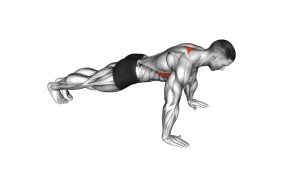
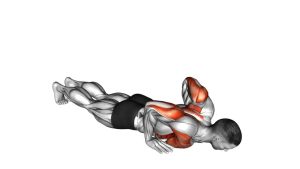
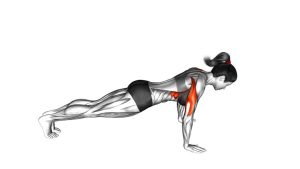
This exercise is small, controlled, and highly specific. In the demonstrated movement, the body stays in a high plank while the shoulders move through a protraction and return phase. Therefore, the main goal is not speed or range. Instead, the goal is to keep the elbows straight, maintain a firm plank, and move only through the shoulder blades.
Because the Protraction Plank challenges both shoulder stability and trunk control, it works well as a warm-up drill, corrective exercise, or accessory movement before push-ups, pressing, crawling, or upper-body training. Moreover, it teaches you how to actively push the ground away without losing spinal alignment.
Quick Overview
| Body Part | Shoulders |
|---|---|
| Primary Muscle | Serratus anterior |
| Secondary Muscle | Anterior deltoids, chest stabilizers, triceps stabilizers, abs, obliques, deep core stabilizers |
| Equipment | No equipment required; optional exercise mat or push-up handles |
| Difficulty | Beginner to intermediate, depending on plank strength and shoulder control |
Sets & Reps (By Goal)
- Scapular control: 2–3 sets × 8–12 slow reps, resting 45–60 seconds between sets.
- Serratus anterior activation: 2–4 sets × 10–15 reps with a short 1–2 second pause at the top.
- Shoulder warm-up: 1–2 sets × 8–10 clean reps before push-ups, dips, pressing, or upper-body work.
- Core stability: 3 sets × 20–30 seconds of controlled protraction holds while keeping the body line still.
- Technique practice: 2 sets × 6–8 reps with very slow tempo and strict elbow position.
Progression rule: First, improve control and pause quality. Then, increase reps or hold time. Finally, progress to harder variations only when you can keep the elbows straight, hips level, and neck neutral.
Setup / Starting Position
- Start in a high plank: Place your hands on the floor under your shoulders with the arms fully extended.
- Set your feet: Keep your feet about hip-width apart, or slightly wider if you need more balance.
- Brace your core: Tighten your abs lightly so your ribs, hips, and legs stay aligned.
- Keep your neck neutral: Look down toward the floor instead of lifting the head or dropping it heavily.
- Lock in straight arms: Keep the elbows extended throughout the movement, but avoid forcing them into an uncomfortable hyperextended position.
- Begin from neutral shoulders: Start with the chest supported between the shoulders without sagging toward the floor.
Setup matters because this is not a traditional plank hold only. Instead, it is a shoulder-blade movement performed from a stable plank base.
Execution (Step-by-Step)
- Hold the high plank: Press through your palms and keep your body in a straight line from head to heels.
- Keep the elbows straight: Do not bend the arms like a push-up. The motion should come from the shoulder blades.
- Push the floor away: Slowly spread the shoulder blades apart by moving your upper back slightly upward.
- Reach full protraction: Continue until your chest feels lifted away from the floor and your upper back rounds slightly.
- Pause briefly: Hold the top position for 1–2 seconds while keeping the core tight and hips level.
- Return with control: Let the shoulder blades move back toward neutral without collapsing through the chest.
- Repeat smoothly: Move in a steady rhythm while keeping the neck relaxed and the plank position stable.
Pro Tips & Common Mistakes
Pro Tips
- Think “push the floor away”: This cue helps you reach shoulder-blade protraction without turning the movement into a push-up.
- Use a small range first: A clean small motion is better than a large messy rep.
- Keep your ribs controlled: If the ribs flare, the lower back may arch and reduce core stability.
- Move slowly: A 2-second push, 1-second pause, and 2-second return works well for technique.
- Spread the shoulder blades: At the top, feel the upper back widen instead of shrugging toward the ears.
- Stay active through the hands: Press evenly through the palm and fingers to keep the wrists stable.
Common Mistakes
- Bending the elbows: This turns the drill into a push-up variation and reduces scapular isolation.
- Letting the hips sag: Hip drop usually means the core has lost tension.
- Piking the hips too high: Raising the hips can make the movement easier but less specific.
- Shrugging the shoulders: Keep the neck long and avoid pulling the shoulders toward the ears.
- Collapsing on the return: Return to neutral with control instead of dropping the chest suddenly.
- Moving too fast: Speed hides compensation, while slow reps reveal real control.
FAQ
What muscles does the Protraction Plank work?
The Protraction Plank mainly works the serratus anterior, which helps move and stabilize the shoulder blades. In addition, your abs, obliques, anterior deltoids, triceps stabilizers, and chest stabilizers support the plank position.
Is the Protraction Plank the same as a scapular push-up?
It is very similar to the top-position portion of a scapular push-up. However, the focus here is specifically on maintaining a plank while practicing controlled shoulder-blade protraction and return without bending the elbows.
Should my elbows bend during this exercise?
No. Your elbows should stay straight throughout the movement. If they bend, you are likely shifting into a push-up pattern instead of training scapular control.
Where should I feel the Protraction Plank?
You should feel work around the sides of the ribs near the shoulder blades, the front of the shoulders, and the core. However, you should not feel sharp pain in the shoulders, wrists, neck, or lower back.
Why does my upper back round during the movement?
A slight upper-back rounding is normal at full protraction because the shoulder blades are spreading apart. Nevertheless, avoid turning it into a full spinal crunch. The motion should stay controlled and shoulder-driven.
Can beginners do the Protraction Plank?
Yes, but beginners may need to start with a shorter hold, fewer reps, or an elevated-hand version. For example, placing the hands on a bench can reduce the load while still teaching the same shoulder-blade action.
How often should I train the Protraction Plank?
You can use it 2–4 times per week as part of a warm-up or shoulder stability routine. Also, it can be performed with low volume before push-ups, pressing, or bodyweight training.
Recommended Equipment
- Non-Slip Exercise Mat — adds comfort for the hands and improves traction during plank work.
- Push-Up Handles — useful if wrist extension feels uncomfortable on the floor.
- Workout Wrist Wraps — provide light wrist support during high-plank exercises.
- Resistance Bands Set — helpful for pairing this drill with serratus punches, band pull-aparts, and shoulder warm-ups.
- Push-Up Board / Angled Plank Board — can help adjust hand position and make plank-based shoulder drills more comfortable.
Tip: Equipment is optional. The exercise can be trained effectively with only bodyweight, provided the floor surface is stable and your wrists feel comfortable.