Lying Bent Knee Side Roll: Form, Core Benefits, Sets & Tips
Learn the Lying Bent Knee Side Roll for core control, oblique activation, hip mobility, and lower-back rotation with safe form tips.
Lying Bent Knee Side Roll
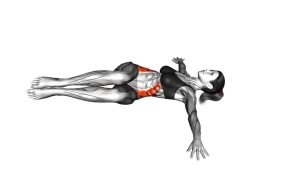
This exercise works best when the movement stays slow and controlled. Because the knees move as one unit, the hips and pelvis rotate together while the core manages the side-to-side shift. As a result, the drill can be useful for beginners, warm-ups, mobility sessions, and low-impact core training.
Quick Overview
| Body Part | Core |
|---|---|
| Primary Muscle | Obliques |
| Secondary Muscle | Rectus abdominis, deep core stabilizers, lower back, hip rotators |
| Equipment | None; optional exercise mat |
| Difficulty | Beginner |
Sets & Reps (By Goal)
- Mobility warm-up: 1–2 sets × 8–12 reps per side with a slow, easy range.
- Core control: 2–3 sets × 10–15 reps per side with steady breathing and no bouncing.
- Beginner strength practice: 2–4 sets × 8–12 reps per side, resting 30–60 seconds between sets.
- Cooldown mobility: 1–2 sets × 6–10 slow reps per side, pausing briefly at each comfortable end range.
Progression rule: First improve control and range. Then add more reps only if your shoulders stay down and your lower back does not feel strained.
Setup / Starting Position
- Lie on your back: Rest flat on the floor or on an exercise mat.
- Bend both knees: Place your feet flat on the floor, roughly hip-width apart.
- Set your arms: Keep your arms relaxed out to the sides to help stabilize the upper body.
- Brace lightly: Engage your core enough to control the pelvis without holding your breath.
- Keep the shoulders grounded: Your upper back should stay stable as the knees move side to side.
Execution (Step-by-Step)
- Start in the center: Keep both knees bent, feet on the floor, and spine relaxed.
- Roll the knees to one side: Let both knees move together while the pelvis rotates naturally.
- Control the end range: Stop before your opposite shoulder lifts or your lower back feels pulled.
- Return to center: Use your core to bring the knees back smoothly instead of swinging them.
- Repeat to the opposite side: Move with the same tempo and range on both sides.
Pro Tips & Common Mistakes
- Keep both knees together: This helps the hips rotate evenly and keeps the movement clean.
- Move slowly: A slower tempo makes the obliques work harder to control rotation.
- Avoid forcing the floor touch: The goal is control, not maximum range.
- Keep the shoulders down: If one shoulder lifts, you have likely gone too far.
- Do not twist aggressively: Let the hips and pelvis rotate naturally while the upper body stays calm.
- Breathe through each rep: Exhale as the knees return to center to improve core control.
FAQ
What muscles does the Lying Bent Knee Side Roll work?
It mainly works the obliques and deep core stabilizers. In addition, the hips, lower back, and pelvic muscles assist the controlled side-to-side rotation.
Should my knees touch the floor?
Not necessarily. Your knees should only lower as far as you can control while keeping your shoulders grounded and your lower back comfortable.
Is this exercise good for beginners?
Yes. Because it uses bodyweight only and a small adjustable range of motion, it is beginner-friendly when performed slowly.
Why do my shoulders lift during the movement?
Your range may be too large. Reduce how far the knees roll, brace lightly, and focus on keeping your upper back steady.
Can I use this as a warm-up?
Yes. It works well as a gentle core and mobility warm-up before lower-body training, ab workouts, or general movement sessions.
Recommended Equipment (Optional)
- Exercise Mat — adds comfort and support for floor-based core movements.
- Non-Slip Yoga Mat — helps keep your body stable while rotating side to side.
- Foam Roller — useful for warm-up mobility and post-session recovery.
- Pilates Ball — can support gentle core drills and mobility progressions.
- Stretching Strap — helpful for hip and lower-body flexibility work after training.
Tip: Equipment is optional. For this exercise, smooth control and comfortable range matter more than added tools.